AI Appraisal Estimate

AI-generated estimates · not official valuations

From the user

What was submitted

Photo and notes provided by the user — not generated by AI

Submitted item photo
Submitted photo · May 27, 2026

User's notes

I’m in in

AI analysis below

AI appraisal

AI analysis & estimate

AI-Generated · Verify before acting

Everything below is generated by AI for informational purposes only. AI can make mistakes — the AI may misidentify items or misattribute them (artist, maker, brand, designer, origin, era). This is not an official valuation and should not be used for insurance, sale, tax, estate, legal, or lending purposes — or any decision requiring a certified appraisal. It is not an authoritative claim about any person, brand, or rights holder — do not share or rely on it as a factual statement about a third party. Always consult qualified professionals before making financial decisions.

Note

This analysis also relies on unverified notes provided by the user, which may be incomplete or inaccurate and could affect the result.

Read the full disclaimer

AI Identification

·Not independently authenticated·Verify before acting

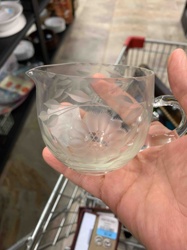
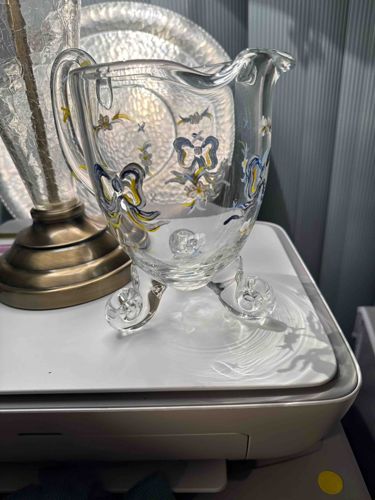
Hand-Painted Floral and Ribbon Enamel Glass Creamer with Scroll Feet

Antique and Vintage Glassware/Tableware

AI Estimated Value

·Not an official valuation·Verify before acting

$45.00 - $65.00

As of May 27, 2026

AI Item Analysis

·AI can make mistakes·Verify before acting
This item is a decorative clear glass creamer, likely of mid-20th-century vintage origin, estimated between 1940 and 1960. It features a pressed or molded glass construction with three distinctive scroll or snail-shaped feet that elevate the rounded body. The piece is notably decorated with hand-applied enamel paint depicting a motif of light blue and yellow ribbons tied in bows, interspersed with small white and yellow floral blossoms. The glass provides a high level of clarity, and the decoration shows a whimsical, perhaps European or American Provincial style. The handle is a simple 'C' curve of clear glass applied to the side. At the base of the feet, there are molded rosette details. In terms of condition, the glass appears to be in good structural health without visible chips or major cracks, though there is minor wear and fading to the enamel paint, particularly on the blue outlines of the bows. The paint thickness varies, indicating hand-application rather than a transfer print. No specific maker's mark is visible from the provided orientation, but the style is reminiscent of companies like Fenton, Westmoreland, or various glass decorators of the era. The craftsmanship is decent for mass-produced glassware, with focus on the charming aesthetic of the enamel work.
AI Appraisal Report

·AI can make mistakes·Verify before acting
I have carefully examined the provided images and descriptions of this hand-painted enamel glass creamer. The piece exhibits the classic characteristics of mid-century American or European decorative glassware, specifically echoing the 'Hand Painted' lines popularized by firms like Westmoreland or Fenton between 1940 and 1960. The presence of three scroll feet and rosette moldings suggests a pressed-glass origin, while the tactile variation in the enamel confirms a hand-applied technique rather than a decal. The condition is observed as good for its age. While the glass remains structurally sound, the visible fading and wear on the blue pigment of the ribbons slightly reduce the premium value typical of 'mint condition' collectibles. In the current secondary market for vintage tableware, demand for non-signed enamel glass remains steady but modest, primarily driven by 'shabby chic' aesthetic appeal rather than high-end investment rarity. Comparables for similar footed creamers with floral enamel motifs typically realize between $35 and $75 at auction or antique mall settings. The specific scroll-foot design adds a slight 'whimsical' desirability that elevates it above standard flat-bottomed utility pieces. Limitations: This appraisal is based strictly on visual inspection of images. A definitive valuation and authentication would require an in-person examination to verify the presence of acid-etched marks on the base, check for 'flea bites' or internal stress fractures, and use UV light testing to confirm the glass composition (e.g., manganese or lead content). Provenance documentation regarding the original purchase or manufacturer tags would be necessary to attribute this to a specific high-tier glass house.

Get your items appraised

Instant estimates of your treasures with AI-powered appraisals

Browse More Appraisals