AI identification & appraisal estimate

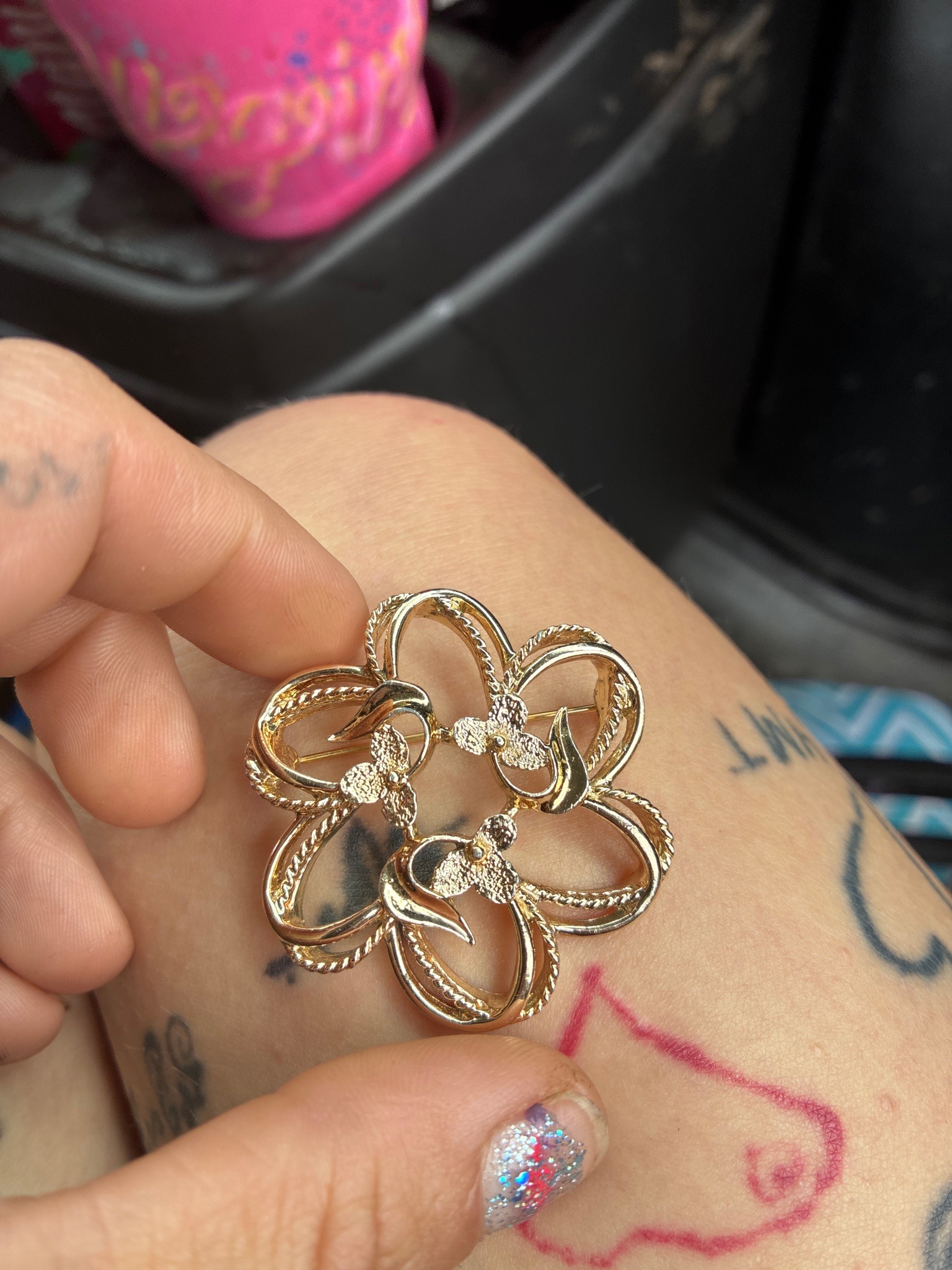
Gold-tone openwork floral brooch in a mid-20th-century style

This name is the AI's identification of the item — it may be incorrect.

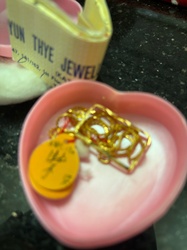
Submitted photo of Gold-tone openwork floral brooch in a mid-20th-century style
Photo submitted by the user — not generated by AI

AI Estimated Value

Not an official valuation

$25 - $55

AI estimate as of June 2, 2026 · verify with a professional before acting

AI-Generated · Verify before acting

Everything on this page is generated by AI for informational purposes only. AI can make mistakes — the AI may misidentify items or misattribute them (artist, maker, brand, designer, origin, era). This is not an official valuation and should not be used for insurance, sale, tax, estate, legal, or lending purposes — or any decision requiring a certified appraisal. It is not an authoritative claim about any person, brand, or rights holder — do not share or rely on it as a factual statement about a third party. Always consult qualified professionals before making financial decisions.

Read the full disclaimer

AI Item Analysis

AI can make mistakes
This item is a circular, openwork brooch featuring a stylized floral motif, appearing to be made of a gold-tone metal. The design consists of six interconnected loops or 'petals' that form a wreath-like shape. Within this frame, three textured elements resembling stylized flowers or butterflies are symmetrically placed, accented by smooth, curved leaf-like forms. The outer loops feature a rope-twist border detail, while the inner surfaces are high-polished. On the reverse, a standard pin stem and safety catch are visible, suggesting it is intended for wear on clothing. The construction appears to be cast metal with a gold-colored plating or wash. Stylistically, the piece is consistent with costume jewelry from the mid-to-late 20th century. Condition appears fair to good, with some minor surface scratches and possible light oxidation in the recessed areas, though no significant plating loss is immediately apparent from the image. Because no hallmark, maker’s mark, or signature is visible in the provided photo, any identification of metal purity or specific manufacturer is based solely on stylistic features and would require a physical inspection and localized testing for verification.
AI Appraisal Report

AI can make mistakes
I have examined the provided image of the gold-tone openwork floral brooch. Based on what I can see, the piece displays stylistic characteristics consistent with mass-produced costume jewelry from the mid-to-late 20th century. The construction appears to be cast base metal with a gold-colored plating, as suggested by the rope-twist detailing and the specific texture of the floral elements. Because no maker's mark or metal purity hallmark is visible, I must treat any attribution to a specific designer as a hypothesis that I cannot verify from a photo alone. The estimated value of $25 - $55 is based on the assumption that this is a high-quality unsigned fashion piece in good vintage condition. This range reflects general market demand for mid-century botanical motifs. I cannot determine the exact metal composition or the durability of the plating without a physical inspection; if the piece were found to be gold-filled or produced by a sought-after maker like Trifari or Monet (bearing a corresponding mark), the value could increase to the $60 - $100 range. Conversely, if there is significant plating loss or if the pin mechanism is faulty—details difficult to confirm via image—the value would likely fall below $15. To provide a more precise valuation, a physical examination would be required to check for hidden marks, perform a streak test for gold content, and assess the weight and hinge tension. Currently, the market for unattributed 'in the style of' mid-century costume jewelry remains stable but modest, driven primarily by aesthetic appeal rather than investment potential or brand heritage.

Keep exploring

More jewelry appraisals

Get your items appraised

Instant AI-powered appraisal estimates — a starting point, not an official valuation

Browse More Appraisals