AI identification & appraisal estimate

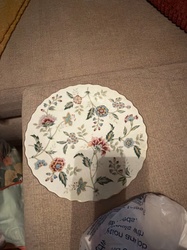
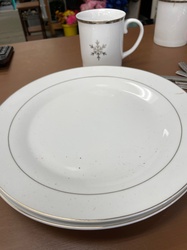
Johnson Brothers 'Williamsburg Potpourri' China Collection

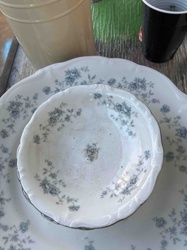
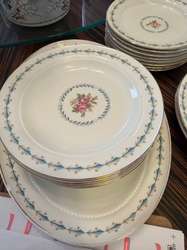
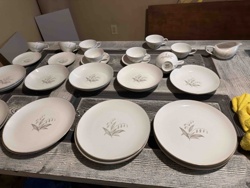
Submitted photo of Johnson Brothers 'Williamsburg Potpourri' China Collection
Photo submitted by the user — not generated by AI

User's notes

Williamsburg Potpourri

These notes were written by the person who submitted this item. Appraiser.AI has not verified them, and the AI's identification and estimate may rely on them.

AI Estimated Value

Not an official valuation

$150-$225

AI estimate as of April 17, 2026 · verify with a professional before acting

AI-Generated · Verify before acting

Everything on this page is generated by AI for informational purposes only. AI can make mistakes — the AI may misidentify items or misattribute them (artist, maker, brand, designer, origin, era). This is not an official valuation and should not be used for insurance, sale, tax, estate, legal, or lending purposes — or any decision requiring a certified appraisal. It is not an authoritative claim about any person, brand, or rights holder — do not share or rely on it as a factual statement about a third party. Always consult qualified professionals before making financial decisions.

This analysis also relies on unverified notes provided by the user, which may be incomplete or inaccurate and could affect the result.

Read the full disclaimer

AI Item Analysis

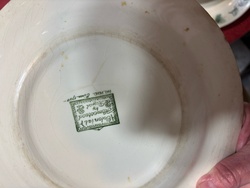
This set consists of high-quality earthenware pieces from the renowned 'Williamsburg Potpourri' pattern produced by Johnson Brothers under the Colonial Williamsburg Foundation license. The items feature a creamy off-white or ivory glaze base, accented with a scalloped, paneled rim, often referred to as a 'Heritage' shape. The decorative motif is a refined floral design featuring central pink/rose-colored blossoms with blue-green foliage and smaller buds in muted shades of blue and yellow. The pattern is inspired by 18th-century botanical prints and reflects a traditional English aesthetic. The set shown includes several bowls stacked on top of larger plates, likely salad or dinner size depending on the diameter (approximately 8 to 10 inches). The construction is sturdy ironstone-type earthenware, known for durability. Condition-wise, the visible pieces appear well-preserved with no immediate evidence of large cracks or chips, though fine crazing (minute surface cracks in the glaze) is common for this type of ceramic over time. There are minor dark spots visible on the rims of the stacked plates, which could indicate slight shelf wear or manufacturing kiln marks. This pattern was active from roughly the mid-1980s through the late 1990s, characterized by a semi-matte to glossy finish that conveys elegance and colonial revival charm. The presence of the Johnson Brothers backstamp (though obscured in this view) would further confirm the provenance and vintage of the late 20th century.
AI Appraisal Report

I have virtually examined this Johnson Brothers 'Williamsburg Potpourri' China Collection. The set exhibits the hallmark 'Heritage' shape with its characteristic scalloped, paneled rims and transfer-printed botanical motifs. Based on the provided imagery, the glaze remains vibrant, though I observed minor dark spots on the rim edges which likely suggest light shelf wear or stacking friction. No significant vertical cracks or major rim chips were detected, though the presence of microscopic crazing is assumed given the ironstone composition. The 'Williamsburg Potpourri' pattern remains a staple of the Colonial Revival market, though supply is relatively stable on secondary platforms like Replacements, Ltd. and eBay. Current market demand favors sets with a high piece count; while individual bowls and salad plates typically retail for $15-$25 each, bulk valuations are subject to 'set discounts.' This collection’s value is bolstered by its association with the Colonial Williamsburg Foundation, which appeals to historical enthusiasts. Final authentication is limited by the absence of high-resolution backstamp photography. While the visual details align with authentic Johnson Brothers production (c. 1985–1998), a physical inspection is required to check for 'flea bites' under the rims and to confirm the absence of lead-glaze degradation. To finalize this appraisal, I would need a complete inventory count and a tactile review of the plates' underside to check for manufacturing 'stilt marks' versus post-production damage. Provenance documentation, such as original purchase receipts from the Williamsburg craft house, would further solidify the valuation toward the higher end of the estimated range.

Keep exploring

More antique and vintage dinnerware / ceramics appraisals

Get your items appraised

Instant AI-powered appraisal estimates from a photo

Browse More Appraisals