AI estimate as of September 28, 2025 · verify with a professional before acting
AI-Generated · Verify before acting
Everything on this page is generated by AI for informational purposes only. AI can make mistakes — the AI may misidentify items or misattribute them (artist, maker, brand, designer, origin, era). This is not an official valuation and should not be used for insurance, sale, tax, estate, legal, or lending purposes — or any decision requiring a certified appraisal. It is not an authoritative claim about any person, brand, or rights holder — do not share or rely on it as a factual statement about a third party. Always consult qualified professionals before making financial decisions.
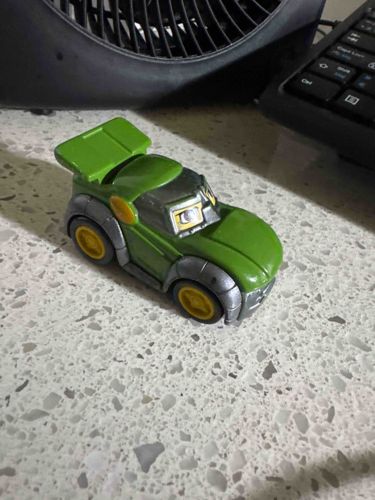
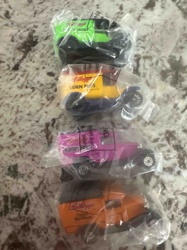
This item is a small, compact toy vehicle, likely constructed from molded plastic, designed to resemble a stylized car. The primary color is a vibrant lime green, covering the main body, hood, roof, and a rear spoiler element. Distinctive silver/grey accents define the wheel arches, front bumper area, and side panels, suggesting armor plating or mechanical components. The wheels are bright yellow with visible hub details, contrasting sharply with the green body. The windshield and side windows are opaque grey, giving them a frosted or darkened appearance. The front grill area features a silver/grey face-like design with what appear to be yellow 'eyes' or headlights, and a silver mouth-like detail, strongly indicating a transforming robot character in vehicle mode. The overall design features rounded edges combined with angular details, giving it a playful yet robust aesthetic. The toy appears to be in good condition with no immediate visible signs of major damage, chips, or cracks, though minor surface scuffs or play wear cannot be entirely ruled out without closer inspection. The construction suggests a snap-together or molded plastic assembly, typical of mass-produced children's toys. The style points towards a modern animated or movie-inspired character, likely from a franchise such as 'Transformers' or a similar mechanical robot theme. Its small size suggests it is either a standalone collectible or part of a larger playset, designed for handheld play. The craftsmanship appears to be standard for a toy of this type, with clear molding and paint application.
AI Appraisal Report
Upon visual examination of the provided image, I assess this Transforming Robot Car Toy, likely a variant of a character such as Bumblebee. The toy appears to be in good, played-with condition. I observe no immediate signs of major damage like chips, cracks, or significant paint loss. The vibrant lime green color is largely intact, and the silver/grey and yellow accents show good definition. Its construction from molded plastic is typical for mass-produced children's toys, and the clear molding and paint application suggest standard craftsmanship.
Authenticity, based purely on imagery, is challenging. While the style strongly points to a 'Transformers' or similar robot franchise, I cannot definitively confirm if it's an official product, a third-party rendition, or a knock-off without physical inspection. The 'face-like' grill design is a common characteristic of such transforming toys.
In terms of market conditions, this type of toy is widely available. Comparables would include other small-scale transforming robot toys. Demand for such items is generally steady for children, but the adult collector market often prefers larger, more detailed, or vintage pieces. Rarity for this specific item appears low, given the mass-produced nature of similar toys. Factors significantly impacting value include its condition (which appears good), but more importantly, its official status (if it's a known character from a major line) and whether it's complete with all original parts and able to transform as intended.
Limitations of this appraisal include the inability to verify the transformation mechanism's functionality, assess overall structural integrity, or confirm branding/copyright without better imagery (e.g., of packaging or clear markings on the toy). For full authentication, an in-person examination would be crucial to check for manufacturer stamps, patent numbers, and material quality. Provenance documentation, such as original purchase receipts or packaging, would also aid significantly in confirming its authenticity and origin.