AI Appraisal Estimate

AI-generated estimates · not official valuations

From the user

What was submitted

Photo and notes provided by the user — not generated by AI

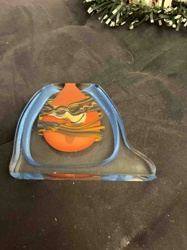
Submitted item photo
Submitted photo · June 1, 2026

User's notes

Bud vase

AI analysis below

AI appraisal

AI analysis & estimate

AI-Generated · Verify before acting

Everything below is generated by AI for informational purposes only. AI can make mistakes — the AI may misidentify items or misattribute them (artist, maker, brand, designer, origin, era). This is not an official valuation and should not be used for insurance, sale, tax, estate, legal, or lending purposes — or any decision requiring a certified appraisal. It is not an authoritative claim about any person, brand, or rights holder — do not share or rely on it as a factual statement about a third party. Always consult qualified professionals before making financial decisions.

Note

This analysis also relies on unverified notes provided by the user, which may be incomplete or inaccurate and could affect the result.

Read the full disclaimer

AI Identification

·Not independently authenticated·Verify before acting

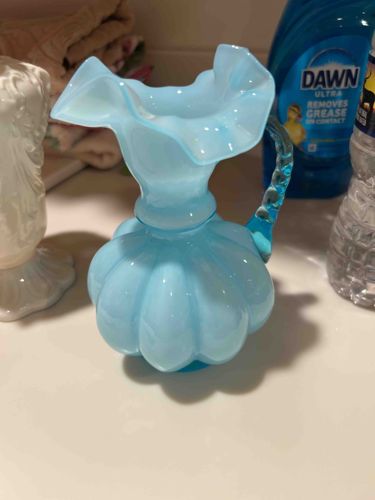
Fenton Blue Opalescent Melon Pitcher Vase

Art Glass / Collectible Glassware

AI Estimated Value

·Not an official valuation·Verify before acting

$65.00 - $85.00

As of June 1, 2026

AI Item Analysis

·AI can make mistakes·Verify before acting
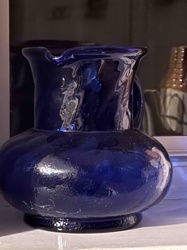
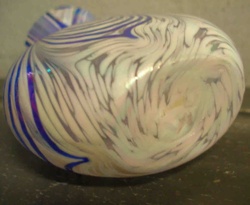
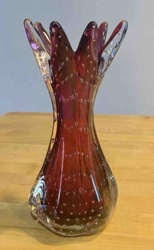
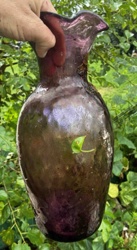
This item is a vintage pitcher-style bud vase, likely manufactured by the Fenton Art Glass Company, featuring a distinctive light blue opalescent finish. The piece is constructed from hand-blown glass and characterized by a deeply lobed or 'melon' shaped globular body that sits on a small circular base. The neck flares out into a dramatic ruffled or crimped top rim, which shows a strong milky white opalescence consistent with heat-treated glass techniques. A delicate, translucent blue glass handle is attached to the side, featuring a twisted or 'reeded' texture. The color is a vibrant sky blue that transitions to a semi-opaque white at the edges of the ruffles. Based on the style and craftsmanship, this piece likely dates to the mid-20th century, specifically the 1940s or 1950s. The surface appears to be in good condition with no visible cracks, chips, or major scratches, though slight shelf wear on the base is expected. The glass exhibits high-quality clarity and smooth transitions between the opalescent and translucent areas, signifying skilled factory production from a reputable American glassmaker.
AI Appraisal Report

·AI can make mistakes·Verify before acting
I have carefully examined the provided images and descriptions of this Fenton Blue Opalescent Melon Pitcher Vase. The piece exhibits the classic 'Melon' pattern (No. 904) characteristic of Fenton's production during the 1940s and 1950s. The ruffled rim and reeded handle demonstrate the high-quality hand-finishing for which the Fenton Art Glass Company was known. The color, a vibrant French Opalescent blue, shows a healthy transition to milky white, suggesting proper heat treatment during the striking process. Based on visual inspection, the item appears to be in excellent condition with no visible structural defects; however, the presence of shelf wear on the base is a common and acceptable sign of age. The current market for mid-century American glass remains stable but niche. While Fenton pieces are highly collectible, this specific shape and color were produced in relatively high volume compared to rarer 'limited run' colors. Comparable sales for this 6-to-8-inch pitcher size typically fall within the $60 to $90 range. Value is significantly enhanced by the presence of a double-crimped rim and the integrity of the application point where the handle meets the body. It is important to note that this digital appraisal cannot confirm the absence of internal heat cracks or 'sick glass' (cloudiness) caused by mineral deposits. A full authentication would require physical inspection to verify the tactile feel of the glass, the presence of a 'poncil' or mold mark, and the use of a UV light to check for specific chemical compositions in the glass melt used during that era. Lacking a physical mark or original foil label, provenance documentation would further solidify its origin.

Get your items appraised

Instant estimates of your treasures with AI-powered appraisals

Browse More Appraisals