AI Appraisal Estimate

AI-generated estimates · not official valuations

From the user

What was submitted

Photo and notes provided by the user — not generated by AI

Submitted item photo
Submitted photo · June 18, 2026

User's notes

Japan

AI analysis below

AI appraisal

AI analysis & estimate

AI-Generated · Verify before acting

Everything below is generated by AI for informational purposes only. AI can make mistakes — the AI may misidentify items or misattribute them (artist, maker, brand, designer, origin, era). This is not an official valuation and should not be used for insurance, sale, tax, estate, legal, or lending purposes — or any decision requiring a certified appraisal. It is not an authoritative claim about any person, brand, or rights holder — do not share or rely on it as a factual statement about a third party. Always consult qualified professionals before making financial decisions.

Note

This analysis also relies on unverified notes provided by the user, which may be incomplete or inaccurate and could affect the result.

Read the full disclaimer

AI Identification

·Not independently authenticated·Verify before acting

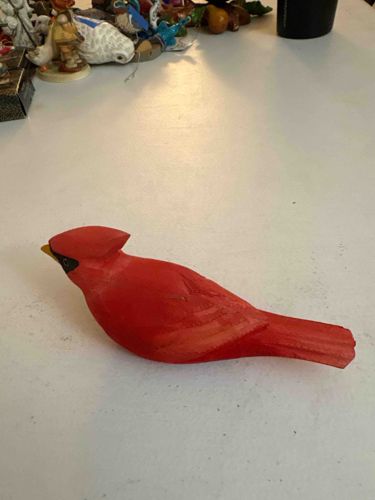
Carved and Painted Wooden Northern Cardinal Figurine

Collectibles - Bird Figurines

AI Estimated Value

·Not an official valuation·Verify before acting

$15.00 - $25.00

As of June 18, 2026

AI Item Analysis

·AI can make mistakes·Verify before acting
A vintage decorative figurine of a male Northern Cardinal, hand-carved from a single block of lightweight wood, likely basswood or pine. The piece measures approximately 5 to 6 inches in length. It features a vibrant, matte red monochromatic paint finish across the body, with a characteristic black 'mask' around the face and a mustard-yellow conical beak. The carving displays a folk-art style with visible tool marks that simulate feather textures along the wings and the tail. The bird is depicted in a horizontal, resting posture without legs, suggesting it was designed to sit flat on a mantel or shelf. Given the provided context of 'Japan,' this is a mid-century export item, likely dating from the 1950s to 1970s, which were popular as nature-themed home decor. The condition appears fair to good; there is visible paint thinning and slight wear at the tips of the crest and tail, revealing the pale wood underneath. The craftsmanship is utilitarian but charming, typical of mass-produced Japanese woodworking for the Western market. No visible maker’s marks or original foil stickers are present in this view, though they were commonly found on the base of such pieces.

AI Appraisal Report

·AI can make mistakes·Verify before acting
I have conducted a visual examination of the Carved and Painted Wooden Northern Cardinal Figurine. This piece is a classic example of a mid-century Japanese export, produced primarily for the North American market between 1950 and 1970. The use of lightweight wood and the stylized, flat-bottomed 'resting' posture are hallmarks of this era's utilitarian folk art exports. The 'Japan' provenance aligns with the mass-produced nature of these collectibles. The condition is graded as fair to good. I observed significant paint loss at the crest and tail tip, which is common for these items as the matte tempera or acrylic paints used were prone to flaking. While the tool marks add a charming textural element, they indicate a factory-line hand-carving process rather than high-end artisan craftsmanship. The absence of the original foil export sticker slightly reduces the collectibility for 'completeness' enthusiasts. The market for mid-century Japanese wooden birds remains steady but modest. High-end collectors typically seek 'signed' pieces from specific workshops or sets in pristine condition. As a standalone cardinal—a common subject—rarity is low. Comparables on secondary markets such as eBay or Etsy typically realize prices in the $15–$25 range, depending on the buyer's desire for specific species. Limitations: This appraisal is based on photographic evidence. A physical inspection is required to confirm wood density and check for hidden repairs or insect damage. Full authentication of the age would require examining the adhesive residues of the missing label. Without a maker's mark or original packaging, the attribution to a specific Japanese prefecture or workshop cannot be definitively confirmed.

Get your items appraised

Instant estimates of your treasures with AI-powered appraisals

Browse More Appraisals