AI Appraisal Estimate

AI-generated estimates · not official valuations

From the user

What was submitted

Photo and notes provided by the user — not generated by AI

Submitted item photo
Submitted photo · June 10, 2026

User's notes

No additional notes provided.

AI analysis below

AI appraisal

AI analysis & estimate

AI-Generated · Verify before acting

Everything below is generated by AI for informational purposes only. AI can make mistakes — the AI may misidentify items or misattribute them (artist, maker, brand, designer, origin, era). This is not an official valuation and should not be used for insurance, sale, tax, estate, legal, or lending purposes — or any decision requiring a certified appraisal. It is not an authoritative claim about any person, brand, or rights holder — do not share or rely on it as a factual statement about a third party. Always consult qualified professionals before making financial decisions.

Read the full disclaimer

AI Identification

·Not independently authenticated·Verify before acting

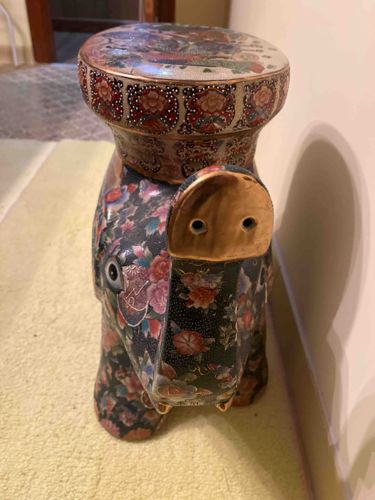
Satsuma Style Gilt Ceramic Elephant Garden Stool

Antique/Vintage Home Decor and Furniture

AI Estimated Value

·Not an official valuation·Verify before acting

$450 - $650

As of June 10, 2026

AI Item Analysis

·AI can make mistakes·Verify before acting
This item is a decorative elephant-shaped garden stool or pedestal, likely crafted from heavy ceramic or porcelain. It features a highly ornate 'Moriage' or Satsuma-style aesthetic, characterized by a dark cobalt or black ground heavily decorated with polychrome enamel floral patterns including peonies and cherry blossoms in shades of pink, red, and blue. The stool is topped with a circular platform featuring a beaded or 'millgrain' edge and gilded accents. The elephant's face is highlighted with large stylized eyes and a trunk raised slightly, with the end of the trunk and some of the lower facial details finished in bright gold-tone paint or gilding. The overall craftsmanship suggests a 20th-century manufacture, specifically in the mid-to-late 20th century, following the traditional Japanese style but likely produced for the export market. Its physical condition appears generally good and stable, though there is visible wear to the gilding on high-contact points, particularly around the trunk and the top rim. Subtle crazing may be present in the glaze due to age. This piece serves as both a functional side table or plant stand and a bold decorative accent, demonstrating a blend of Chinoiserie and traditional Japanese influences common in mid-century home decor.
AI Appraisal Report

·AI can make mistakes·Verify before acting
I have carefully examined the provided images of this Satsuma-style elephant garden stool. The piece exhibits the classic hallmarks of mid-to-late 20th-century export ware, specifically the 'Moriage' technique involving raised enamel decoration and a heavy application of gilt accents. The condition appears structurally sound; however, I note visible thinning of the gold-leafing on the trunk and top rim, which is consistent with its use as a functional pedestal. The crazing observed in the glaze is typical for high-fired ceramics of this thickness and does not necessarily indicate antiquity, but rather the natural movement of the glaze over time. Currently, the market for Japanese-inspired porcelain remains steady, with garden stools of this scale and decorative intensity being highly sought after by interior designers for the 'Grandmillennial' and maximalist aesthetics. Comparables for mass-produced 20th-century Satsuma-style stools range from $300 to $800 depending on the level of detail and color palette. This example’s cobalt ground and raised floral work place it in the higher end of that tier. It is important to note that a definitive assessment of age and origin is limited by the digital nature of this inspection. A physical examination is required to check for manufacturer marks on the underside and to determine if the 'gold' is true 22k leaf or a metallic paint. To confirm its status as a vintage mid-century piece rather than a modern reproduction, I would need to examine the foot ring for kiln debris and signs of authentic shelf wear. No scientific testing is recommended given its likely 20th-century provenance.

Get your items appraised

Instant estimates of your treasures with AI-powered appraisals

Browse More Appraisals