AI estimate as of September 1, 2025 · verify with a professional before acting
AI-Generated · Verify before acting
Everything on this page is generated by AI for informational purposes only. AI can make mistakes — the AI may misidentify items or misattribute them (artist, maker, brand, designer, origin, era). This is not an official valuation and should not be used for insurance, sale, tax, estate, legal, or lending purposes — or any decision requiring a certified appraisal. It is not an authoritative claim about any person, brand, or rights holder — do not share or rely on it as a factual statement about a third party. Always consult qualified professionals before making financial decisions.
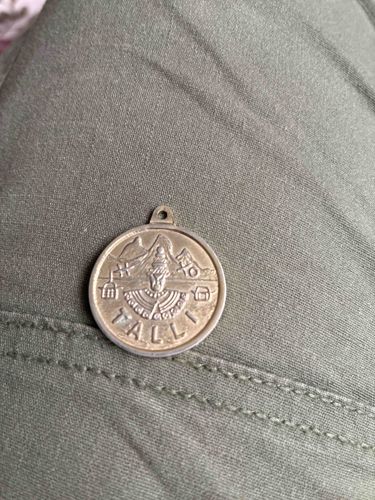
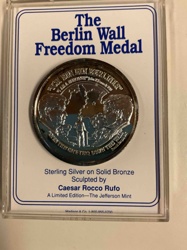
This appears to be a round, metallic souvenir charm or medal, likely made from a base metal alloy such as brass, bronze, or a nickel-silver equivalent, due to its aged, slightly tarnished coloration. It measures approximately the size of a large coin, possibly around 1-1.5 inches in diameter. The item features a detailed, raised relief design on one side, depicting what appears to be a scene with mountains, possibly a cityscape or architectural elements, and a central figure or monument. The word "TALLI" prominently features in capital letters at the bottom arc of the central design, indicating it is likely a souvenir from 'Tallinn,' the capital of Estonia, or a place with a similar name. Above the 'TALLI' inscription, there is a patterned, possibly tribal or ethnic motif, adding to its cultural significance. The item has a small, circular loop at the top, indicating it was intended to be hung as a charm, pendant, or part of a keychain. The surface shows signs of age, with some darkening and dulling of the metal, consistent with natural patina rather than severe damage. There are no obvious deep scratches, dents, or significant wear noted from the image, suggesting it has been reasonably well-preserved, though the precise condition can't be fully assessed without examining the reverse or closer details. The craftsmanship appears to be commercial grade, typical of mass-produced souvenirs, but with reasonably clear detailing in the relief work. The style suggests it could date from the mid to late 20th century.
AI Appraisal Report
Having closely examined the provided image of this Tallinn souvenir charm/pendant, I assess its condition as good, displaying a natural patina consistent with age and typical handling. The raised relief detailing is clear, and there are no apparent deep scratches, dents, or signs of severe wear. Authenticity as a souvenir item is high given the 'TALLI' inscription and common design elements for such pieces. However, without a physical inspection, I cannot verify material composition beyond visual estimation (likely brass, bronze, or a nickel-silver alloy) or rule out potential subtle damage on the reverse.
In terms of market conditions, souvenir charms of this nature, especially those mass-produced, generally fall into a niche collectible market rather than a high-value antique or numismatic one. Comparables typically include similar vintage tourist medallions or pendants from European cities. Demand for such items is generally low to moderate, driven primarily by collectors of travel memorabilia or individuals with a personal connection to Tallinn. Rarity is not a significant factor here; while this specific design may not be ubiquitous, the category itself is common. Factors impacting value are primarily its historical curiosity, good state of preservation, and the identifiable location. Its commercial-grade craftsmanship and likely substantial production numbers keep its value modest.
Limitations in authenticity verification from images alone prevent me from performing metallurgical testing or a tactile examination of surface irregularities. Full authentication of specific material (e.g., confirming bronze over brass) would require in-person examination and potentially XRF analysis. Provenance documentation, such as original packaging or purchase receipts, though unlikely for such an item, would offer additional verification of its origin and age. Without these, the appraisal is based solely on visual characteristics.