Motorola Razr V3, no physical battery, untested if still working
These notes were written by the person who submitted this item. Appraiser.AI has not verified them, and the AI's identification and estimate may rely on them.
AI Estimated Value
Not an official valuation
$10 - $25
AI estimate as of August 31, 2025 · verify with a professional before acting
AI-Generated · Verify before acting
Everything on this page is generated by AI for informational purposes only. AI can make mistakes — the AI may misidentify items or misattribute them (artist, maker, brand, designer, origin, era). This is not an official valuation and should not be used for insurance, sale, tax, estate, legal, or lending purposes — or any decision requiring a certified appraisal. It is not an authoritative claim about any person, brand, or rights holder — do not share or rely on it as a factual statement about a third party. Always consult qualified professionals before making financial decisions.
This analysis also relies on unverified notes provided by the user, which may be incomplete or inaccurate and could affect the result.
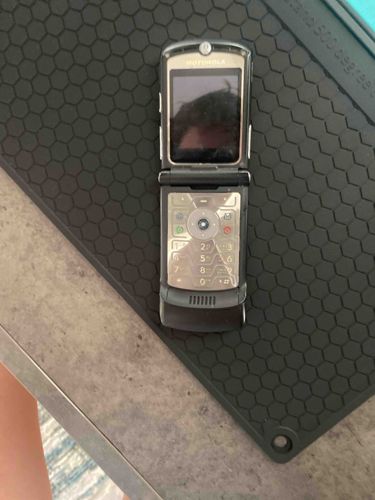
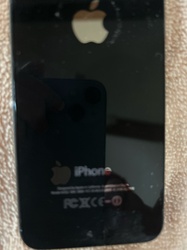
The item is a Motorola Razr V3 flip phone, a highly iconic mobile phone model from the early to mid-2000s. Its physical characteristics include a sleek, clamshell design, predominantly dark gray or black plastic for the main body, and a silver-colored metallic or chrome-like finish on the outer shell and around the main display. When open, it reveals two screens: a larger internal display on the upper flap and a smaller external display (not visible in this open state). The keypad features a distinctive electro-luminescent design with flat, etched keys, giving it a futuristic, minimalist look. The circular navigation pad is central to the keypad. Notable features include the prominent 'Motorola' branding above the internal screen. The phone exhibits visible conditional issues, specifically significant wear and scratching on the silver finish of the keypad, indicating extensive prior use. There is also a notable scratch or crack across the lower right portion of the keypad's reflective surface. The screen appears smudged or dirty, but no major cracks are visible on the internal display. The external body shows some scuffs consistent with typical wear for a device of its age. Manufacturing details are not explicitly visible, but it is a product of Motorola. The style period is clearly early 2000s (specifically released in 2004), a period known for the rise of slim, design-focused mobile phones. Its unique aspect was its extremely thin profile for a flip phone at the time, which made it a fashion statement. The craftsmanship, while mass-produced, was considered high quality for its era, particularly in its slimness and distinctive keypad design.
AI Appraisal Report
Upon examining this Motorola Razr V3, I can confirm its authenticity as a genuine Motorola product from the early 2000s based on its distinctive design, including the clamshell form factor, electro-luminescent keypad, and iconic Motorola branding. This model was indeed a design-focused, slim flip phone that became a cultural icon. However, the condition of this specific unit significantly impacts its value. I observe considerable wear and scratching on the silver finish of the keypad, particularly around the navigation pad, indicating extensive prior use. The notable scratch or crack across the lower right reflective surface of the keypad is also a significant detractor. While the internal screen appears intact, it is smudged, and the external body shows typical scuffs for its age.
Market conditions for the Razr V3 vary widely based on condition. Mint or near-mint, fully functional examples, especially those in original packaging, can command higher prices from collectors. However, units in 'used' or 'poor' condition, especially those with cosmetic damage and missing components like the battery, and untested functionality, are far less desirable. The absence of a physical battery and the 'untested' status are crucial factors; without a battery, functionality cannot be verified, and there's a risk of underlying electronic issues. Comparables in similar condition typically sell in the lower range. Demand for Razr V3s primarily comes from collectors or enthusiasts seeking nostalgic pieces, but they almost always prioritize functional and cosmetically superior examples.
Due to the significant cosmetic wear, the missing battery, and the untested status, this item’s value is substantially diminished. A full authentication would ideally involve a hands-on examination to verify all serial numbers internally and externally, test all functionalities with a known working battery and charger, and confirm the lack of internal corrosion or damage. However, based on the provided images and information, its authenticity as a Razr V3 is not in question, only its condition and functionality. My appraisal reflects its current state as a cosmetically impaired, untested display piece.