AI estimate as of July 20, 2025 · verify with a professional before acting
AI-Generated · Verify before acting
Everything on this page is generated by AI for informational purposes only. AI can make mistakes — the AI may misidentify items or misattribute them (artist, maker, brand, designer, origin, era). This is not an official valuation and should not be used for insurance, sale, tax, estate, legal, or lending purposes — or any decision requiring a certified appraisal. It is not an authoritative claim about any person, brand, or rights holder — do not share or rely on it as a factual statement about a third party. Always consult qualified professionals before making financial decisions.
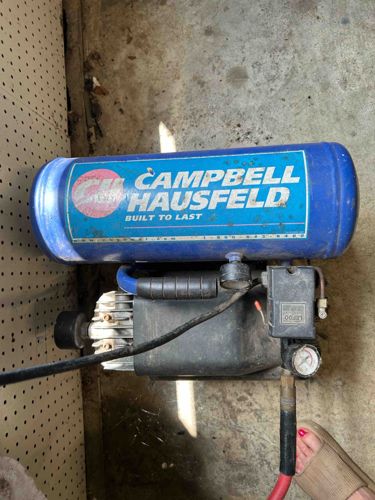
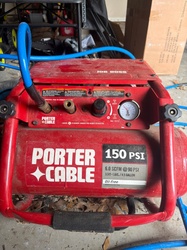
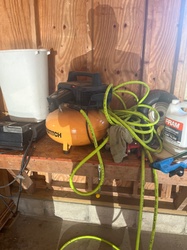
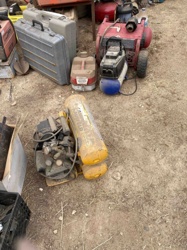
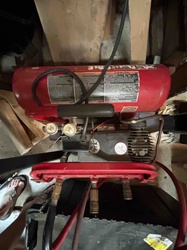
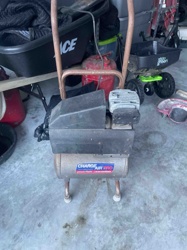
The item is a Campbell Hausfeld air compressor, characterized by its horizontal tank design. The tank is a prominent bright blue, cylindrical in shape, and prominently displays the 'CAMPBELL HAUSFELD BUILT TO LAST' logo in white lettering, which shows some visible wear, scuffs, and dirt, indicating regular use. The overall dimensions suggest it is a portable or medium-sized compressor, suitable for various workshop or garage tasks. A pressure gauge is visible on the motor assembly, indicating operational pressure. The unit features standard compressor components including a motor/pump housing which appears to be constructed from metal casting (likely aluminum) with cooling fins, and a robust black plastic or metal cover. Numerous wires and hoses are connected, with one red air hose prominently visible extending from the output. The physical condition shows signs of age and considerable use, including dust accumulation, surface grime, and scratches on both the tank and the motor housing. There are no obvious signs of major structural damage or repairs, but the general appearance suggests it has been stored in a working environment. The craftsmanship appears to be industrial standard, built for functionality and durability rather than aesthetic appeal. This particular model appears to be from the late 20th to early 21st century, given the branding and general design. The 'CM' logo within a circle is also visible on the tank, reinforcing the Campbell Hausfeld brand identity. The presence of a foot or stand can be inferred from how it's positioned, though the specific type is not entirely clear from the image. The exposed metal fins on the pump suggest an air-cooled design to dissipate heat during operation.
AI Appraisal Report
I have examined the provided image of this Campbell Hausfeld Horizontal Air Compressor. Based on my visual assessment, the unit appears to be an authentic Campbell Hausfeld product, identified by the prominent 'CAMPBELL HAUSFELD BUILT TO LAST' logo and the 'CM' circular emblem on the bright blue tank. This branding is consistent with their manufacturing from the late 20th to early 21st century.
From a condition standpoint, the compressor shows clear signs of age and regular use. There is noticeable wear, scuffs, and dirt on the tank and logo, along with dust accumulation and surface grime on the motor housing. Scratches are visible on both the tank and the metallic components. The exposed cooling fins on the pump suggest an air-cooled design. While there are no obvious signs of major structural damage, the overall appearance indicates it has been stored and operated in a typical workshop environment. The industrial build quality suggests it was designed for durability rather than pristine aesthetics.
Regarding market conditions, portable or medium-sized air compressors from reputable brands like Campbell Hausfeld have consistent demand among DIY enthusiasts, small workshops, and general homeowners. Used units typically sell for a fraction of their new price, with condition playing a significant role. This particular model is not rare; however, its functionality is key to its value. Factors impacting its value negatively are its visual wear and tear, and crucially, the inability to verify operational status. Without knowing if the motor runs, the pump builds pressure, or if there are any leaks, its utility as a working tool is uncertain. Positively, the robust construction provides some confidence in its potential for repair or continued use.
Limitations of this appraisal are significant due to reliance solely on images. Full authentication and a precise valuation would necessitate an in-person examination. This would involve checking the motor's functionality, confirming pressure build-up and retention, assessing for leaks, inspecting internal components for rust or excessive wear, and verifying the integrity of all hoses and electrical connections. Provenance documentation, such as original purchase receipts or service records, would also provide valuable context regarding its history and maintenance. Without a physical inspection and operational test, the value remains an estimate based on cosmetic condition and brand reputation.