AI Appraisal Estimate

AI-generated estimates · not official valuations

From the user

What was submitted

Photo and notes provided by the user — not generated by AI

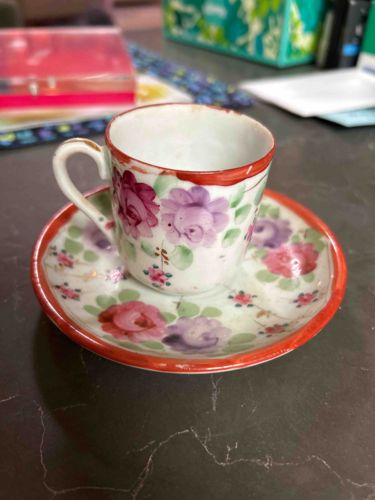
Submitted item photo
Submitted photo · May 23, 2026

User's notes

small cup and saucer vintage maybe Japanese porcelain

AI analysis below

AI appraisal

AI analysis & estimate

AI-Generated · Verify before acting

Everything below is generated by AI for informational purposes only. AI can make mistakes — the AI may misidentify items or misattribute them (artist, maker, brand, designer, origin, era). This is not an official valuation and should not be used for insurance, sale, tax, estate, legal, or lending purposes — or any decision requiring a certified appraisal. It is not an authoritative claim about any person, brand, or rights holder — do not share or rely on it as a factual statement about a third party. Always consult qualified professionals before making financial decisions.

Note

This analysis also relies on unverified notes provided by the user, which may be incomplete or inaccurate and could affect the result.

Read the full disclaimer

AI Identification

·Not independently authenticated·Verify before acting

Vintage Japanese Hand-Painted Kutani-Style Eggshell Porcelain Demitasse Cup and Saucer

Antique and Vintage Ceramics / Japanese Export Porcelain

AI Estimated Value

·Not an official valuation·Verify before acting

$25 - $45

As of May 23, 2026

AI Item Analysis

·AI can make mistakes·Verify before acting
This is a vintage Japanese porcelain demitasse (small espresso-sized) cup and saucer set. The pieces are likely made of thin 'eggshell' porcelain, characterized by its translucent and lightweight nature. The design features a hand-painted floral motif with large, blooming cabbage roses in shades of magenta, violet, and soft pink, accented by pale green leaves. The rims of both the cup and the saucer are finished with a thick, hand-brushed iron-red (bengara) border, a hallmark of Kutani or similar Japanese export ceramic styles from the early to mid-20th century (circa 1920s-1950s). The handle is a simple 'C' shape with delicate gold-tone gilding that appears slightly worn. The paint application is somewhat rustic, suggesting it was produced for the export market as a souvenir or decorative set. Regarding condition, there is visible wear to the red rim of the cup and saucer, showing minor loss of pigment. There are small kiln specks (surface impurities) and slight pitting in the glaze, which are common for Japanese export ware of this era. No major chips or cracks are immediately visible, though the unglazed foot of the saucer shows minor shelf wear and staining consistent with age.
AI Appraisal Report

·AI can make mistakes·Verify before acting
Based on my examination of this demitasse set, I recognize it as a mid-twentieth-century Japanese export porcelain piece, likely produced during the Shōwa era (circa 1930s–1950s). The piece utilizes 'eggshell' porcelain, a technique popularized for Western markets to showcase delicate craftsmanship. The hand-painted 'Cabbage Rose' motif and characteristic iron-red (bengara) borders are consistent with Kutani-style production, though the absence of a 'Dai Nippon' or specific artisan kiln mark suggests a commercial export origin rather than an investment-grade masterwork. The condition is fair to good; the pigment loss on the rim and wear to the handle's gilding are expected for utilitarian decorative ware of this age. The 'kiln specks' noted are typical of the coal-fired kilns used during this period and do not significantly detract from value, though they confirm this was not a 'first-quality' luxury export. Market demand for mid-century Japanese ceramics currently remains steady but soft, as these items were produced in high volumes. This set is valued as a decorative collectible rather than a rare antiquity. Please note: This appraisal is based on photographic evidence. A physical inspection is required to check for 'resonance' (ringing the porcelain to detect hairline cracks not visible to the eye) and to inspect the glaze under UV light for professional restorations. To fully authenticate the specific kiln of origin, an examination of the base markings under magnification would be necessary.

Get your items appraised

Instant estimates of your treasures with AI-powered appraisals

Browse More Appraisals