Vintage Optical Trial Lens Frame
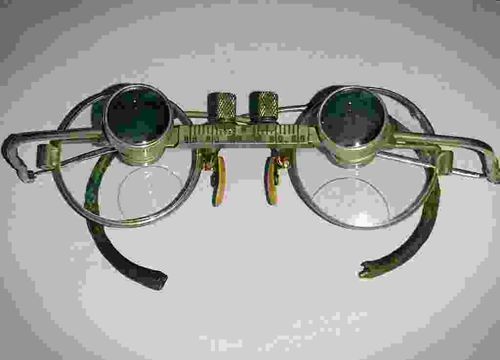
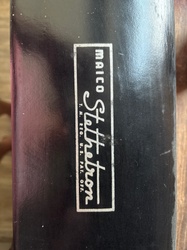
This is a vintage optical trial lens frame, an ophthalmic instrument typically used by optometrists and ophthalmologists during eye examinations to determine a patient's corrective lens prescription. It is constructed from a combination of metal (likely brass and steel) and features intricate adjustment mechanisms. The frame includes two circular lens holders designed to hold various loose trial lenses, with integrated flip-down or secondary magnifying cylinders. A notable feature is the horizontal bridge marked with a millimeter scale (Pupillary Distance ruler) and two large knurled adjustment knobs at the top center for fine-tuning the distance between the lenses. The temples are designed with wrap-around 'cable' ear pieces, a common feature in early to mid-20th-century eyewear to ensure a secure fit. The metal shows significant signs of age, including a greenish oxidation or verdigris patina, surface grime, and wear to the original plating. The nose pads appear to be made of an early plastic or celluloid and show discoloration. This piece likely dates from the early to mid-20th century (circa 1920s-1950s) and reflects the high-quality mechanical craftsmanship and industrial aesthetic of the period, though it currently requires restoration for cosmetic or professional use.
AI-Generated Appraisal Disclaimer
Estimated Value
$150 - $250
Basic Information
Category
Antique Medical and Scientific Instruments
Appraised On
April 5, 2026
Estimated Value
$150 - $250
Item Description
This is a vintage optical trial lens frame, an ophthalmic instrument typically used by optometrists and ophthalmologists during eye examinations to determine a patient's corrective lens prescription. It is constructed from a combination of metal (likely brass and steel) and features intricate adjustment mechanisms. The frame includes two circular lens holders designed to hold various loose trial lenses, with integrated flip-down or secondary magnifying cylinders. A notable feature is the horizontal bridge marked with a millimeter scale (Pupillary Distance ruler) and two large knurled adjustment knobs at the top center for fine-tuning the distance between the lenses. The temples are designed with wrap-around 'cable' ear pieces, a common feature in early to mid-20th-century eyewear to ensure a secure fit. The metal shows significant signs of age, including a greenish oxidation or verdigris patina, surface grime, and wear to the original plating. The nose pads appear to be made of an early plastic or celluloid and show discoloration. This piece likely dates from the early to mid-20th century (circa 1920s-1950s) and reflects the high-quality mechanical craftsmanship and industrial aesthetic of the period, though it currently requires restoration for cosmetic or professional use.
Get Your Items Appraised
Instant estimates of your treasures with AI-powered instant appraisals