AI identification & appraisal estimate

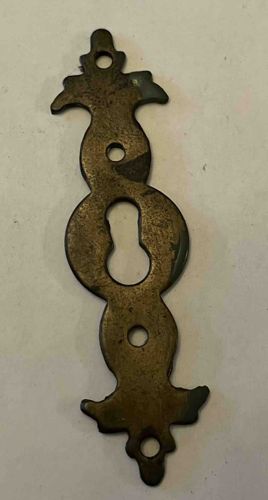
Decorative Brass Keyhole Escutcheon

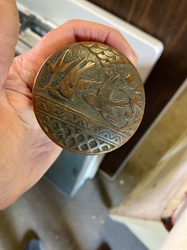
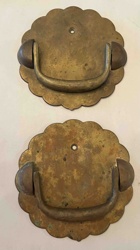
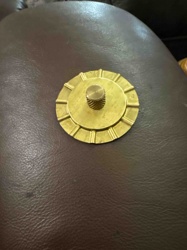
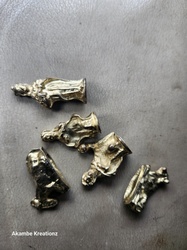
Submitted photo of Decorative Brass Keyhole Escutcheon
Photo submitted by the user — not generated by AI

User's notes

Approximately 8 cm x 2 cm

These notes were written by the person who submitted this item. Appraiser.AI has not verified them, and the AI's identification and estimate may rely on them.

AI Estimated Value

Not an official valuation

$25-45

AI estimate as of July 23, 2025 · verify with a professional before acting

AI-Generated · Verify before acting

Everything on this page is generated by AI for informational purposes only. AI can make mistakes — the AI may misidentify items or misattribute them (artist, maker, brand, designer, origin, era). This is not an official valuation and should not be used for insurance, sale, tax, estate, legal, or lending purposes — or any decision requiring a certified appraisal. It is not an authoritative claim about any person, brand, or rights holder — do not share or rely on it as a factual statement about a third party. Always consult qualified professionals before making financial decisions.

This analysis also relies on unverified notes provided by the user, which may be incomplete or inaccurate and could affect the result.

Read the full disclaimer

AI Item Analysis

This item is an antique or vintage keyhole escutcheon crafted from brass, as indicated by its characteristic dull gold to deep brown patina. It measures approximately 8 cm in length and 2 cm in width. The design is highly decorative, featuring a symmetrical 'figure-eight' or 'double-scroll' form that tapers gracefully at both ends. The central feature is a standard keyhole opening, shaped with a rounded top and a narrower, rectangular bottom section, suggesting it was designed for a traditional warded lock key. Above and below the keyhole, there are two distinct circular holes, which served as mounting points for screws to secure the escutcheon to a piece of furniture, such as a cabinet door, chest, or drawer. The edges display a subtle, undulating contour, adding to its ornamental appeal. The brass surface shows significant wear and natural oxidation, typical of aged metal, with some areas appearing darker and others exhibiting lighter, more polished brass tones due to handling or cleaning over time. There are no apparent maker's marks or signatures visible from the image. The style suggests it could date from the late 19th to early 20th century, consistent with Victorian or Edwardian furniture hardware designs. The craftsmanship indicates a stamped or cast brass piece, mass-produced but still designed with decorative intent to enhance the aesthetic of the furniture it adorned. The overall condition, while showing age, is structurally sound, with no major breaks or repairs, preserving its historical integrity.
AI Appraisal Report

Based on my visual examination of the provided image and dimensional details (8 cm x 2 cm), this Decorative Brass Keyhole Escutcheon appears to be an authentic antique or vintage brass piece. The 'figure-eight' or 'double-scroll' design, combined with the traditional keyhole shape and mounting holes, strongly aligns with late 19th to early 20th-century Victorian or Edwardian furniture hardware. The characteristic dull gold to deep brown patina, uneven wear, and oxidation are consistent with natural aging and past handling, corroborating its age claim. I assess the condition as structurally sound despite visible age, which enhances its authenticity rather than detracting significantly from it. There are no major breaks or repairs, preserving its historical integrity. In terms of market conditions, antique hardware, while not a high-value collector's market unless exceptionally rare or historically significant, maintains a steady demand among furniture restorers, antique enthusiasts, and period home decorators. Comparables for similar decorative brass escutcheons of this era typically retail in the $15-$40 range, depending on condition, design intricacy, and seller. This escutcheon's design is attractive but not exceptionally rare. Factors impacting value include its unrestored yet sound condition. A limiting factor for full authentication solely from the image is the absence of visible maker's marks, which would ideally require in-person examination to confirm. Without physical inspection, I cannot rule out modern reproductions attempting to mimic antique patinas. Full authentication would benefit from detailed physical inspection, especially examining the edges and mounting holes for signs of machining inconsistent with the period, or provenance documentation linking it to a specific piece of furniture or historical context.
Keep exploring

More hardware appraisals

Get your items appraised

Instant AI-powered appraisal estimates from a photo

Browse More Appraisals