AI estimate as of October 5, 2025 · verify with a professional before acting
AI-Generated · Verify before acting
Everything on this page is generated by AI for informational purposes only. AI can make mistakes — the AI may misidentify items or misattribute them (artist, maker, brand, designer, origin, era). This is not an official valuation and should not be used for insurance, sale, tax, estate, legal, or lending purposes — or any decision requiring a certified appraisal. It is not an authoritative claim about any person, brand, or rights holder — do not share or rely on it as a factual statement about a third party. Always consult qualified professionals before making financial decisions.
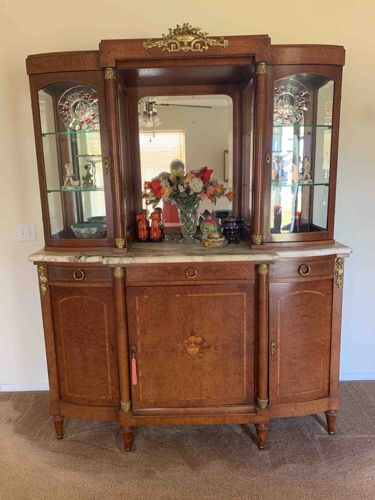
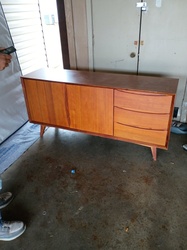
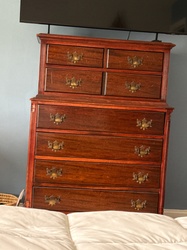
This is a large, multi-component furniture piece, likely a French Empire or Neoclassical style display cabinet or sideboard, characterized by its elegant form and rich materials. The piece is constructed primarily of wood, appearing to be a fruitwood or burled wood, possibly walnut or mahogany, given the warm, variegated grain visible across its surfaces. The overall color is a medium to reddish-brown with lighter figuring where the burl is most prominent. It features a central mirrored section flanked by two glass-fronted display cabinets on the upper portion, which sit atop a substantial lower cabinet base. The upper display cabinets each have a curved front and glass shelves, suggesting they are intended for showcasing decorative objects. They are adorned with brass pilasters and ornate brass mounts at the top and bottom. The central upper section includes a large, recessed mirror, reflecting the room, and is topped with a prominent, elaborate gilded brass or bronze ornament featuring classical motifs like acanthus leaves and a central cartel. Below the mirrored upper section, there is a substantial, off-white marble top, likely Carrara or similar, with visible grey veining, resting on the lower cabinet. The lower cabinet features a central double-door compartment with a marquetry or inlay design depicting a classical urn or basket motif surrounded by floral or foliate elements, which is a hallmark of the Empire style. This central compartment seems to be flanked by two curved-front cabinets, each with a single door. The doors on the lower cabinet have brass ring pulls, and the central door also features a tassel. Vertical brass elements resembling pilasters or columns accent the divisions between the cabinet sections. The entire piece stands on short, tapering legs, also adorned with brass mounts. The condition appears good overall, with a consistent patina suggesting age, but no apparent major damage or repairs are immediately visible, though minor wear consistent with age and use (e.g., slight scratches, fading) would be expected. The craftsmanship indicates a high-quality piece, likely from the late 19th or early 20th century.
AI Appraisal Report
Upon visual examination of the provided image, I assess this French Empire Style Display Cabinet / Sideboard. The piece presents as a high-quality example of its style, likely dating from the late 19th or early 20th century. Its construction appears to be a fine burled wood, possibly walnut or mahogany, with elegant bronze or gilded brass mounts and pilasters, and a substantial marble top. The intricate marquetry on the central lower doors further enhances its appeal and craftsmanship. Condition appears good overall, exhibiting a consistent patina and no immediately visible significant damage or repairs, although minor wear consistent with age is expected.
Authenticity, based solely on visual cues, suggests a well-executed period-revival piece. The design elements, proportions, and decorative motifs are consistent with the French Empire or Neoclassical aesthetic. However, verifying true period authenticity (original Empire era vs. later revival) from images alone is impossible. Market conditions for fine antique and period-revival furniture, especially those with both functional and display capabilities, remain stable. Comparable pieces of high-quality French Empire-style furniture with detailed brass work, marble tops, and marquetry typically command prices in this range. Demand for such elaborate and well-preserved pieces remains relatively strong among collectors and interior designers seeking classical elegance. The multi-component design, combining display and storage, adds to its versatility and desirability.
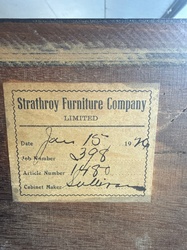
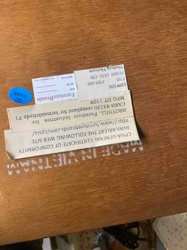
Several factors significantly impact its value: the quality of the wood and marquetry, the material and execution of the bronze mounts, the intactness of the marble, and overall condition. Limitations in authentication from images alone are considerable. Full authentication would require an in-person examination to assess joinery, internal construction methods, the age and composition of the brass/bronze, the specific type of wood and marble, and the presence of any maker's marks. Microscopic analysis of finishes and wood, as well as hands-on evaluation of structural integrity, would be crucial for a definitive assessment of age and originality.