AI Appraisal Estimate

AI-generated estimates · not official valuations

From the user

What was submitted

Photo and notes provided by the user — not generated by AI

Submitted item photo
Submitted photo · June 3, 2026

User's notes

No additional notes provided.

AI analysis below

AI appraisal

AI analysis & estimate

AI-Generated · Verify before acting

Everything below is generated by AI for informational purposes only. AI can make mistakes — the AI may misidentify items or misattribute them (artist, maker, brand, designer, origin, era). This is not an official valuation and should not be used for insurance, sale, tax, estate, legal, or lending purposes — or any decision requiring a certified appraisal. It is not an authoritative claim about any person, brand, or rights holder — do not share or rely on it as a factual statement about a third party. Always consult qualified professionals before making financial decisions.

Read the full disclaimer

AI Identification

·Not independently authenticated·Verify before acting

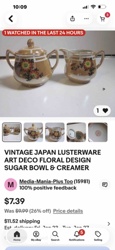
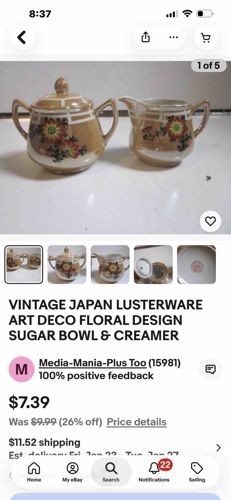
Vintage Japanese Lusterware Floral Sugar Bowl and Creamer Set

Antique and Vintage Collectible Ceramics

AI Estimated Value

·Not an official valuation·Verify before acting

$25.00 - $45.00

As of June 3, 2026

AI Item Analysis

·AI can make mistakes·Verify before acting
This is a two-piece porcelain set consisting of a double-handled lidded sugar bowl and a matching creamer pitcher. The set features a distinctive peach or apricot-toned iridescent lusterware glaze, characteristic of Japanese export porcelain from the Art Deco period, likely dating from the 1920s to the 1940s. The central decorative motif features hand-painted multi-colored floral blossoms, primarily in shades of orange, yellow, and green, surrounded by delicate black branch-like foliage. A white geometric fret or Greek key pattern encircles the top shoulder of both vessels, providing a structured contrast to the organic floral design. The sugar bowl includes a fitted lid with a spherical finial. The handles are angular and slender, reflecting the Art Deco aesthetic of the era. The base appears to have a red circular 'Made in Japan' backstamp, which was common for export items of this period. Overall, the items appear to be in good vintage condition with minor surface wear consistent with age, though some slight fading of the iridescent finish and gold-tone accents may be present upon Close inspection. The set represents a mass-produced but charming example of early 20th-century Japanese ceramic craftsmanship intended for the Western market.
AI Appraisal Report

·AI can make mistakes·Verify before acting
Based on my visual examination of this two-piece Japanese lusterware sugar and creamer set, I have identified it as a classic example of 'Made in Japan' export porcelain from the 1920s-1940s. The peach-toned iridescent glaze and hand-painted floral motifs are indicative of the mass-produced ceramics created for Western middle-class markets during the Art Deco era. The aesthetic condition appears good, with the geometric fret pattern and floral sprays retaining decent saturation. However, I note typical minor thinning of the metallic luster and potential shelf wear on the unglazed foot rings. The market for mid-century Japanese lusterware is currently saturated. These items were produced in high volume, making them highly accessible to collectors but low in rarity. Similar sets frequently sell at flea markets, antique malls, and online auctions (e.g., eBay or Etsy) within the $20 to $50 range depending on the specific pattern complexity and regional demand. The 'Made in Japan' backstamp confirms its origin but also marks it as a commercial export rather than a high-art piece from prestigious kilns like Noritake or Nippon, which would command higher premiums. Authentication via digital image has distinct limitations. While the design and mark appear consistent with period-correct manufacturing, I cannot tactilely verify the presence of hairline cracks, professional restorations, or the exact weight/translucency of the porcelain body. A full authentication would require an in-person inspection under UV light to check for hidden repairs and a physical assessment of the glaze’s 'oil-slick' depth. No further scientific testing is recommended given the item's established market value.

Get your items appraised

Instant estimates of your treasures with AI-powered appraisals

Browse More Appraisals