AI estimate as of October 23, 2025 · verify with a professional before acting
AI-Generated · Verify before acting
Everything on this page is generated by AI for informational purposes only. AI can make mistakes — the AI may misidentify items or misattribute them (artist, maker, brand, designer, origin, era). This is not an official valuation and should not be used for insurance, sale, tax, estate, legal, or lending purposes — or any decision requiring a certified appraisal. It is not an authoritative claim about any person, brand, or rights holder — do not share or rely on it as a factual statement about a third party. Always consult qualified professionals before making financial decisions.
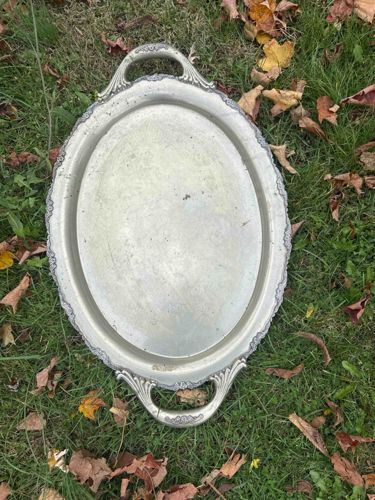
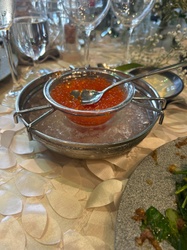
This is an oval-shaped serving tray seemingly made from a silver-tone metal, possibly silverplate, pewter, or aluminum, judging by its muted, somewhat tarnished luster. The tray features an ornate, scalloped border around its entire perimeter, which is further embellished with a delicate repoussé or stamped design depicting scrollwork and floral motifs, particularly noticeable on the edges and extending onto the handles. The surface of the tray's interior is largely plain and flat, showing signs of wear, including minor scratches, scuffs, and possibly some pitting or discoloration consistent with age and use. There are two robust, curved handles on either end, integrated into the overall design with similar ornate detailing at their bases where they join the tray's rim. These handles are hollow-backed or cast with a decorative face, providing both functionality and aesthetic appeal. The overall condition suggests that it is a vintage piece, likely from the mid-20th century, with a desirable aged patina rather than a pristine, highly polished finish. No specific maker's marks or signatures are visible from the provided image, but the quality of the decorative work suggests a commercially produced item from a period when such trays were common for entertaining. The construction appears to be machine-stamped for the decorative elements, indicating mass production rather than bespoke craftsmanship. The item exhibits good structural integrity, with no apparent major damage such as cracks or significant dents, though surface wear is evident and adds to its aged character.
AI Appraisal Report
I've examined the provided image of this Oval Silver-Tone Serving Tray with Handles. Based on the visual evidence, the tray presents as a vintage piece, likely silverplate, pewter, or a similar alloy, given its muted luster and tarnishing. The condition, characterized by surface wear such as scratches, scuffs, and discoloration on the flat interior, is consistent with regular use over decades. The ornate, machine-stamped scalloped border with scroll and floral motifs, along with the integrated decorative handles, indicates mass production common in the mid-20th century for serving wares. Structurally, it appears sound with no major dents or cracks visible, which is a positive factor. Authenticity as a period piece seems reasonable, but without maker's marks, a precise attribution is impossible. The lack of a high silver content, implied by the likely material, places it outside the realm of valuable antique silver.
In terms of market conditions, items like this fall into the decorative vintage serveware category. There's a steady, though not exceptionally high, demand for such pieces for home decor or occasional use. Comparables in this condition and presumed material typically sell in the $40-$75 range. While it possesses an attractive aged patina, its mass-produced nature and the absence of sterling silver or a prominent maker’s mark limit its rarity and, consequently, its value. Factors impacting value negatively include the non-precious metal composition and common design.
It is crucial to note that this assessment is based solely on visual inspection of images. For full authentication, I would need a physical examination to ascertain the exact metal composition (e.g., silverplate vs. pewter), search for any hidden hallmarks, and better evaluate the extent of surface damage and restoration needs. XRF testing could confirm metal content accurately. Provenance documentation would also add significant weight to its historical context and authenticity.