AI Appraisal Estimate

AI-generated estimates · not official valuations

From the user

What was submitted

Photo and notes provided by the user — not generated by AI

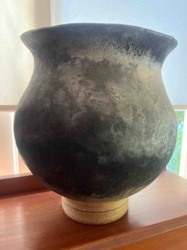
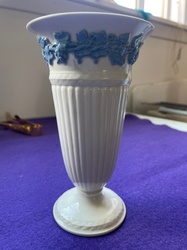
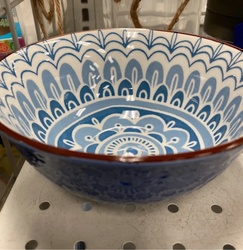
Submitted item photo
Submitted photo · May 19, 2026

User's notes

No additional notes provided.

AI analysis below

AI appraisal

AI analysis & estimate

AI-Generated · Verify before acting

Everything below is generated by AI for informational purposes only. AI can make mistakes — the AI may misidentify items or misattribute them (artist, maker, brand, designer, origin, era). This is not an official valuation and should not be used for insurance, sale, tax, estate, legal, or lending purposes — or any decision requiring a certified appraisal. It is not an authoritative claim about any person, brand, or rights holder — do not share or rely on it as a factual statement about a third party. Always consult qualified professionals before making financial decisions.

Read the full disclaimer

AI Identification

·Not independently authenticated·Verify before acting

Wedgwood Etruria & Barlaston Backstamp on Creamware

Fine Ceramics and Pottery

AI Estimated Value

·Not an official valuation·Verify before acting

$45 - $85

As of May 19, 2026

AI Item Analysis

·AI can make mistakes·Verify before acting
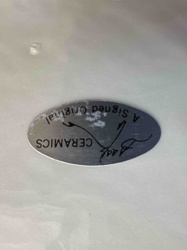
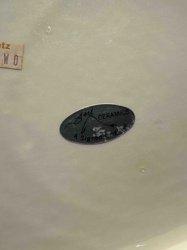
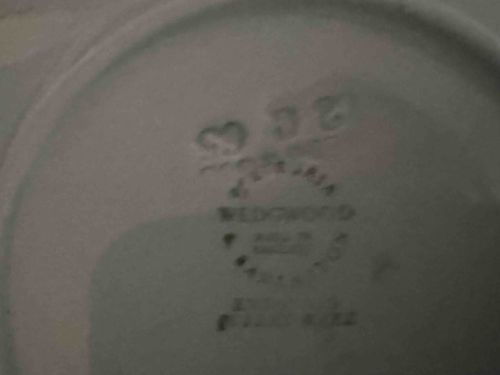
This image displays the underside of a ceramic piece, specifically featuring the maker's marks for Wedgwood. The piece appears to be made of cream-colored earthenware, often referred to as 'Queen's Ware.' The surface shows a slightly matte or eggshell finish typical of mid-20th-century ivory bodies. The markings are diverse: there is a circular printed backstamp that reads 'ETRURIA & BARLASTON' surrounding the 'WEDGWOOD' name and 'MADE IN ENGLAND,' which indicates a production date likely between 1940 and the early 1960s. Above this circular mark, there are impressed codes, including a sequence that appears to be '3 J 52' or similar; historical Wedgwood impressed marks often utilize three-letter codes where the last letter represents the year of manufacture (e.g., 'J' for 1907 or later cycles). There is also a distinct heart-shaped impressed mark and a separate 'MADE IN ENGLAND' stamp. The visible section shows a smooth foot ring and a clean surface, though some minor kiln stilt marks or surface irregularities are visible. The craftsmanship reflects the high industrial standards of the Barlaston factory, which was established to modernize production while maintaining the quality associated with the original Etruria site.
AI Appraisal Report

·AI can make mistakes·Verify before acting
Based on the provided imagery of the underside of this creamware vessel, I have conducted a visual appraisal of the piece. The backstamp, featuring the circular 'ETRURIA & BARLASTON' mark alongside the stamped 'MADE IN ENGLAND' and impressed date codes, confirms this as a mid-20th-century production from the Wedgwood Barlaston facility. The '52' in the impressed sequence suggests a manufacture year of roughly 1952, a period when Wedgwood was transitioning operations fully from the historic Etruria site. The ivory 'Queen's Ware' body appears to be in excellent condition with no visible crazing, chips, or staining, though minor kiln stilt marks are noted as part of the standard manufacturing process. The market for mid-century Wedgwood Queen's Ware is currently liquid but saturated. While historically significant, these pieces were mass-produced to high industrial standards, making them common in today's secondary market. Value is heavily dependent on the specific form of the vessel—a standard dinner plate or simple bowl sits at the lower end, while a large centerpiece, lidded tureen, or embossed 'Windsor' pattern piece may command the higher end of the estimate. Limitations: This appraisal is based solely on a photograph of the maker's marks. A physical inspection is required to check for hidden restorations (visible under UV light), tactile glaze consistency, and structural resonance. Full authentication would require verifying the specific pattern on the obverse side and cross-referencing provenance if the item were part of a notable service. Scientific testing is generally not warranted for mid-century earthenware, but a physical examination for rim nicks and 'flea bites' is essential for final valuation.

Get your items appraised

Instant estimates of your treasures with AI-powered appraisals

Browse More Appraisals