AI identification & appraisal estimate

Clark and Coombs V30 14K RPG Sweetheart Ring

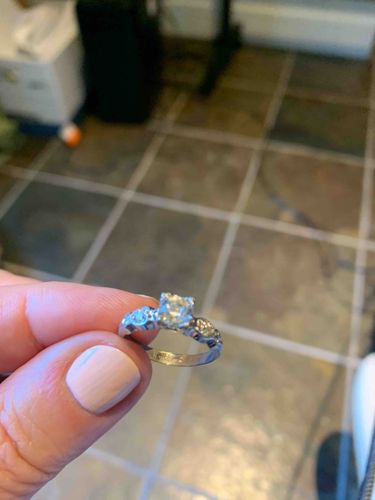
Submitted photo of Clark and Coombs V30 14K RPG Sweetheart Ring
Photo submitted by the user — not generated by AI

User's notes

Clark and Coombs V30 14K RPG sweetheart ring

These notes were written by the person who submitted this item. Appraiser.AI has not verified them, and the AI's identification and estimate may rely on them.

AI Estimated Value

Not an official valuation

$40-$65

AI estimate as of August 9, 2025 · verify with a professional before acting

AI-Generated · Verify before acting

Everything on this page is generated by AI for informational purposes only. AI can make mistakes — the AI may misidentify items or misattribute them (artist, maker, brand, designer, origin, era). This is not an official valuation and should not be used for insurance, sale, tax, estate, legal, or lending purposes — or any decision requiring a certified appraisal. It is not an authoritative claim about any person, brand, or rights holder — do not share or rely on it as a factual statement about a third party. Always consult qualified professionals before making financial decisions.

This analysis also relies on unverified notes provided by the user, which may be incomplete or inaccurate and could affect the result.

Read the full disclaimer

AI Item Analysis

The item is a Clark and Coombs V30 14K RPG sweetheart ring, likely dating from the mid-20th century, possibly around the 1940s given its period-correct design often associated with sweetheart jewelry from WWII. It features a prominent clear, round-cut central stone, possibly a diamond or a simulant like white sapphire or cubic zirconia, held securely in what appears to be a four-prong setting. The ring's band is a silver-toned metal, identified as 14K RPG (presumably Rolled Gold Plate) from the context. The shoulders of the ring are adorned with decorative scrollwork or filigree leading up to the central stone setting, indicating a vintage or antique aesthetic. Two smaller, clear accent stones appear to be set on each side of the main stone, integrated into the decorative elements, though their exact cut and clarity are difficult to ascertain from the image. The ring exhibits some signs of wear consistent with its age, such as potential minor scratching or dulling of the metal, and possibly some patina in the recesses of the decorative elements, which is typical for vintage jewelry. The craftsmanship suggests a mass-produced item from a reputable manufacturer for the period, Clark and Coombs, known for producing a range of jewelry including sweetheart pieces. The overall impression is one of a beloved piece with historical charm.
AI Appraisal Report

Upon visual examination of the provided images and details, this item is identified as a Clark and Coombs V30 Sweetheart Ring, consistent in design with pieces from the World War II era (circa 1940s). The ring appears authentic to its manufacturer and period, exhibiting typical mid-century mass-production craftsmanship. The condition is fair to good for its age, with expected signs of wear such as minor surface scratches and potential patina within the scrollwork. The central stone and accents are likely period-appropriate simulants, such as paste, white sapphire, or early cubic zirconia, rather than diamonds, given the 14K RPG (Rolled Gold Plate) composition of the band. Rolled gold plate, while durable for its time, contains only a thin layer of gold and significantly impacts the intrinsic value compared to solid gold. The market for WWII-era sweetheart jewelry is driven primarily by sentimental and historical collector interest rather than material value. Similar Clark and Coombs rolled gold rings typically trade in a modest range. The primary factors limiting its value are the base metal (gold plate over a non-precious metal) and the use of simulated stones. While its historical association as a 'sweetheart' ring adds appeal, it is not considered rare. It is crucial to note the limitations of an appraisal based on images alone. A definitive authentication and valuation would require in-person examination to test the stones for composition (diamond vs. simulant) and to verify the metal content and plating thickness. Without physical inspection, the identity of the stones cannot be confirmed, and this appraisal assumes they are non-precious simulants.

Keep exploring

More jewelry appraisals

Get your items appraised

Instant AI-powered appraisal estimates from a photo

Browse More Appraisals