AI estimate as of August 1, 2026 · verify with a professional before acting
AI-Generated · Verify before acting
Everything on this page is generated by AI for informational purposes only. AI can make mistakes — the AI may misidentify items or misattribute them (artist, maker, brand, designer, origin, era). This is not an official valuation and should not be used for insurance, sale, tax, estate, legal, or lending purposes — or any decision requiring a certified appraisal. It is not an authoritative claim about any person, brand, or rights holder — do not share or rely on it as a factual statement about a third party. Always consult qualified professionals before making financial decisions.
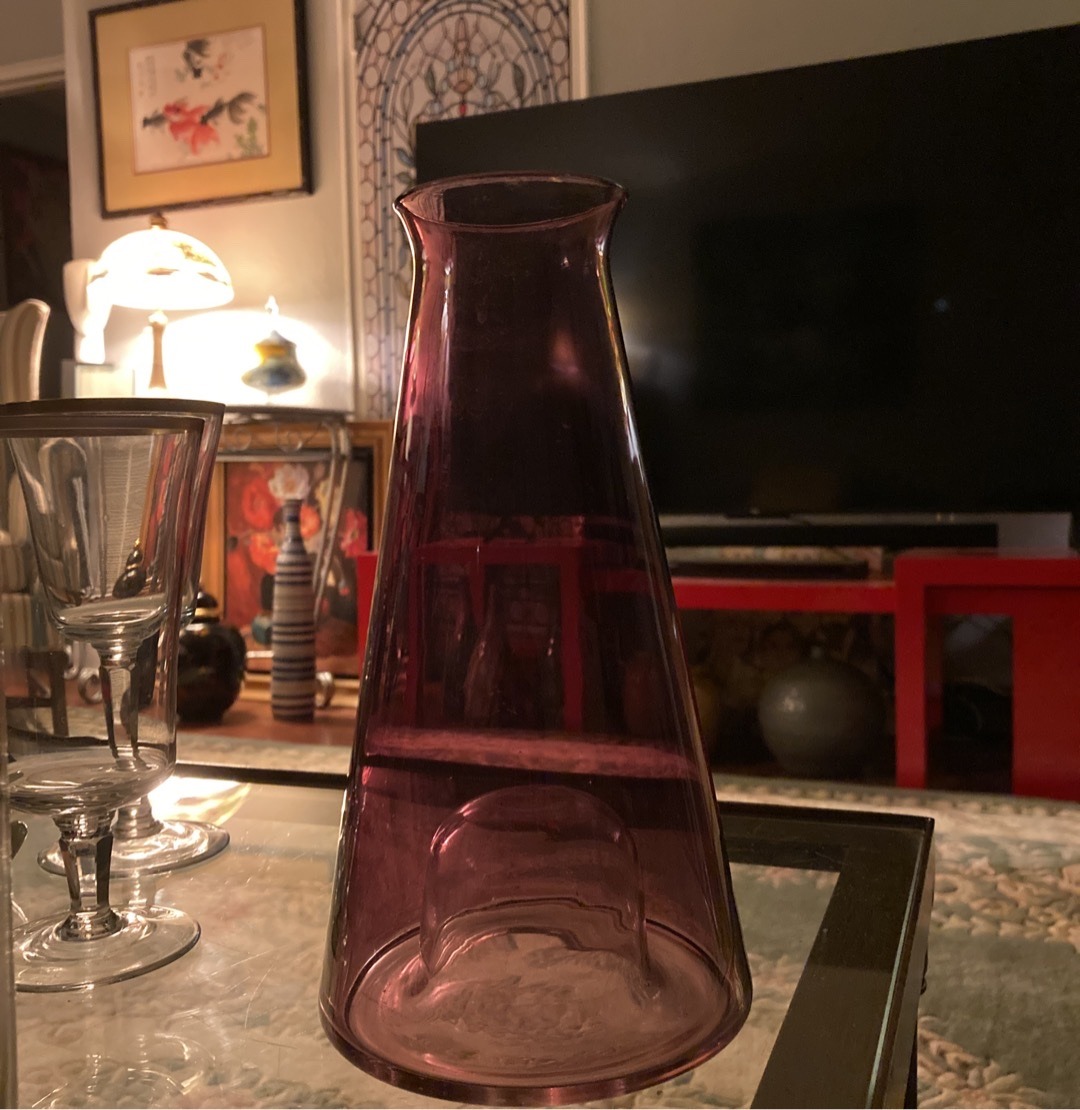
This is a tall, slender glass decanter or carafe rendered in a rich translucent purple or amethyst hue. The vessel features a distinctly tapered, conical body that widens toward a flat, circular base. A prominent, upward-curving dome feature is integrated directly into the interior bottom center of the vessel, rising from the base like an inverted well or punt, which is a unique structural and optical element. The neck is relatively narrow with a slight flare at the rim, designed for pouring. The piece exhibits a smooth, polished finish consistent with blown or molded glass production techniques. There are no visibly discernible maker's marks, signatures, or stamps evident in the provided image. The overall aesthetic suggests a mid-to-late 20th-century origin, potentially aligning with modernist or contemporary Scandinavian or Murano glass design traditions, though this remains entirely unverified. The physical condition appears generally clean and intact, showing no obvious major chips, cracks, or surface abrasions upon casual visual inspection, although a definitive assessment of condition is impossible from a photograph alone. The identification relies purely on the visible form, color, and silhouette of the glassware.
AI Appraisal Report
Based on what I can see in the provided image, this tall, slender decanter features a striking translucent purple hue, a tapered conical body, and an intriguing upward-curving dome feature at the interior base. I note the absence of any visible maker's marks, signatures, or stamps. The overall aesthetic suggests a mid-to-late 20th-century origin, potentially aligning with modernist or contemporary Scandinavian or Murano glass design traditions, though this remains an unverified hypothesis. I cannot verify the exact maker, glasshouse, production date, or material composition from a photograph alone, and I would need physical inspection to confirm these details. The estimated value range of $300 to $500 assumes the attribution to mid-century modernist glass design is correct. This valuation reflects typical market behavior for decorative art glass of this type and visual appeal. However, condition is a major factor, and any hidden chips, cracks, or severe surface abrasions not visible in the image would negatively impact the value. Furthermore, if this piece turns out to be a modern reproduction, a generic commercial replica, or simply made 'in the style of' without the quality of mid-century studio production, the market value would likely drop significantly to the $75-$150 range. To establish authenticity and a more precise value, an in-person examination by a qualified glass specialist, physical analysis of the glass weight and pontil mark, and research into potential matching forms in design archives would be required.