AI estimate as of August 28, 2025 · verify with a professional before acting
AI-Generated · Verify before acting
Everything on this page is generated by AI for informational purposes only. AI can make mistakes — the AI may misidentify items or misattribute them (artist, maker, brand, designer, origin, era). This is not an official valuation and should not be used for insurance, sale, tax, estate, legal, or lending purposes — or any decision requiring a certified appraisal. It is not an authoritative claim about any person, brand, or rights holder — do not share or rely on it as a factual statement about a third party. Always consult qualified professionals before making financial decisions.
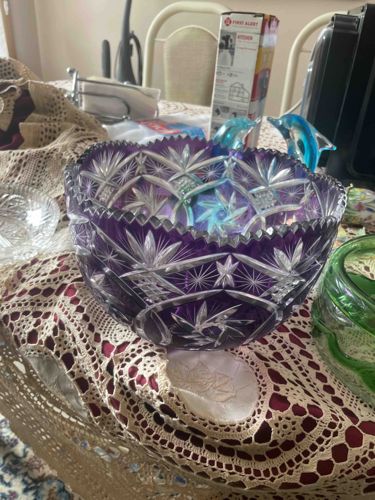
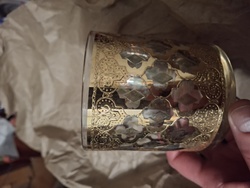
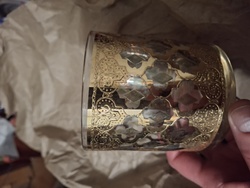
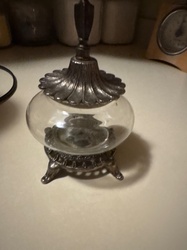
This is a substantial cut glass bowl, likely made of crystal, distinguished by its deep amethyst or royal purple color. The bowl features intricate, hand-cut patterns, including arrays of starbursts, diamond facets, and fan-shaped designs, which are characteristic of traditional brilliant cut glass. The brilliant cut facets are sharply defined and catch the light, creating a dazzling effect, especially where the clear-cut patterns contrast with the vibrant purple glass. The rim of the bowl is also cut with a serrated or scalloped edge, adding to its decorative appeal. The interior appears to have an iridescent or opalescent finish, which reflects various colors of light, particularly blues and greens, through the purple glass, suggesting a possible 'carnival glass' treatment or simply the effect of light bouncing off the internal surface and the surrounding environment. There are no visible chips, cracks, or significant abrasions on the exterior, indicating good to excellent condition for its likely age. The quality of the cuts suggests skilled craftsmanship. While no specific maker's marks are visible in the provided image, the style points to a Victorian or Edwardian era production, or a later reproduction employing similar techniques, possibly late 19th to early 20th century. The heavy weight suggested by its density and the sharpness of the cuts are indicators of quality. The bowl appears to be a medium-sized serving or decorative bowl, suitable for display as a centerpiece or functional use. Its unique color and detailed cutting make it a notable piece of glassware.
AI Appraisal Report
Upon examining the provided image of this amethyst/purple cut glass bowl, I observe an item of considerable decorative appeal. The condition appears to be excellent, with no visible chips, cracks, or significant abrasions. The sharpness of the brilliant cuts, clarity of the patterns (starbursts, diamonds, fans), and the serrated rim all suggest high-quality craftsmanship, likely a testament to its age. The deep purple hue, combined with the iridescent interior, creates a striking visual effect, indicative of possible 'carnival glass' characteristics or sophisticated light reflection from the internal surface. I agree with the assessment that the weight and cut quality point to a well-made piece.
From a market perspective, purple brilliant cut glass, especially in this substantial form, holds a niche but steady demand among collectors of antique glassware. Comparables typically include similarly sized Victorian or Edwardian era cut glass pieces, with colored examples often commanding a premium over clear ones. The unique color and detailed patterns enhance its rarity. While amethyst cut glass is less common than clear, it's not exceedingly rare, positioning it as a desirable rather than an ultra-rare collectible. Factors positively impacting value include its excellent condition, substantial size, and intricate cutting. Its potential age contributes significantly, as older, well-preserved pieces are generally more valued.
Limitations in authenticity verification from an image alone are significant. While the style strongly suggests a late 19th to early 20th-century production, without physical examination, I cannot definitively confirm its age, a crucial factor for authenticity. An in-person examination would allow for tactile assessment of weight, detailed inspection for subtle damage not visible in images, examination of the glass's composition (e.g., lead content for crystal), and the presence of any unlisted maker's marks or pontil marks. Provenance documentation, if available, would provide invaluable historical context and support authenticity. Scientific testing, such as spectroscopy, could confirm glass composition and approximate age more precisely.