AI estimate as of October 17, 2025 · verify with a professional before acting
AI-Generated · Verify before acting
Everything on this page is generated by AI for informational purposes only. AI can make mistakes — the AI may misidentify items or misattribute them (artist, maker, brand, designer, origin, era). This is not an official valuation and should not be used for insurance, sale, tax, estate, legal, or lending purposes — or any decision requiring a certified appraisal. It is not an authoritative claim about any person, brand, or rights holder — do not share or rely on it as a factual statement about a third party. Always consult qualified professionals before making financial decisions.
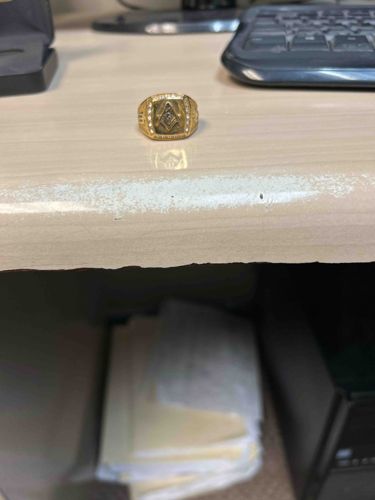
This is a gold-toned men's signet ring, likely made of gold or gold-plated metal, featuring a prominent Masonic Square and Compasses emblem on its face. The emblem is clearly depicted with the 'G' in the center, and it appears to be etched or raised with a darkened background to enhance visibility. The ring's face is square or slightly rectangular with rounded corners, and it is framed by several small, clear stones, possibly diamonds or cubic zirconia, set into the metal. There are three such stones on each side of the central emblem, totaling six stones on the face. Additionally, the shoulders of the ring, leading from the face to the band, are also embellished with rows of these small, clear stones – approximately six to seven stones per shoulder, arranged in a channel or pave setting in a stepped design. The overall color is a rich gold, suggesting a higher carate gold or a well-maintained gold plating. The ring exhibits some signs of wear consistent with regular use, such as minor surface scratches and possibly some slight loss of definition in the finer details, especially visible on the high points of the band and bezel, however, it appears to be in good overall condition with all stones present and intact. The design is classic for Masonic jewelry, indicating an estimated age from the mid-20th century to contemporary. The craftsmanship appears solid, with crisp detailing on the emblem and well-set stones, suggesting a quality piece of jewelry that serves both as a symbolic item and a decorative accessory. The ring's size cannot be determined from the image but appears to be a standard men's size. No specific manufacturer's marks or hallmarks are visible in the provided image.
AI Appraisal Report
Based on my visual examination of the provided image, this men's Masonic signet ring presents as a quality piece. The gold-toned metal, likely 10K or 14K gold, or a high-quality gold plating, shows a rich color. The central Square and Compasses emblem with the 'G' is crisply defined, indicating good craftsmanship. All small, clear stones (three accenting the face on each side of the emblem, and approximately 6-7 per shoulder) appear present and intact, set in a manner suggesting either diamonds or cubic zirconia. While the setting style is good, without testing, definitive identification of these stones is impossible; they significantly impact value if actual diamonds. The ring exhibits wear consistent with regular use, such as minor surface scratches, but remains in good overall condition. This style of Masonic jewelry is classic, placing its likely age from the mid-20th century to contemporary. Market demand for Masonic jewelry remains steady among collectors and members, but it is not rare, with many similar variations available. The primary value drivers are the metal purity, the authenticity of the stones, and the overall condition. My valuation assumes mid-range gold content (e.g., 10K or 14K) and that the stones are cubic zirconia or very small, low-grade diamonds. To fully authenticate the item, particularly the metal composition and the identity and quality of the stones, an in-person examination, including hallmark verification, specific gravity testing for the metal, and gemological testing, would be required. This would also allow for a precise weight and size measurement, further refining the appraisal.