AI estimate as of August 27, 2025 · verify with a professional before acting
AI-Generated · Verify before acting
Everything on this page is generated by AI for informational purposes only. AI can make mistakes — the AI may misidentify items or misattribute them (artist, maker, brand, designer, origin, era). This is not an official valuation and should not be used for insurance, sale, tax, estate, legal, or lending purposes — or any decision requiring a certified appraisal. It is not an authoritative claim about any person, brand, or rights holder — do not share or rely on it as a factual statement about a third party. Always consult qualified professionals before making financial decisions.
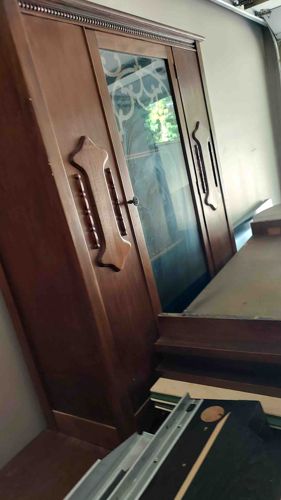
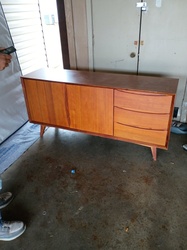
This item is a wooden display cabinet or china hutch, characterized by its medium-brown wood finish. The top features a decorative dentil molding and a narrow, fluted trim along the upper edge, adding a touch of classical detail. The cabinet appears to have at least two vertical sections; the central section is a prominent glass-front door, showcasing an ornate, possibly etched or leaded, glass pattern. This pattern suggests a design aesthetic common in the mid-20th century or earlier, leaning towards traditional or Colonial Revival styles. The left door, which appears to be solid wood, features a unique, carved wooden pullhandle with spool-turned elements, providing a tactile and decorative grip. A dark, possibly metal, knob or keyhole is visible on the central glass door. The right section, also solid wood, has a simpler, vertically oriented pull handle with a more streamlined carved design. The overall construction appears sturdy, likely made of solid wood or high-quality veneer over a wood core. No major visible damage like cracks or significant gouges are immediately apparent, though minor surface wear consistent with age and use, such as scuffs or light scratches, may be present but are not clearly discernible from the image. The patina of the wood suggests a piece that has been well-maintained over time. The craftsmanship, particularly the detailed trim and carved handles, indicates a period where attention to decorative elements was valued. Its robust build suggests it was designed for long-term use.
AI Appraisal Report
Upon examining the provided image of this wooden display cabinet/china hutch, I note its medium-brown wood finish, which appears well-maintained. The decorative dentil molding and fluted trim suggest a traditional or Colonial Revival aesthetic, likely mid-20th century or earlier. The prominent glass-front door with its ornate, etched or leaded pattern is a key visual feature, indicating craftsmanship. The unique, carved spool-turned pull handle on the left, and the more streamlined carved handle on the right, further point to a period where decorative details were valued. The overall construction seems robust, consistent with solid wood or high-quality veneer.
Based on visual evidence alone, the condition appears good, with no immediately discernible major damage. Minor surface wear, typical of age and use, is highly probable but not evident from the image. Its authenticity as a period piece of furniture is supported by the design elements and craftsmanship.
In terms of market conditions, traditional wooden display cabinets like this face a somewhat fluctuating demand. While less popular than mid-century modern pieces, quality items with distinctive features, like the glass pattern and carved handles, still hold value. Comparables would include similar hutches from reputable manufacturers of the era. Demand isn't high rarity, but the specific design details contribute to its uniqueness. Factors impacting value include the wood species (undeterminable from image), the actual condition of the glass and internal shelving, and whether it’s a single piece or separable upper/lower sections.
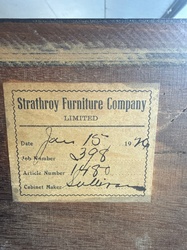
It is crucial to note that this is an appraisal based solely on visual examination of an image. Full authentication would require an in-person examination to assess the wood type, construction methods (e.g., joinery), and to verify the condition of all surfaces, hardware, and structural integrity. Provenance documentation, such as original sales receipts or family history, would further solidify its authenticity and potentially its value. Scientific testing, like wood dating, would be an extreme measure typically reserved for high-value or disputed pieces.