Lower Paleolithic Acheulean Chert Bifacial Scraper Tool
Archaeological Artifacts - Lithics

Lower Paleolithic Acheulean Chert Bifacial Scraper Tool

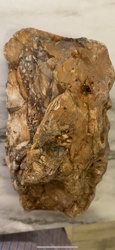
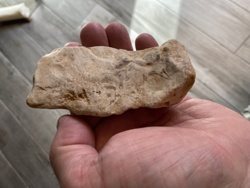
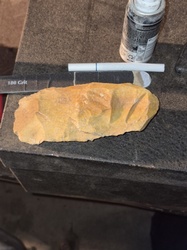
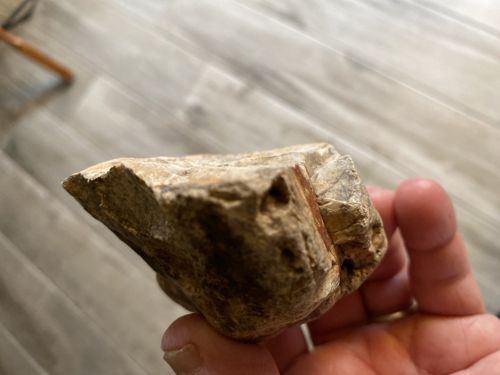
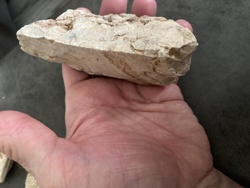
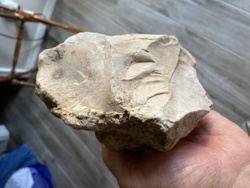
This is a prehistoric lithic artifact discovered in Guthrie, Oklahoma, identified as a chert bifacial tool, likely functioning as a hand axe or scraper. Measuring approximately 3" x 3", the object is crafted from a tan to light-brown cryptocrystalline chert. The construction exhibits characteristic percussion flaking, creating a bifacial edge where flakes were removed from both sides to sharpen the tool's perimeter. The color variation includes earthy ochre tones with visible streaks of darker iron oxide or mineral staining, indicative of prolonged exposure to soil elements. The tool's morphology features a broad, thick base intended for a palm grip and a tapering edge designed for percussion or scraping tasks. Surface inspection reveals a heavy patina and significant desert varnish, suggesting substantial age. There is evidence of edge-wear consistent with prehistoric utility, though some irregular fractures may be attributed to geologic tumble or modern agricultural equipment strikes. While the user identifies this as Acheulean, it is important to note that true Acheulean technology is traditionally associated with Afro-Eurasian Homo erectus; in a North American context, such a tool would typically be classified as a Paleo-Indian or Archaic period preform or bifacial scraper, reflecting high-quality lithic reduction craftsmanship from local Oklahoma raw materials. The item shows no modern signatures, as it is a hand-knapped tool from the Lower to Middle Paleolithic tradition found in the region.

Estimated Value

$40.00 - $75.00

Basic Information

Category

Archaeological Artifacts - Lithics

Appraised On

March 1, 2026

Estimated Value

$40.00 - $75.00

Additional Details Provided By Owner

User Provided Information

Lower Paleolithic Acheulean chert. bi face hand axe scraper tool found in Guthrie OK measuring 3" x 3"

Item Description

This is a prehistoric lithic artifact discovered in Guthrie, Oklahoma, identified as a chert bifacial tool, likely functioning as a hand axe or scraper. Measuring approximately 3" x 3", the object is crafted from a tan to light-brown cryptocrystalline chert. The construction exhibits characteristic percussion flaking, creating a bifacial edge where flakes were removed from both sides to sharpen the tool's perimeter. The color variation includes earthy ochre tones with visible streaks of darker iron oxide or mineral staining, indicative of prolonged exposure to soil elements. The tool's morphology features a broad, thick base intended for a palm grip and a tapering edge designed for percussion or scraping tasks. Surface inspection reveals a heavy patina and significant desert varnish, suggesting substantial age. There is evidence of edge-wear consistent with prehistoric utility, though some irregular fractures may be attributed to geologic tumble or modern agricultural equipment strikes. While the user identifies this as Acheulean, it is important to note that true Acheulean technology is traditionally associated with Afro-Eurasian Homo erectus; in a North American context, such a tool would typically be classified as a Paleo-Indian or Archaic period preform or bifacial scraper, reflecting high-quality lithic reduction craftsmanship from local Oklahoma raw materials. The item shows no modern signatures, as it is a hand-knapped tool from the Lower to Middle Paleolithic tradition found in the region.
Get Your Items Appraised

Instant estimates of your treasures with AI-powered instant appraisals

Browse More Appraisals