AI identification & appraisal estimate

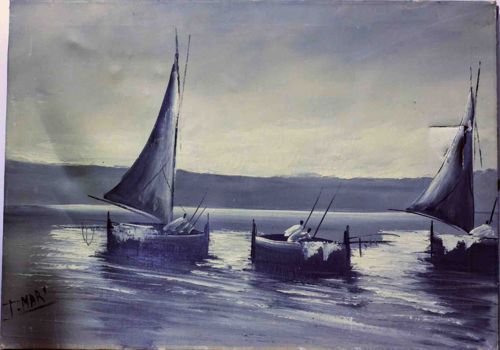
Late 20th Century Mediterranean Seascape Painting

Submitted photo of Late 20th Century Mediterranean Seascape Painting
Photo submitted by the user — not generated by AI

User's notes

Unknown artist, untitled artwork

These notes were written by the person who submitted this item. Appraiser.AI has not verified them, and the AI's identification and estimate may rely on them.

AI Estimated Value

Not an official valuation

$150 - $250

AI estimate as of March 9, 2026 · verify with a professional before acting

AI-Generated · Verify before acting

Everything on this page is generated by AI for informational purposes only. AI can make mistakes — the AI may misidentify items or misattribute them (artist, maker, brand, designer, origin, era). This is not an official valuation and should not be used for insurance, sale, tax, estate, legal, or lending purposes — or any decision requiring a certified appraisal. It is not an authoritative claim about any person, brand, or rights holder — do not share or rely on it as a factual statement about a third party. Always consult qualified professionals before making financial decisions.

This analysis also relies on unverified notes provided by the user, which may be incomplete or inaccurate and could affect the result.

Read the full disclaimer

AI Item Analysis

This item is an original oil or acrylic painting on canvas or board, depicting a trio of traditional lateen-rigged fishing boats on calm waters. The composition employs a muted, atmospheric palette dominated by cool tones of grey, lavender, and slate blue, with creamy highlights representing the sky's reflection and sea foam. The style is impressionistic, using broad, confident brushstrokes to suggest movement and form rather than fine detail. Noteworthy features include the prominent vertical masts and curved triangular sails of the three vessels, which are shown in a staggered formation across the horizon line. In the lower-left corner, there is a distinct signature that appears to read 'J. MART' or 'I. MAR' with a flourish. The condition of the piece shows visible age and wear; there is a significant surface indentation or vertical crease on the left side of the canvas, along with minor abrasions and potential craquelure in the thicker paint layers. There are also some small white spots that could indicate paint loss or surface debris. The work likely dates from the mid-to-late 20th century and reflects a mid-century decorative art style, often associated with Mediterranean or coastal European motifs. The craftsmanship shows a skilled handling of light and shadow, typical of commercial gallery art from that period.


AI Appraisal Report

Upon examination of the digital images, I have assessed this mid-to-late 20th-century seascape. The work depicts a traditional Mediterranean maritime scene, characterized by decorative impressionistic brushwork and a sophisticated, though muted, color palette. The signature, appearing to be 'J. MART' or similar, suggests a commercial or 'gallery-style' artist active during the postwar era, likely producing works for the interior design or tourism markets. The condition presents significant challenges to the valuation. I observed a prominent vertical crease or indentation on the left side of the canvas, which suggests structural stress to the support. Combined with the visible abrasions and potential paint loss (the white spotting), the piece requires professional conservation to stabilize the surface. In the current market, decorative works of this period by unidentified artists rely heavily on aesthetic appeal and condition; the existing damage significantly detracts from the 'ready-to-hang' retail value. Market demand for mid-century Mediterranean scenes remains stable but is currently saturated with similar works. Comparables for unsigned or minor-listed artists in this style typically sell at auction or secondary markets within the low hundreds. Limitations: This appraisal is based solely on digital imagery. Full authentication and a more precise valuation would require an in-person inspection to determine if the medium is truly oil or a textured acrylic, to examine the reverse for gallery labels or provenance, and to use UV light to detect hidden repairs. Scientific testing of the pigment and canvas fibers would be necessary to confirm an exact date of manufacture. Without provenance documentation or a confirmed artist biography, the work is valued as a decorative object rather than a fine art investment.

Keep exploring

More fine art - paintings appraisals

Get your items appraised

Instant AI-powered appraisal estimates from a photo

Browse More Appraisals