These notes were written by the person who submitted this item. Appraiser.AI has not verified them, and the AI's identification and estimate may rely on them.
AI Estimated Value
Not an official valuation
$250-500
AI estimate as of September 26, 2025 · verify with a professional before acting
AI-Generated · Verify before acting
Everything on this page is generated by AI for informational purposes only. AI can make mistakes — the AI may misidentify items or misattribute them (artist, maker, brand, designer, origin, era). This is not an official valuation and should not be used for insurance, sale, tax, estate, legal, or lending purposes — or any decision requiring a certified appraisal. It is not an authoritative claim about any person, brand, or rights holder — do not share or rely on it as a factual statement about a third party. Always consult qualified professionals before making financial decisions.
This analysis also relies on unverified notes provided by the user, which may be incomplete or inaccurate and could affect the result.
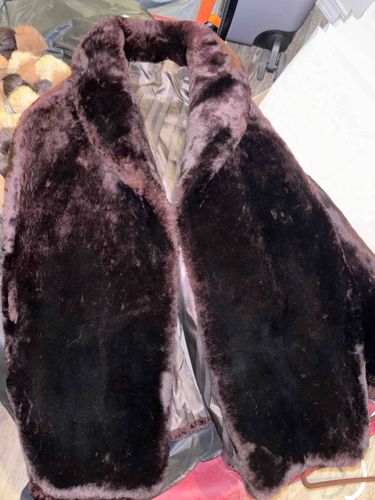
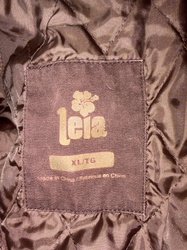
This item appears to be a vintage or antique real fur coat or a large stole, rendered in a deep, rich shade of dark brown, almost black in some lighting. The fur itself has a lustrous sheen, indicating it is likely a high-quality animal fur, possibly mink, sable, or a similar luxurious pelt, although definitive identification without closer inspection is difficult. The garment features a wide, rolled collar that extends into the lapels, suggesting a classic and elegant design often seen in mid-20th-century outerwear. The interior lining, partially visible, appears to be made of a complementary brown or champagne-colored satin-like fabric, possibly with a subtle striped pattern, indicating a finished and well-constructed piece. The construction seems robust, with visible stitching along the edges, suggesting careful craftsmanship in joining the fur pelts. There are no obvious signs of severe damage such as tears or bald spots, but some areas of the fur exhibit minor matting or slight variations in pile direction, which is common with age and use. The overall condition appears to be good for its presumed age, maintaining much of its original softness and fullness. The ample cut implies it was designed to provide significant warmth and a statement of luxury. Without maker's marks or size labels, its exact origin and manufacturer are indeterminable from the image alone, but the style points to an era of classic fur fashion, likely between the 1940s and 1970s. The thickness and depth of the fur suggest good insulation properties and a sense of opulence.
AI Appraisal Report
Based on my visual examination of the provided image, this dark brown real fur coat or stole presents as a vintage piece, likely dating from the mid-20th century (1940s-1970s). The deep, lustrous brown color and the substantial appearance of the fur suggest it is a high-quality animal pelt, possibly mink or a similar fine fur, though definitive species identification is impossible from an image. The wide, rolled collar and classic cut are characteristic of the era. The interior lining appears to be a complementary satin-like fabric, indicative of a well-finished garment.
The condition appears good for its presumed age. While there are no obvious tears or bald spots, minor matting and variations in pile direction are visible, which are typical signs of age and wear. This suggests responsible care over time. Authenticity as 'real fur' is supported by the visual evidence of varied fur lengths, natural luster, and how the pelts appear joined, consistent with genuine fur garments.
Market conditions for vintage real fur have seen fluctuations. While there's a niche market for quality vintage furs due to their inherent luxury and warmth, demand can be sensitive to current fashion trends and ethical considerations regarding fur. Comparables in similar good condition, without designer labels, typically range from a few hundred to several hundred dollars, depending on the fur type, size, and specific style. The current piece, lacking specific provenance or designer attribution, sits within a broader market segment.
Factors impacting value include the lack of a known maker or designer, the general vintage condition, and the general market's current stance on fur. Without physical examination, I cannot confirm the exact fur species, inspect the integrity of the pelts and seams from the interior, or assess any hidden damage, odors, or the true softness and suppleness of the leather backing beneath the fur. A hands-on inspection would allow for precise species identification, a thorough assessment of interior lining condition, and a more accurate evaluation of overall structural integrity and any scent issues. Provenance documentation, such as original receipts or appraisal documents, would also significantly enhance valuation by confirming origin and quality.