AI estimate as of October 4, 2025 · verify with a professional before acting
AI-Generated · Verify before acting
Everything on this page is generated by AI for informational purposes only. AI can make mistakes — the AI may misidentify items or misattribute them (artist, maker, brand, designer, origin, era). This is not an official valuation and should not be used for insurance, sale, tax, estate, legal, or lending purposes — or any decision requiring a certified appraisal. It is not an authoritative claim about any person, brand, or rights holder — do not share or rely on it as a factual statement about a third party. Always consult qualified professionals before making financial decisions.
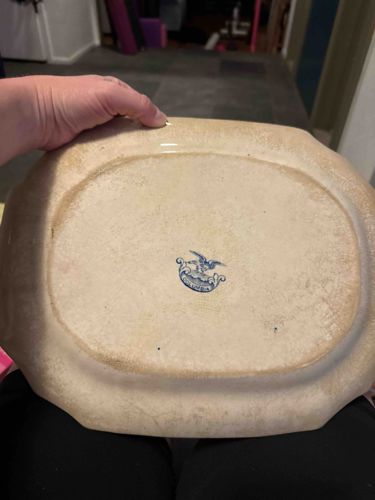
This item is a vintage rectangular, possibly octagonal, ceramic platter, viewed from its underside. The material appears to be a heavy earthenware or porcelain, consistent with historical ceramic production. The dominant color on the underside is an off-white to cream, with significant staining and discoloration, particularly around the edges and across the main surface, hinting at age and usage. The texture appears somewhat irregular and possibly unglazed or partially glazed on the base, contributing to its rustic or antique aesthetic. A central transfer-printed mark in 'Flow Blue' style is visible, featuring an eagle or another bird of prey perched atop a scrolled cartouche, which may contain manufacturer details, though the text is not clearly legible from the image (appears to read 'IRONSTONE' or similar at the bottom of the scroll). The platter exhibits signs of substantial age and wear, including numerous small dark spots, possibly dirt or pitting in the glaze/material. There are minor chips or fleabites visible along the rim, as highlighted by the cropped images, particularly one white chip on the upper edge. The overall condition suggests a highly used or stored piece, with a strong patina that could appeal to collectors of antique ceramics. The 'Flow Blue' marking indicates a manufacturing period typically from the mid-19th to early 20th century, characterized by its distinctive blurred blue cobalt decoration underglaze, though this particular mark is on the unglazed base. The craftsmanship appears sturdy, indicative of utilitarian ware designed for durability.
AI Appraisal Report
I have examined the provided image of this vintage ceramic platter, viewed from its underside. Based on my visual assessment, the platter appears to be a heavy earthenware or ironstone piece, consistent with late 19th to early 20th-century production. The off-white to cream coloration and significant staining, particularly around the edges, indicate age and extensive use. The texture seems irregular and likely unglazed on the base, typical for such utilitarian ware. The central 'Flow Blue' style transfer print of an eagle atop a cartouche is characteristic of manufacturer marks from that era, with 'IRONSTONE' likely visible at the base of the scroll, a common indicator of material. While the 'Flow Blue' refers to the decorative technique, this mark refers to the manufacturer's identification. The overall condition, with prominent discoloration, numerous dark spots (likely dirt or wear-related pitting), and minor fleabites along the rim, suggests a well-used item with a strong patina. This level of wear typically diminishes value for fine china collectors but can appeal to those who appreciate authentic antique condition.
Market comparables for similar vintage ironstone platters, especially those with visible manufacturer marks but significant wear, typically range from $50 to $150. Pieces with rarer patterns or in pristine condition command higher prices. Demand for utilitarian ironstone remains steady, but this specific piece does not present unique rarity indicators beyond its age.
Factors impacting value: The significant staining and chips are primary value detractors. The legibility of the maker's mark, while partially obscured, helps authenticity. Without physical inspection, I cannot confirm the exact material composition, repair history, or the extent of any hidden damage. A full authentication would require in-hand examination to verify the ceramic type, thoroughly decipher the maker's mark (which could identify a specific, desirable manufacturer), and rule out repairs or structural weaknesses not visible in the image. I would also recommend a black light test to detect invisible repairs or glaze alterations. Based on the visible information, I estimate an appraisal value of $60-120.