AI estimate as of August 6, 2025 · verify with a professional before acting
AI-Generated · Verify before acting
Everything on this page is generated by AI for informational purposes only. AI can make mistakes — the AI may misidentify items or misattribute them (artist, maker, brand, designer, origin, era). This is not an official valuation and should not be used for insurance, sale, tax, estate, legal, or lending purposes — or any decision requiring a certified appraisal. It is not an authoritative claim about any person, brand, or rights holder — do not share or rely on it as a factual statement about a third party. Always consult qualified professionals before making financial decisions.
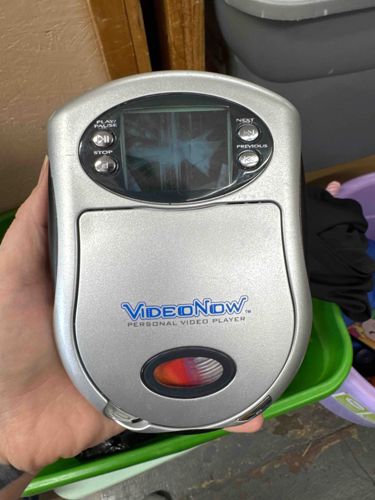
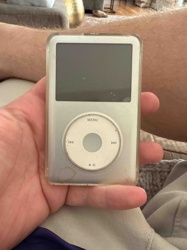
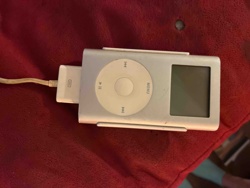
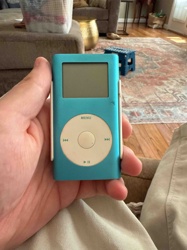
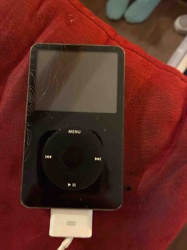
The item is identified as a VideoNow Personal Video Player, a portable media device designed for children and teens, manufactured by Hasbro. The player is predominantly silver-colored, constructed from plastic, and features a compact, somewhat ergonomic design with rounded edges, making it easy to hold in one hand. It measures approximately 7-8 inches in length and 4-5 inches in width, though precise dimensions are not available from the image. The device has a small, monochromatic liquid crystal display (LCD) screen at the top, which appears to be non-functional or cracked as evidenced by what looks like a 'spiderweb' pattern of damage across its surface, suggesting internal screen damage or significant external impact. Below the screen, there are four circular buttons: 'PLAY/PAUSE' (represented by a triangle and two vertical lines) and 'STOP' (a square icon) on the left, and 'NEXT' and 'PREVIOUS' on the right, indicating basic video playback controls. These buttons appear to be made of a darker, possibly black or dark grey plastic. Below the control buttons, the 'VideoNow' logo is prominently displayed in blue lettering, with 'PERSONAL VIDEO PLAYER' written underneath in a smaller, lighter blue font. Towards the bottom of the device, there is an oval-shaped opening, potentially a speaker grille, with a red or orange translucent cover allowing a glimpse of an internal patterned surface, possibly a speaker cone or a decorative element. The overall condition shows signs of use, but the primary visible damage is to the screen. The plastic casing appears to be mostly intact without major cracks or chips beyond expected surface wear from handling. Given its design and the 'VideoNow' branding, this player belongs to the early 2000s era of personal entertainment devices, likely manufactured between 2003 and 2006. Quality and craftsmanship are typical of mass-produced consumer electronics from that period, intended for durability for its target demographic rather than high-fidelity or premium materials. There are no discernible maker's marks or signatures visible on the front of the device other than the main brand name.
AI Appraisal Report
Upon visual examination of the provided image, I assess this VideoNow Personal Video Player to be an authentic Hasbro product from the early 2000s, consistent with its design and branding. The item is in fair condition overall, showing typical signs of use. However, the most significant factor impacting its value is the clear 'spiderweb' pattern indicating damage to the monochromatic LCD screen. This likely renders the device non-functional or severely impairs its intended use. The plastic casing appears mostly intact with minor surface wear.
The market for retro portable media players, particularly those aimed at children like the VideoNow, is niche. Demand primarily comes from nostalgic collectors or enthusiasts of early 2000s tech. Rarity is low; these were mass-produced. Functional units in excellent condition might fetch a modest sum, but a non-functional unit with a damaged screen drastically reduces its appeal.
Comparables for non-working units typically range from minimal value (parts only) to slightly more if complete and aesthetically sound. The screen damage here places it firmly in the 'parts or repair' category. Factors significantly impacting value are the screen damage, its non-functional status, and the general low market interest in this specific model.
Limitations exist in authenticity verification from images alone. While branding appears correct, a physical inspection would confirm the internal components match the model and verify the extent of the screen damage, as well as test functionality. Provenance documentation (e.g., original packaging, purchase receipts) could provide further authentication and context, but is not typically available for items of this type and value. No scientific testing is typically needed for such consumer electronics.