AI estimate as of July 3, 2025 · verify with a professional before acting
AI-Generated · Verify before acting
Everything on this page is generated by AI for informational purposes only. AI can make mistakes — the AI may misidentify items or misattribute them (artist, maker, brand, designer, origin, era). This is not an official valuation and should not be used for insurance, sale, tax, estate, legal, or lending purposes — or any decision requiring a certified appraisal. It is not an authoritative claim about any person, brand, or rights holder — do not share or rely on it as a factual statement about a third party. Always consult qualified professionals before making financial decisions.
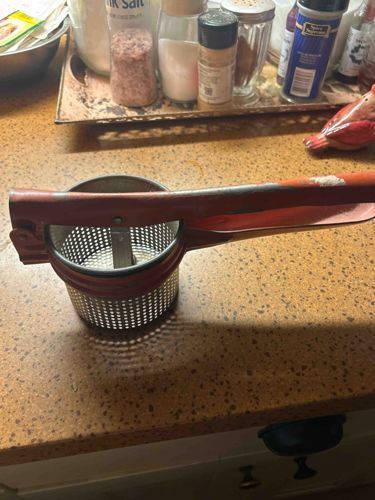
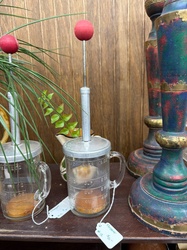
The item is a vintage-style food mill, characterized by its bright red painted metal handle assembly and a stainless steel or tinplate perforated basket. The handle is long and appears to be made of two pieces riveted together at the base, creating a lever action for pressing. The red paint on the handle shows significant wear, particularly on the top surface where it has chipped and faded, revealing the underlying metal. A distinct area of white residue or paint transfer is visible towards the end of the handle. The basket component is cylindrical with numerous small, uniform perforations, indicative of its function for puréeing or milling soft foods. Inside the basket, a central shaft with a pressing plate is visible, typical of food mill designs. The overall construction appears robust, suggesting it was built for regular use. There are no clear maker's marks or signatures visible in the image. Given the red painted finish and general design, it likely dates from the mid-20th century, possibly 1950s-1970s, a period when such kitchen gadgets were common and often had colorful finishes. The visible wear on the paint and minor discoloration of the metal suggest a history of use and age-appropriate patina, but no major structural damage or repairs are apparent. The quality of craftsmanship seems utilitarian, designed for functionality rather than intricate aesthetics, though the bright red adds a decorative touch.
AI Appraisal Report
Upon examining the Vintage Red Hand-Crank Food Mill presented, I observe an item consistent with mid-20th century domestic kitchenware, likely dating from the 1950s-1970s. The bright red painted handle, a characteristic of utilitarian items from that era, exhibits significant paint wear, chipping, and fading, particularly on the top surface. This wear, along with minor discoloration on the metal basket, is consistent with age and regular use rather than abuse, contributing to an age-appropriate patina. The white residue on the handle merits closer inspection, as it could be paint transfer or a different type of accretion.
Authenticity, based solely on visual examination, appears to be that of a genuine period kitchen utensil. However, without physical examination, I cannot confirm materials definitively (e.g., specific alloy of stainless steel or tinplate) or the exact manufacturing process. In-person examination would allow for tactile assessment of structural integrity, identification of maker's marks, and potential identification of the white residue. Further authentication would benefit from provenance documentation, though such documentation is rare for common kitchen items. Scientific testing, such as paint analysis, could confirm pigments and age but is generally not economically warranted for items of this value.
In terms of market conditions, vintage food mills are common. While functional, they are not rare. Demand is primarily from collectors of vintage kitchenware or individuals seeking a retro aesthetic. Comparables for similar used, utilitarian food mills typically range from $15-$40, depending on brand, condition, and specific features. The robust appearance and vibrant red color add slight appeal but do not elevate its rarity or demand significantly. Factors impacting value include the visible wear, absence of a known desirable brand, and lack of unique features. This item's value lies more in its historical and functional context rather than its collectible scarcity.