Hand-painted Papyrus Artwork of Tutankhamun
Art / Egyptian Revival Decor

Hand-painted Papyrus Artwork of Tutankhamun

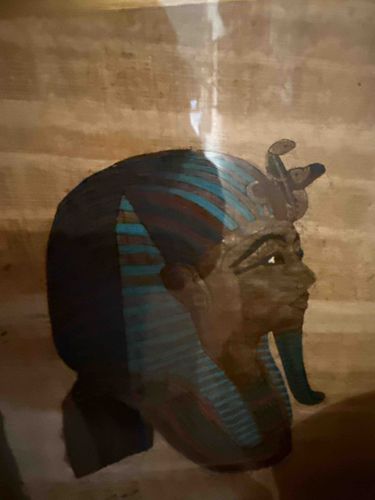
This item is a hand-painted depiction of the profile of the Egyptian Pharaoh Tutankhamun, rendered on authentic papyrus substrate. The artwork features the classic Nemes headcloth with alternating blue and brown bands, topped with the Uraeus (cobra) symbol. The Pharaoh is shown with traditional kohl-lined eyes and a ceremonial false beard. The primary colors include teal blue, terracotta brown, and black, applied with a matte pigment typical of modern Egyptian souvenir art. The background consists of natural papyrus pith strips laid in a characteristic cross-hatched pattern, displaying a light tan to beige hue with visible organic variations and dark horizontal fiber lines. Condition-wise, the piece shows some rippling and minor fraying at the edges, which is typical for the delicate nature of handmade papyrus. The craftsmanship suggests a mid-to-late 20th-century production, likely created for the tourist trade in Egypt following the global 'Tut-mania' associated with traveling exhibitions. While it lacks the fine detail of ancient temple reliefs, the application of paint is deliberate and follows traditional iconographic standards. There are no visible artist signatures or maker's marks, which is common for such artisanal decorative works. The overall presentation is that of a decorative wall piece intended to evoke the grandeur of ancient Egypt.
Estimated Value

$45 - $75

Basic Information

Category

Art / Egyptian Revival Decor

Appraised On

March 8, 2026

Estimated Value

$45 - $75

Item Description

This item is a hand-painted depiction of the profile of the Egyptian Pharaoh Tutankhamun, rendered on authentic papyrus substrate. The artwork features the classic Nemes headcloth with alternating blue and brown bands, topped with the Uraeus (cobra) symbol. The Pharaoh is shown with traditional kohl-lined eyes and a ceremonial false beard. The primary colors include teal blue, terracotta brown, and black, applied with a matte pigment typical of modern Egyptian souvenir art. The background consists of natural papyrus pith strips laid in a characteristic cross-hatched pattern, displaying a light tan to beige hue with visible organic variations and dark horizontal fiber lines. Condition-wise, the piece shows some rippling and minor fraying at the edges, which is typical for the delicate nature of handmade papyrus. The craftsmanship suggests a mid-to-late 20th-century production, likely created for the tourist trade in Egypt following the global 'Tut-mania' associated with traveling exhibitions. While it lacks the fine detail of ancient temple reliefs, the application of paint is deliberate and follows traditional iconographic standards. There are no visible artist signatures or maker's marks, which is common for such artisanal decorative works. The overall presentation is that of a decorative wall piece intended to evoke the grandeur of ancient Egypt.

Get Your Items Appraised

Instant estimates of your treasures with AI-powered instant appraisals

Browse More Appraisals