AI estimate as of September 3, 2025 · verify with a professional before acting
AI-Generated · Verify before acting
Everything on this page is generated by AI for informational purposes only. AI can make mistakes — the AI may misidentify items or misattribute them (artist, maker, brand, designer, origin, era). This is not an official valuation and should not be used for insurance, sale, tax, estate, legal, or lending purposes — or any decision requiring a certified appraisal. It is not an authoritative claim about any person, brand, or rights holder — do not share or rely on it as a factual statement about a third party. Always consult qualified professionals before making financial decisions.
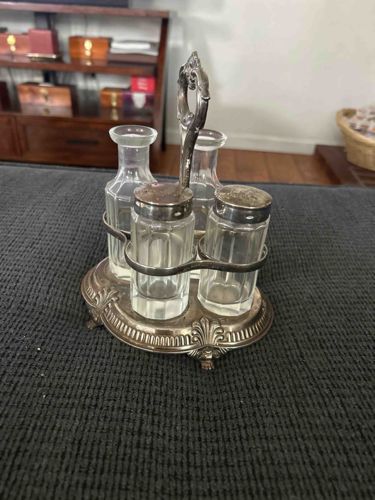
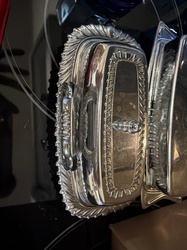
This is an antique or vintage cruet set, designed for tabletop condiments. The set consists of a silver-toned metal caddy holding four glass vessels. The caddy features an oval base with ornate, possibly Rococo Revival or Victorian-era, design elements. The base stands on four small, detailed feet. The rim of the base is fluted or reeded, with shell or fan-like motifs on the side curves, indicating a decorative rather than purely functional purpose. A central handle, also made of the same silver-toned metal, rises from the center of the caddy, adorned with scrollwork and possibly a stylized floral or foliate design, presumably for easy portability. The metal exhibits a noticeable patina consistent with age and oxidation, suggesting it may be silver plate or an alloy like Britannia metal, rather than sterling silver, though further inspection for hallmarks would be necessary. Two of the glass vessels appear to be taller, possibly for oil and vinegar (cruets), with flared openings, and lack stoppers in the visible image. The other two are smaller, squat vessels with metal caps, likely salt and pepper shakers, one of which appears to have a perforated top for sprinkling. All glass inserts are clear and have a faceted or paneled construction, which adds to their aesthetic appeal and helps them catch the light. There are no obvious chips or cracks visible on the glass, but the metal components show surface wear and potential tarnishing, particularly on the caps of the shakers, which appear discolored and dull. The overall craftsmanship suggests a mass-produced item from the late 19th or early 20th century, a common period for such elaborate table accessories, prioritizing decorative appeal alongside utility.
AI Appraisal Report
Upon examining the provided image of this antique/vintage cruet set, I can offer the following professional appraisal. The set, featuring a silver-toned metal caddy and four clear glass vessels, appears to be a typical late 19th or early 20th-century mass-produced item. The Rococo Revival or Victorian-era design elements on the caddy, including the fluted base, shell motifs, and scrollwork handle, are consistent with the period.
The condition of the metal caddy shows a noticeable patina and signs of oxidation, suggesting it is likely silver plate or Britannia metal, rather than sterling silver. This aligns with the common materials for such elaborate household items of the era. The presence of surface wear and tarnishing, particularly on the shaker caps, impacts its aesthetic appeal, but is expected given its age. The glass inserts, appearing faceted or paneled, show no visible chips or cracks, which is a positive aspect for their condition. However, the absence of stoppers for the two taller vessels (likely oil and vinegar cruets) is a detraction.
In terms of market conditions, cruet sets from this period are relatively common. While decorative, they are not exceedingly rare, and demand tends to be moderate rather than high. The lack of stoppers and the tarnished metal components reduce its overall desirability and, consequently, its value. Comparable items in better, complete condition typically fetch higher prices. This set's value is primarily driven by its decorative appeal and historical charm, suitable for a collector of antique dining accessories or for decorative use.
It is crucial to note that this assessment is based solely on visual examination of the image. For full authentication and a more precise valuation, an in-person inspection would be required to look for hallmarks (which would confirm material like sterling silver if present), assess the extent of metal damage/wear, and definitively confirm the absence of damage not visible in the image. Provenance documentation could also enhance its value if available. Without physical examination, determining the exact metal composition or any subtle repairs is impossible.