Mid-20th Century Neoclassical Style Lyre-Base Side Table
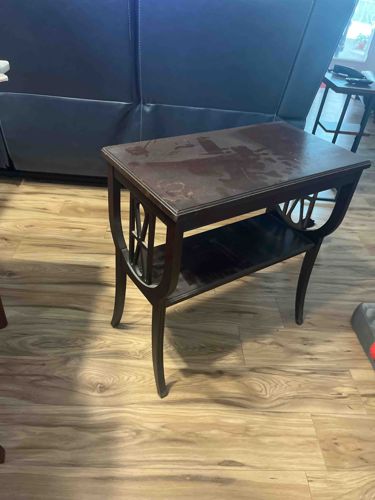
This is a rectangular wooden side table or end table, likely dating from the mid-20th century (circa 1940s-1950s), featuring a dark reddish-brown mahogany-toned finish. The table is constructed with a flat rectangular top with slightly beveled edges, supported by a distinctive trestle-style base. The side supports are designed in a stylized lyre or harp shape, containing a central vertical fretwork element with a 'cross' or 'X' motif. Below the main tabletop is a secondary lower shelf for storage. The piece stands on four slender, curved saber legs that taper toward the floor. In terms of condition, the top surface shows significant aesthetic degradation, including heavy water rings, heat marks, and general finish loss, suggesting a need for professional refinishing. The structural integrity appears sound, though there are visible scuffs along the leg edges and wear consistent with age and domestic use. The style is a revival of Neoclassical or Regency design trends, commonly produced by American furniture manufacturers of the era. No maker's marks are visible in the photograph, but the level of detail in the side fretwork indicates mass-market quality typical of post-war decorative furniture.
AI-Generated Appraisal Disclaimer
Estimated Value
$150 - $250
Basic Information
Category
Antique/Vintage Furniture
Appraised On
February 28, 2026
Estimated Value
$150 - $250
Item Description
This is a rectangular wooden side table or end table, likely dating from the mid-20th century (circa 1940s-1950s), featuring a dark reddish-brown mahogany-toned finish. The table is constructed with a flat rectangular top with slightly beveled edges, supported by a distinctive trestle-style base. The side supports are designed in a stylized lyre or harp shape, containing a central vertical fretwork element with a 'cross' or 'X' motif. Below the main tabletop is a secondary lower shelf for storage. The piece stands on four slender, curved saber legs that taper toward the floor. In terms of condition, the top surface shows significant aesthetic degradation, including heavy water rings, heat marks, and general finish loss, suggesting a need for professional refinishing. The structural integrity appears sound, though there are visible scuffs along the leg edges and wear consistent with age and domestic use. The style is a revival of Neoclassical or Regency design trends, commonly produced by American furniture manufacturers of the era. No maker's marks are visible in the photograph, but the level of detail in the side fretwork indicates mass-market quality typical of post-war decorative furniture.

Related Tags
Explore similar items and categories:
Get Your Items Appraised
Instant estimates of your treasures with AI-powered instant appraisals