AI Appraisal Estimate

AI-generated estimates · not official valuations

From the user

What was submitted

Photo and notes provided by the user — not generated by AI

Submitted item photo
Submitted photo · May 19, 2026

User's notes

Clodion status

AI analysis below

AI appraisal

AI analysis & estimate

AI-Generated · Verify before acting

Everything below is generated by AI for informational purposes only. AI can make mistakes — the AI may misidentify items or misattribute them (artist, maker, brand, designer, origin, era). This is not an official valuation and should not be used for insurance, sale, tax, estate, legal, or lending purposes — or any decision requiring a certified appraisal. It is not an authoritative claim about any person, brand, or rights holder — do not share or rely on it as a factual statement about a third party. Always consult qualified professionals before making financial decisions.

Note

This analysis also relies on unverified notes provided by the user, which may be incomplete or inaccurate and could affect the result.

Read the full disclaimer

AI Identification

·Not independently authenticated·Verify before acting

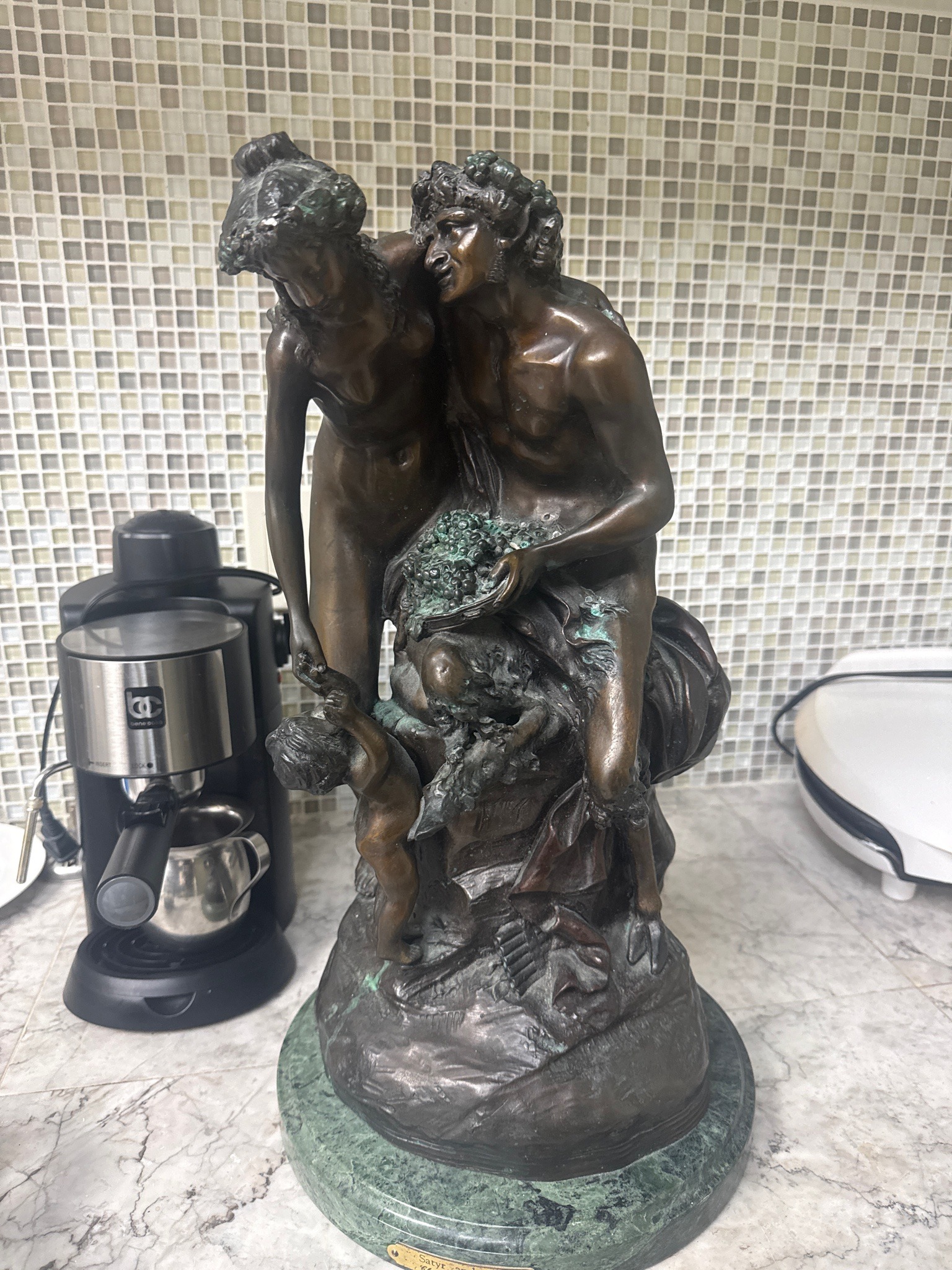
Neoclassical-style bronze figurative sculpture group

Sculptures

AI Estimated Value

·Not an official valuation·Verify before acting

$4,000 - $8,000

As of May 19, 2026

AI Item Analysis

·AI can make mistakes·Verify before acting
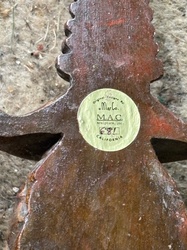
This appears to be a patinated bronze sculpture group, stylistically consistent with the Neoclassical or Rococo Revival movements. The piece depicts a mythological scene featuring a satyr, a nymph, and a putto/cherub, often referred to in art history as a 'Satyr Family.' The user-supplied context attributes this to 'Clodion' (Claude Michel, 1738–1814), a famous French sculptor known for such themes; however, this attribution is unverified from the image alone. The sculpture sits on a circular green marble plinth which bears a brass nameplate; the visible portion of the label appears to read 'Satyr...', but the full text is obscured. The figures exhibit fluid, dynamic posturing and detailed anatomical rendering. The metal has a dark brown patina with significant green oxidation (verdigris) visible in the recessed areas, specifically around the grapes and the base, which may indicate age or intentional chemical patination. No artist's signature is clearly legible in the photograph. The craftsmanship displays high-relief modeling, typical of 19th-century bronze casting or later high-quality reproductions. Without physical inspection of the casting marks, weight, and metallic composition, it remains a hypothesis that this is a period piece or an authentic work by Clodion.

AI Appraisal Report

·AI can make mistakes·Verify before acting
Based on the provided imagery, I have examined this bronze figurative sculpture group depicting a mythological scene. Per the user submission, this piece is attributed to the French sculptor Claude Michel, known as Clodion. While the fluid modeling and dynamic composition are consistent with the Neoclassical style popularized by Clodion in the 18th century, I cannot verify from a photo whether this is a period cast, a 19th-century foundry production, or a later high-quality reproduction. The sculpture bears a brass nameplate and shows patination with significant verdigris in the recesses; however, I would need a physical inspection to determine if this oxidation is aged or chemically induced. The appraisal value of $4,000 to $8,000 assumes the hypothesis that the piece is a high-quality 19th-century bronze casting 'after' Clodion, as these are highly sought after by collectors of European decorative arts. If the piece were to be authenticated as an 18th-century work documented by the artist's hand, the value would likely exceed this range significantly. Conversely, if a physical examination reveals it to be a modern mass-produced copy or a base-metal casting with a contemporary finish, the market value would likely fall to $400 or less. To confirm the origin, I would require an in-person examination to check for foundry marks, inspect the casting technique inside the base, and verify the metallic composition. General market demand for Neoclassical bronzes remains stable, though prices are heavily dependent on the quality of the 'cire perdue' (lost-wax) or sand-casting details and the provenance of the work.

Get your items appraised

Instant estimates of your treasures with AI-powered appraisals

Browse More Appraisals