White Quartz Lanceolate Arrowhead Point
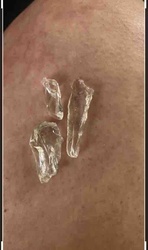
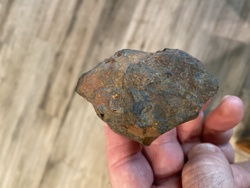
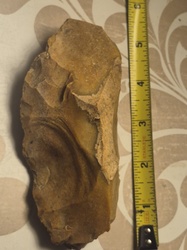
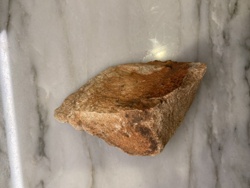
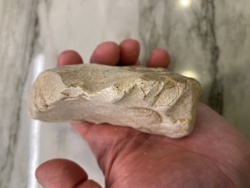
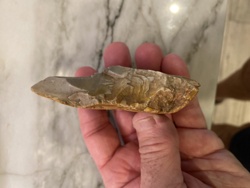
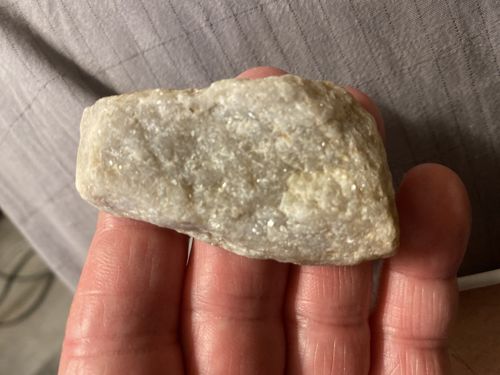
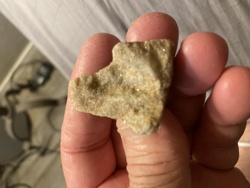
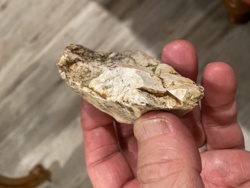
This is a prehistoric lanceolate-style projectile point crafted from white quartz, documenting indigenous lithic technology. Measuring approximately 2.25 inches in length and 1.25 inches in width, the item is characterized by its sub-triangular or lanceolate profile, lacking the distinct notches common in later period points. The material is a semi-translucent to opaque white quartz, which presents significant challenges to the flintknapper due to its crystalline structure and unpredictable fracture patterns. Despite these difficulties, the piece shows evidence of percussion flaking and marginal retouching to create a functional cutting edge. The surface exhibits a sugary, crystalline texture with subtle highlights of light tan or cream-colored mineral inclusions. The edges appear somewhat weathered, consistent with an item recovered from a field or riverine environment in the Guthrie, Oklahoma area. It maintains a relatively thick cross-section, common for quartz artifacts which require more mass for structural integrity. The tip appears slightly rounded, either through original manufacture or post-depositional wear. This specimen represents an example of Paleo-Indian to Early Archaic lithic tools, reflecting the resourcefulness of early inhabitants using locally available high-silica stone for subsistence hunting equipment.
AI-Generated Appraisal Disclaimer
Estimated Value
$45.00 - $75.00
Basic Information
Category
Archeological Artifacts / Native American Lithics
Appraised On
March 6, 2026
Estimated Value
$45.00 - $75.00
Additional Details Provided By Owner
User Provided Information
Paleo an white quartz lanceolate arrowhead found in Guthrie OK 2.25" x 1.25"
Item Description
This is a prehistoric lanceolate-style projectile point crafted from white quartz, documenting indigenous lithic technology. Measuring approximately 2.25 inches in length and 1.25 inches in width, the item is characterized by its sub-triangular or lanceolate profile, lacking the distinct notches common in later period points. The material is a semi-translucent to opaque white quartz, which presents significant challenges to the flintknapper due to its crystalline structure and unpredictable fracture patterns. Despite these difficulties, the piece shows evidence of percussion flaking and marginal retouching to create a functional cutting edge. The surface exhibits a sugary, crystalline texture with subtle highlights of light tan or cream-colored mineral inclusions. The edges appear somewhat weathered, consistent with an item recovered from a field or riverine environment in the Guthrie, Oklahoma area. It maintains a relatively thick cross-section, common for quartz artifacts which require more mass for structural integrity. The tip appears slightly rounded, either through original manufacture or post-depositional wear. This specimen represents an example of Paleo-Indian to Early Archaic lithic tools, reflecting the resourcefulness of early inhabitants using locally available high-silica stone for subsistence hunting equipment.
Related Tags
Get Your Items Appraised
Instant estimates of your treasures with AI-powered instant appraisals