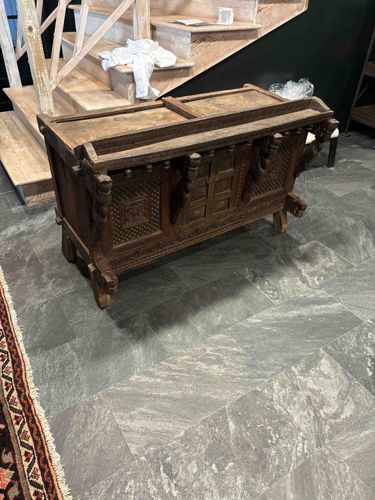
Antique Hand-Carved Indo-Portuguese Damchiya (Bridal Chest)
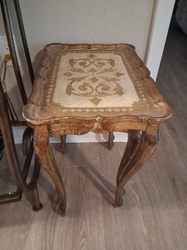
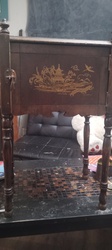
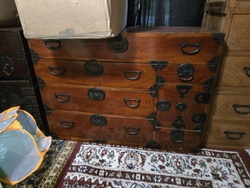
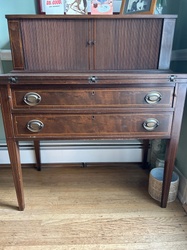
This is a substantial, antique hand-carved wooden storage chest, historically known as a Damchiya or bridal chest, likely originating from Northern India or the Gujarat/Rajasthan region with Indo-Portuguese stylistic influences. The piece is constructed from solid dense tropical wood, possibly teak or rosewood, displaying a deep, aged brown patina. Its architecture features an ornate front facade divided into panels: two side panels with intricate geometric chip-carving flanking a central door with a grid-like raised pattern. The chest is characterized by heavy decorative corbels or brackets that extend from the face, terminating in stylized animal or floral motifs. A recessed tray-style top provides a flat surface, though it appears weathered with notable grain separation and surface wear consistent with age. Structurally, the chest stands on sturdy, integrated legs with curved footings. Condition-wise, the piece shows significant signs of antiquity including surface abrasions, minor wood loss on the decorative carvings, and a dry, desaturated finish that indicates its age—estimated to be late 19th or early 20th century. The craftsmanship is highly detailed, utilizing traditional joinery and manual tool marks that enhance its rustic authenticity.
AI-Generated Appraisal Disclaimer
Estimated Value
$1,800 - $2,600
Basic Information
Category
Antique Furniture
Appraised On
March 6, 2026
Estimated Value
$1,800 - $2,600
Item Description
This is a substantial, antique hand-carved wooden storage chest, historically known as a Damchiya or bridal chest, likely originating from Northern India or the Gujarat/Rajasthan region with Indo-Portuguese stylistic influences. The piece is constructed from solid dense tropical wood, possibly teak or rosewood, displaying a deep, aged brown patina. Its architecture features an ornate front facade divided into panels: two side panels with intricate geometric chip-carving flanking a central door with a grid-like raised pattern. The chest is characterized by heavy decorative corbels or brackets that extend from the face, terminating in stylized animal or floral motifs. A recessed tray-style top provides a flat surface, though it appears weathered with notable grain separation and surface wear consistent with age. Structurally, the chest stands on sturdy, integrated legs with curved footings. Condition-wise, the piece shows significant signs of antiquity including surface abrasions, minor wood loss on the decorative carvings, and a dry, desaturated finish that indicates its age—estimated to be late 19th or early 20th century. The craftsmanship is highly detailed, utilizing traditional joinery and manual tool marks that enhance its rustic authenticity.
Get Your Items Appraised
Instant estimates of your treasures with AI-powered instant appraisals