AI estimate as of August 18, 2026 · verify with a professional before acting
AI-Generated · Verify before acting
Everything on this page is generated by AI for informational purposes only. AI can make mistakes — the AI may misidentify items or misattribute them (artist, maker, brand, designer, origin, era). This is not an official valuation and should not be used for insurance, sale, tax, estate, legal, or lending purposes — or any decision requiring a certified appraisal. It is not an authoritative claim about any person, brand, or rights holder — do not share or rely on it as a factual statement about a third party. Always consult qualified professionals before making financial decisions.
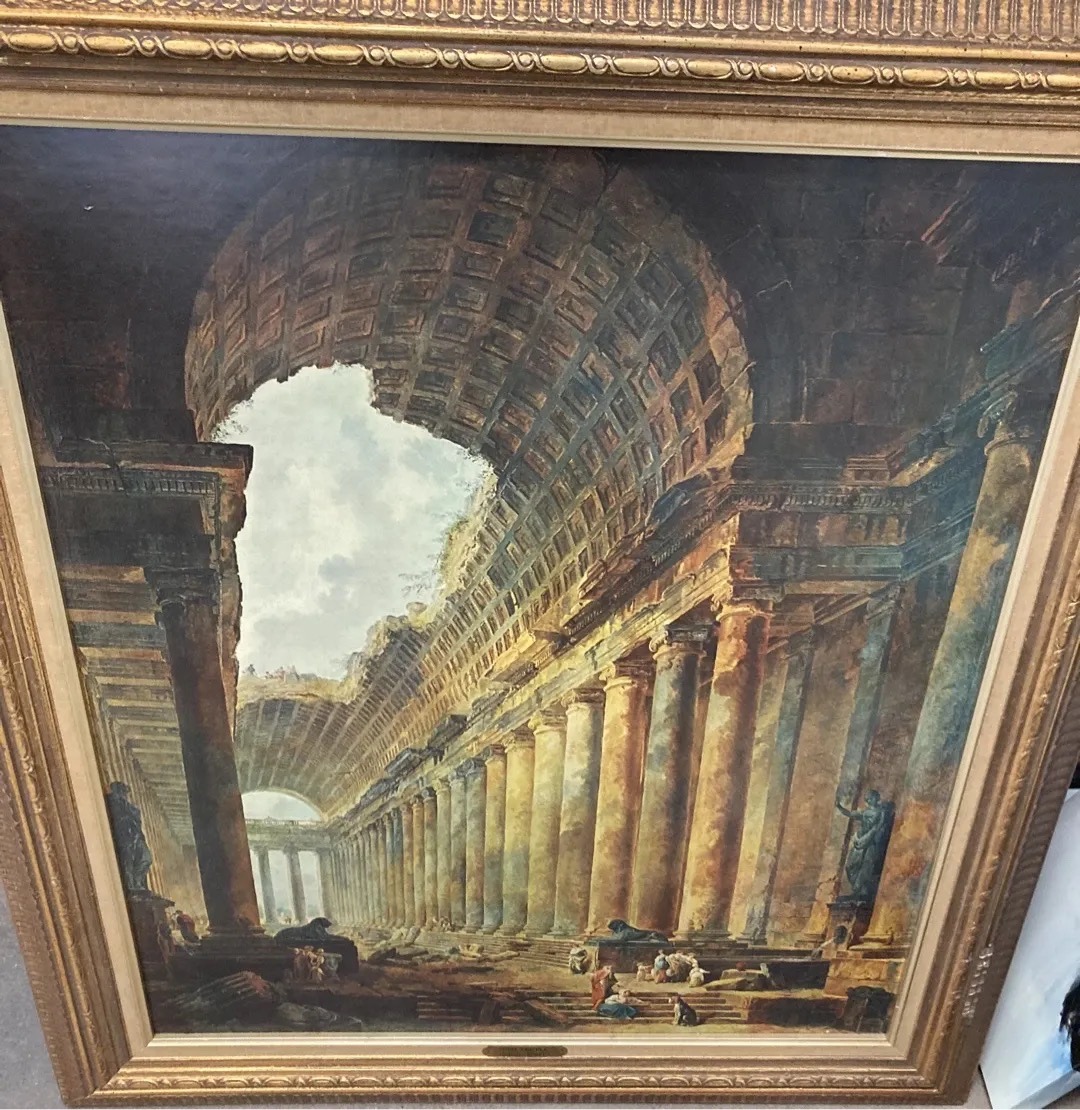
This is a framed painting depicting a classical architectural capriccio featuring monumental ruins, a vaulted coffered ceiling, and receding rows of classical columns. The painting exhibits a muted color palette dominated by earth tones, ochres, deep browns, and muted blues in the sky visible through the ruined vault. The physical construction appears to be an oil or acrylic painting on canvas or panel, housed within an ornate, gilt-finished wooden frame with classical molding details. At the bottom center of the frame, a small brass-colored plaque is visible, bearing unverified text. There are no clearly legible artist signatures or maker's marks directly visible within the painted composition from this viewing angle. The style is consistent with 18th-century European architectural fantasy paintings, though the actual age, execution date, and specific artist remain entirely unverified due to the limitations of photographic examination. The overall condition appears generally intact, displaying light surface wear, subtle craquelure, and minor aging consistent with traditional framed canvas artworks, but the piece has not been professionally examined or authenticated.
AI Appraisal Report
Based on what I can see in the photograph, this framed architectural capriccio painting depicts a classical fantasy scene with monumental ruins and vaulted coffered ceilings, housed in an ornate gilt-finished wooden frame with a small unverified brass plaque. Based on the visual characteristics, I am treating this as a potential 18th-century European architectural capriccio painting, though I cannot verify the actual age, execution date, or specific artist from a photographic examination alone. The overall condition appears generally intact with light surface wear and subtle craquelure, but physical inspection is required to determine the exact medium, canvas condition, and presence of overpaint. The valuation range of $2,000 to $4,000 assumes the work is a period piece consistent with the 18th-century European school; however, this estimate is entirely dependent on authentication. Market demand for classical architectural capriccio paintings fluctuates, but decorative period works of this scale generally attract steady interest from interior decorators and collectors of European art. If the piece were to turn out to be a later reproduction, a decorative replica, a copy, or executed simply 'in the style of' rather than a period work, the value would be substantially lower, typically ranging from $300 to $700 depending primarily on the decorative quality of the frame and canvas. To confirm authenticity, age, and authorship, the piece would need an in-person physical examination by a fine art conservator, professional provenance documentation, and potential scientific testing such as pigment analysis or ultraviolet light examination.