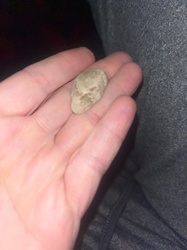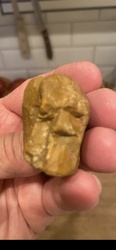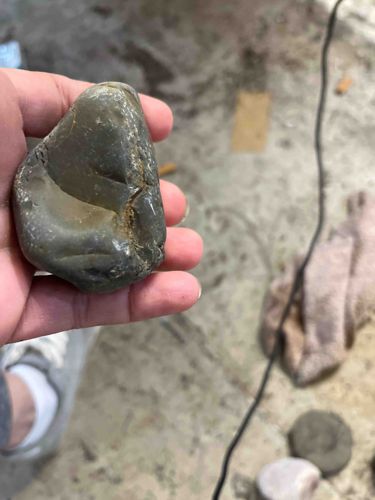
Smooth River Cobble (Natural Chert or Siliceous Rock)
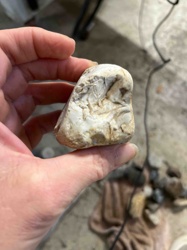
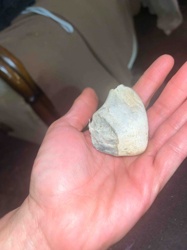
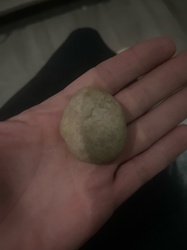
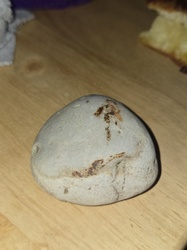
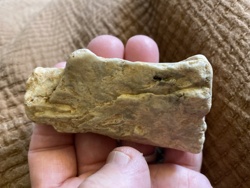
This item is a palm-sized, naturally occurring river stone or cobble, likely composed of chert, jasper, or a similar high-silica metamorphic rock. Physically, the stone exhibits a rounded, sub-angular shape with smooth edges, which is a primary indicator of long-term alluvial transport or water erosion. The color palette is dominated by matte olive-green and charcoal grey tones, with areas of ferruginous (iron-oxide) staining visible in the deeper crevices and recessed surface features. The stone measures approximately 3 to 4 inches in length and shows a fairly dense, microcrystalline grain characteristic of durable silicate minerals. Notable features include several concave indentations and conchoidal fracture scars, which suggest historical impacts against other rocks in a high-energy water environment. There are no man-made markings, signatures, or decorative elements, as it is a geological specimen rather than a tool. The surface condition shows a light patina of natural mineral deposits and fine white percussion marks resulting from more recent handling or impacts. Historically, this type of material has been valued for its hardness and durability. It does not appear to have been knapped into a lithic tool, as it lacks the systematic flaking patterns or bulb of percussion found in artifacts. Its age is geological, likely dating back millions of years, while its current form was shaped over thousands of years through natural erosive forces.
AI-Generated Appraisal Disclaimer
Estimated Value
$5 - $15
Basic Information
Category
Geological Specimens / Natural Stones
Appraised On
April 6, 2026
Estimated Value
$5 - $15
Item Description
This item is a palm-sized, naturally occurring river stone or cobble, likely composed of chert, jasper, or a similar high-silica metamorphic rock. Physically, the stone exhibits a rounded, sub-angular shape with smooth edges, which is a primary indicator of long-term alluvial transport or water erosion. The color palette is dominated by matte olive-green and charcoal grey tones, with areas of ferruginous (iron-oxide) staining visible in the deeper crevices and recessed surface features. The stone measures approximately 3 to 4 inches in length and shows a fairly dense, microcrystalline grain characteristic of durable silicate minerals. Notable features include several concave indentations and conchoidal fracture scars, which suggest historical impacts against other rocks in a high-energy water environment. There are no man-made markings, signatures, or decorative elements, as it is a geological specimen rather than a tool. The surface condition shows a light patina of natural mineral deposits and fine white percussion marks resulting from more recent handling or impacts. Historically, this type of material has been valued for its hardness and durability. It does not appear to have been knapped into a lithic tool, as it lacks the systematic flaking patterns or bulb of percussion found in artifacts. Its age is geological, likely dating back millions of years, while its current form was shaped over thousands of years through natural erosive forces.
Get Your Items Appraised
Instant estimates of your treasures with AI-powered instant appraisals