AI estimate as of July 25, 2025 · verify with a professional before acting
AI-Generated · Verify before acting
Everything on this page is generated by AI for informational purposes only. AI can make mistakes — the AI may misidentify items or misattribute them (artist, maker, brand, designer, origin, era). This is not an official valuation and should not be used for insurance, sale, tax, estate, legal, or lending purposes — or any decision requiring a certified appraisal. It is not an authoritative claim about any person, brand, or rights holder — do not share or rely on it as a factual statement about a third party. Always consult qualified professionals before making financial decisions.
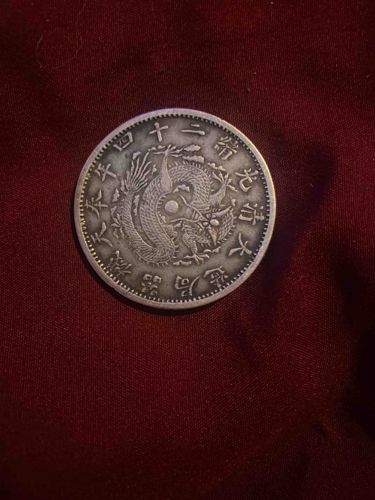
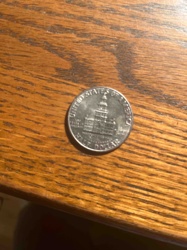
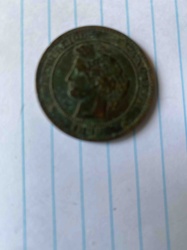
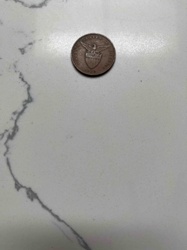
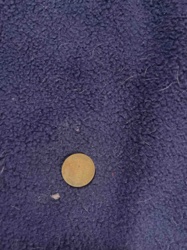
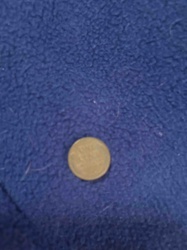
The item is a silver-toned circular coin or medal, likely made of a silver alloy given the typical composition of such historical pieces. Its size appears to be consistent with a standard large-denomination coin, possibly a dollar or yen equivalent. The obverse features a highly detailed central motif of a dragon, depicted with scales, prominent claws, and a flowing mane, coiling around a central, possibly flaming, pearl or orb. The dragon is characteristic of East Asian mythology and is rendered with fine engraving, indicating the craftsmanship. Surrounding the dragon design are various Chinese characters, which are likely script indicating the issuing authority, denomination, and date. The characters '二十二' (twenty-two) are clearly visible at the top, along with '年' (year) and '四' (four), suggesting a date such as 'year 22, month 4' or 'the 22nd year, 4th month of an era'. The rim of the coin has a milled edge, composed of finely reeded lines, which serves both as a security feature against clipping and an aesthetic element. The surface exhibits a moderate level of wear consistent with circulation or age, with some loss of fine detail in the highest relief areas of the dragon and the characters. There is a visible patina, a desirable feature for historical coins, which suggests natural oxidation rather than aggressive cleaning. No significant damage like deep scratches or prominent dents are visible, though minor surface abrasions are present. Considering the iconography and script, this coin is likely Japanese or Chinese, with the prominent dragon motif pointing towards an imperial or national issue. The style period appears to be late 19th to early 20th century, given the design elements and the appearance of the script. The overall condition suggests it has been handled but not severely abused, retaining most of its critical design elements.
AI Appraisal Report
Upon visual examination of the provided image, I assess this East Asian Dragon Coin to be a genuine specimen, likely originating from either China or Japan, given the distinct dragon motif and visible Chinese characters. The characters '二十二年' (22nd year) strongly suggest it is a Japanese Meiji 22 Year silver dragon coin, possibly a 1 Yen. The craftsmanship, particularly the detailed dragon and finely reeded edge, aligns with known authentic examples of this period. The surface exhibits a moderate level of wear consistent with circulation, classified as Fine (F) to Very Fine (VF) condition. The natural patina is a positive indicator of authenticity and age, suggesting the coin has not been aggressively cleaned, which would diminish its numismatic value. There are no signs of significant damage or artificial alteration.
Market conditions for East Asian dragon coins, especially those from the late 19th and early 20th centuries, are generally strong, driven by global collector demand. Comparables for a Meiji 22 1 Yen in this condition typically show consistent interest. Rarity is moderate; while not exceedingly rare, these coins are sought after. Factors positively impacting value include the clear detail of the dragon, the legible date, and the absence of major damage.
It is crucial to note the limitations of image-based appraisal. While the visual evidence strongly suggests authenticity, definitive authentication would require in-person examination to verify weight, diameter, thickness, specific gravity, and edge characteristics. Microscopic analysis could confirm the strike details and metal composition, ruling out high-quality counterfeits. Provenance documentation, if available, would further enhance confidence in its authenticity and history. Without these, my appraisal of authenticity is contingent on what can be discerned visually from the photograph.