AI Appraisal Estimate

AI-generated estimates · not official valuations

From the user

What was submitted

Photo and notes provided by the user — not generated by AI

Submitted item photo
Submitted photo · June 18, 2026

User's notes

No additional notes provided.

AI analysis below

AI appraisal

AI analysis & estimate

AI-Generated · Verify before acting

Everything below is generated by AI for informational purposes only. AI can make mistakes — the AI may misidentify items or misattribute them (artist, maker, brand, designer, origin, era). This is not an official valuation and should not be used for insurance, sale, tax, estate, legal, or lending purposes — or any decision requiring a certified appraisal. It is not an authoritative claim about any person, brand, or rights holder — do not share or rely on it as a factual statement about a third party. Always consult qualified professionals before making financial decisions.

Read the full disclaimer

AI Identification

·Not independently authenticated·Verify before acting

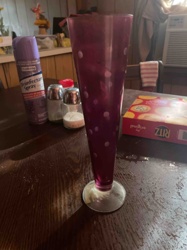
Polish Art Glass Pitcher with Black and White Webbed Pattern

Art Glass / Decorative Home Accessories

AI Estimated Value

·Not an official valuation·Verify before acting

$45.00 - $75.00

As of June 18, 2026

AI Item Analysis

·AI can make mistakes·Verify before acting
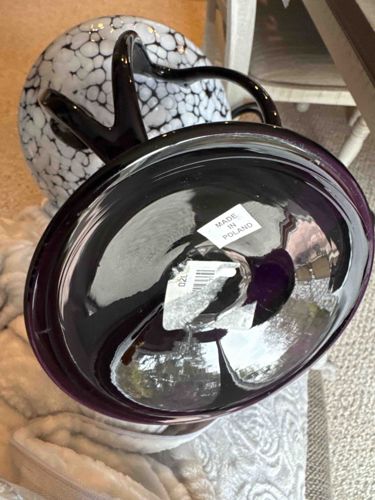
This item is a contemporary hand-blown art glass pitcher, likely produced in the late 20th to early 21st century. The body features a distinctive 'end of day' or 'tortoise' style webbed patterning, comprised of white opaque mottling set against a deep obsidian black background. The base of the pitcher is constructed from a heavy, solid dark purple or black amethyst glass, which transitions into a bifurcated handle that connects with sculptural elegance to the main body. The bottom of the foot is polished and flat, featuring a prominent 'MADE IN POLAND' white paper label and a partially removed retail price/barcode sticker. The glass exhibits a high-gloss finish with no visible chips or cracks in the provided view, though the presence of the original stickers suggests it was kept for decorative use rather than functional utility. The craftsmanship is typical of high-quality Polish glass factories known for exporting artistic glassware, characterized by thick walls, a balanced weight, and fluid, organic transitions between the structural elements like the handle and the base. The style reflects a modern take on Murano-inspired glassblowing techniques, emphasizing bold high-contrast colors and geometric textural patterns.
AI Appraisal Report

·AI can make mistakes·Verify before acting
I have examined the digital images of this contemporary Polish art glass pitcher. The vessel features a monochromatic webbed or 'tortoise' pattern with a bifurced handle and a weighted dark amethyst base. Based on the presence of the 'MADE IN POLAND' paper label and the remaining adhesive residue, I have identified this as a mass-produced studio glass export from the late 20th or early 21st century. The condition appears excellent with no visible chips, cracks, or clouding; however, the persistent retail labeling suggests it was utilized as a decorative object rather than a functional piece. The market for Polish glass of this era is stable but characterized by high supply. Comparable pieces from major Polish glasshouses (such as Krosno or Jozefina) frequently appear on secondary markets and online auctions within the $40 to $80 range. The high-contrast black and white palette is currently desirable for modern interior aesthetics, which helps maintain its liquidity compared to more traditional multicolored palettes. Its value is primarily decorative rather than as a rare collectible. Critically, a full authentication is limited by the digital format. While the label is consistent with period exports, I cannot verify the presence of a ground pontil mark or subtle surface scratches (wear) to the base that would indicate age and quality. To finalize this appraisal, a physical inspection is required to assess glass density, check for internal air bubbles or stress fractures, and verify the weight. Documentation such as the original manufacture receipt or catalog entry would further solidify the provenance, though for items of this market tier, visual identification of the label is generally accepted as sufficient for valuation.

Get your items appraised

Instant estimates of your treasures with AI-powered appraisals

Browse More Appraisals