AI Appraisal Estimate

AI-generated estimates · not official valuations

From the user

What was submitted

Photo and notes provided by the user — not generated by AI

Submitted item photo
Submitted photo · June 4, 2026

User's notes

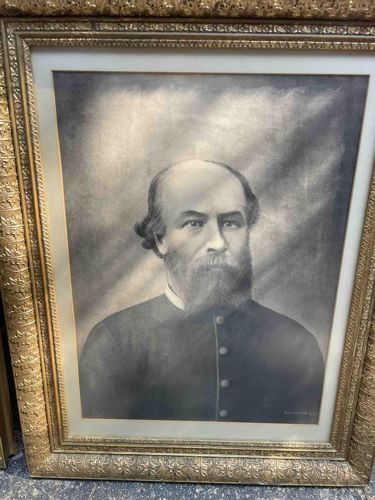
Pencil or charcoal portrait drawing from late 1800’s-early 1900’s

AI analysis below

AI appraisal

AI analysis & estimate

AI-Generated · Verify before acting

Everything below is generated by AI for informational purposes only. AI can make mistakes — the AI may misidentify items or misattribute them (artist, maker, brand, designer, origin, era). This is not an official valuation and should not be used for insurance, sale, tax, estate, legal, or lending purposes — or any decision requiring a certified appraisal. It is not an authoritative claim about any person, brand, or rights holder — do not share or rely on it as a factual statement about a third party. Always consult qualified professionals before making financial decisions.

Note

This analysis also relies on unverified notes provided by the user, which may be incomplete or inaccurate and could affect the result.

Read the full disclaimer

AI Identification

·Not independently authenticated·Verify before acting

Late Victorian Crayon or Charcoal Portrait Enlargement of a Bearded Man

Fine Art - Antique Portraits

AI Estimated Value

·Not an official valuation·Verify before acting

$450 - $650

As of June 4, 2026

AI Item Analysis

·AI can make mistakes·Verify before acting
This is a large-format monochromatic portrait drawing, likely executed in charcoal, crayon, or graphite, common in the late 19th and early 20th centuries. The subject is a middle-aged male with a receding hairline, prominent mustache, and a full beard, rendered in a realistic, academic style. The technique appears to be a 'solar enlargement' or 'crayon portrait,' where a photograph was lightly projected onto paper and then heavily worked over with charcoal or crayon to create a life-sized, hand-finished appearance. The artwork features soft, blended shading in the background with diagonal light rays, contrasting with the sharp detail in the eyes and beard. The subject wears a dark, high-collared jacket with five visible buttons. The drawing is housed in a contemporary ornate gilded wooden frame featuring a deep-profile cove with acanthus leaf, floral, and repeating geometric molding patterns. The frame exhibits a dusty gold patina consistent with age but appears to be in relatively stable condition. A signature or studio mark is visible in the lower right corner, though the text is partially obscured by the frame glass. Condition of the artwork appears excellent from an ocular inspection, with no visible foxing, water damage, or significant fading, though the paper may show natural yellowing/toning typical of non-acid-free supports of the Victorian era.
AI Appraisal Report

·AI can make mistakes·Verify before acting
I have conducted a visual examination of this Late Victorian Crayon Portrait. Based on the stylistic execution, it appears to be a classic 'solar enlargement' common between 1880 and 1910. The technique of hand-finishing a photographic base with charcoal or crayon is executed with high technical skill, particularly in the rendering of the ocular region and facial hair. The condition is remarkably well-preserved for a work on paper of this era; I note no significant foxing or 'burn' from the acidic wood backing often found in these pieces. The ornate gilded frame is of substantial quality and adds approximately 40% of the total value to the object. While these portraits were mass-produced by regional studios, the exceptional preservation of this specific example elevates it above average market finds. Recently, the market for 'dark academia' and Victorian aesthetics has seen a moderate resurgence, though these pieces remain relatively common. The primary value-limiting factor is the anonymity of the sitter and the obscured studio mark. A physical inspection is required to remove the piece from the frame to check for hidden tears, identify the signature, and verify if the paper has been laid down on an acidic board, which would threaten its longevity. Full authentication of the medium would require examining the paper texture under magnification to differentiate between strictly manual charcoal application and a light photographic under-print. Provenance regarding the sitter’s identity would significantly enhance historical interest.

Get your items appraised

Instant estimates of your treasures with AI-powered appraisals

Browse More Appraisals