Set of Diamond-Cut Yellow Gold Bangles
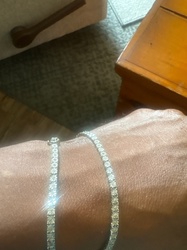
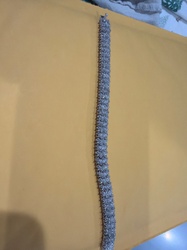
This set consists of approximately seven thin, circular bangles constructed from high-karat yellow gold, possibly 18k or 22k given the saturated yellow hue. Each bangle features a repeating diamond-cut pattern, which is a precision machine-cut technique used to create faceted surfaces that reflect light similarly to gemstones. These grooves are oriented in a diagonal 'slant' pattern, interspersed with horizontal hash marks, providing a textured, shimmering appearance. The bangles are individual and designed to be worn stacked together, which creates a rhythmic chiming sound with movement. In terms of condition, the metal appears to maintain a high polish with minimal visible deformation or deep scratches, though fine surface abrasions (patina) consistent with light wear may be present. There are no obvious hallmarks visible in the photograph, but typical examples of this style originate from Southeast Asian or Indian manufacturing traditions. The craftsmanship is uniform, indicating modern machining tools were used to achieve the consistent geometric facets across the entire circumference. This style is timeless but particularly popular in mid-to-late 20th-century jewelry design and remains a staple in contemporary high-purity gold collections.
AI-Generated Appraisal Disclaimer
Estimated Value
$4,200 - $4,850
Basic Information
Category
Fine Jewelry / Bracelets
Appraised On
March 7, 2026
Estimated Value
$4,200 - $4,850
Item Description
This set consists of approximately seven thin, circular bangles constructed from high-karat yellow gold, possibly 18k or 22k given the saturated yellow hue. Each bangle features a repeating diamond-cut pattern, which is a precision machine-cut technique used to create faceted surfaces that reflect light similarly to gemstones. These grooves are oriented in a diagonal 'slant' pattern, interspersed with horizontal hash marks, providing a textured, shimmering appearance. The bangles are individual and designed to be worn stacked together, which creates a rhythmic chiming sound with movement. In terms of condition, the metal appears to maintain a high polish with minimal visible deformation or deep scratches, though fine surface abrasions (patina) consistent with light wear may be present. There are no obvious hallmarks visible in the photograph, but typical examples of this style originate from Southeast Asian or Indian manufacturing traditions. The craftsmanship is uniform, indicating modern machining tools were used to achieve the consistent geometric facets across the entire circumference. This style is timeless but particularly popular in mid-to-late 20th-century jewelry design and remains a staple in contemporary high-purity gold collections.
Get Your Items Appraised
Instant estimates of your treasures with AI-powered instant appraisals