Men's Yellow Gold and Cluster Sapphire Ring
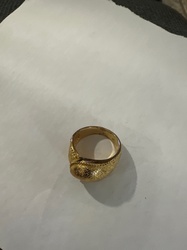
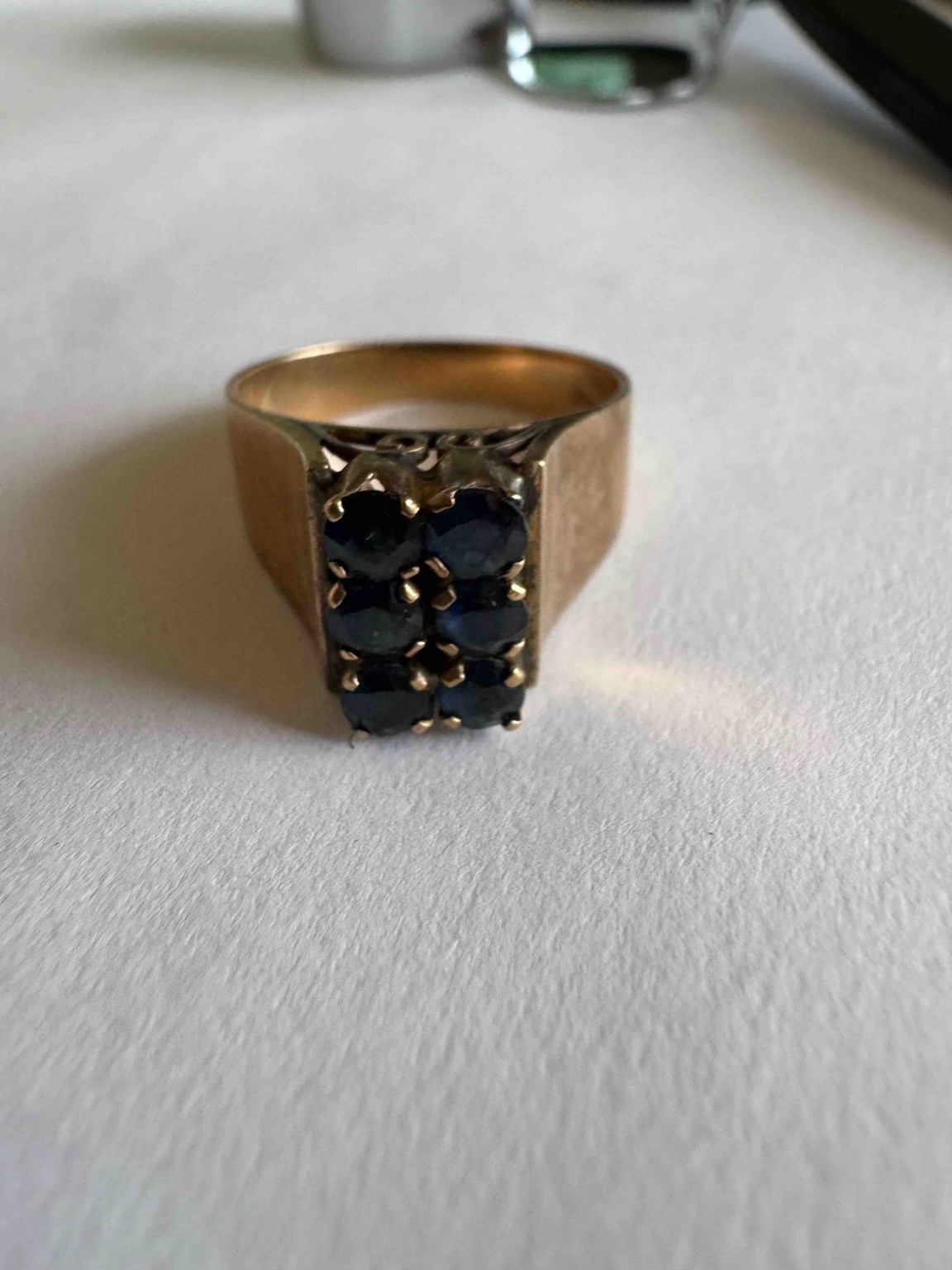
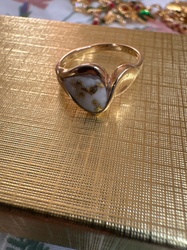
This is a vintage-style men's signet-inspired ring, likely crafted from 10k or 14k yellow gold based on the warm hue. The focal point features a rectangular 2x3 grid cluster consisting of six round-cut natural sapphires. The sapphires exhibit a very deep, dark navy blue tone, appearing almost black in low light, which is characteristic of high iron content often found in Australian or Thai sapphires. Each gemstone is secured in a traditional prongs setting, elevated slightly above the band's shoulders. The band follows a robust, tapered design with wide, flat shoulders that transition into a thick shank, indicating a mid-20th-century aesthetic (circa 1950s-1970s). The construction shows solid craftsmanship with an open gallery beneath the stones to allow light passage. Regarding condition, the metal shows significant surface scratches, micro-pitting, and a noticeable patina consistent with frequent wear over several decades. The prongs appear somewhat worn down but still functional. No distinct maker's marks or fineness stamps are visible in the photograph, though they would likely be located on the inner shank. The overall weight and substantial width suggest a masculine design prioritized for durability and presence.
AI-Generated Appraisal Disclaimer
Estimated Value
$650 - $900
Basic Information
Category
Fine Jewelry / Rings
Appraised On
April 8, 2026
Estimated Value
$650 - $900
Item Description
This is a vintage-style men's signet-inspired ring, likely crafted from 10k or 14k yellow gold based on the warm hue. The focal point features a rectangular 2x3 grid cluster consisting of six round-cut natural sapphires. The sapphires exhibit a very deep, dark navy blue tone, appearing almost black in low light, which is characteristic of high iron content often found in Australian or Thai sapphires. Each gemstone is secured in a traditional prongs setting, elevated slightly above the band's shoulders. The band follows a robust, tapered design with wide, flat shoulders that transition into a thick shank, indicating a mid-20th-century aesthetic (circa 1950s-1970s). The construction shows solid craftsmanship with an open gallery beneath the stones to allow light passage. Regarding condition, the metal shows significant surface scratches, micro-pitting, and a noticeable patina consistent with frequent wear over several decades. The prongs appear somewhat worn down but still functional. No distinct maker's marks or fineness stamps are visible in the photograph, though they would likely be located on the inner shank. The overall weight and substantial width suggest a masculine design prioritized for durability and presence.
Get Your Items Appraised
Instant estimates of your treasures with AI-powered instant appraisals