AI identification & appraisal estimate

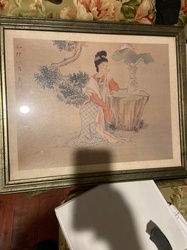
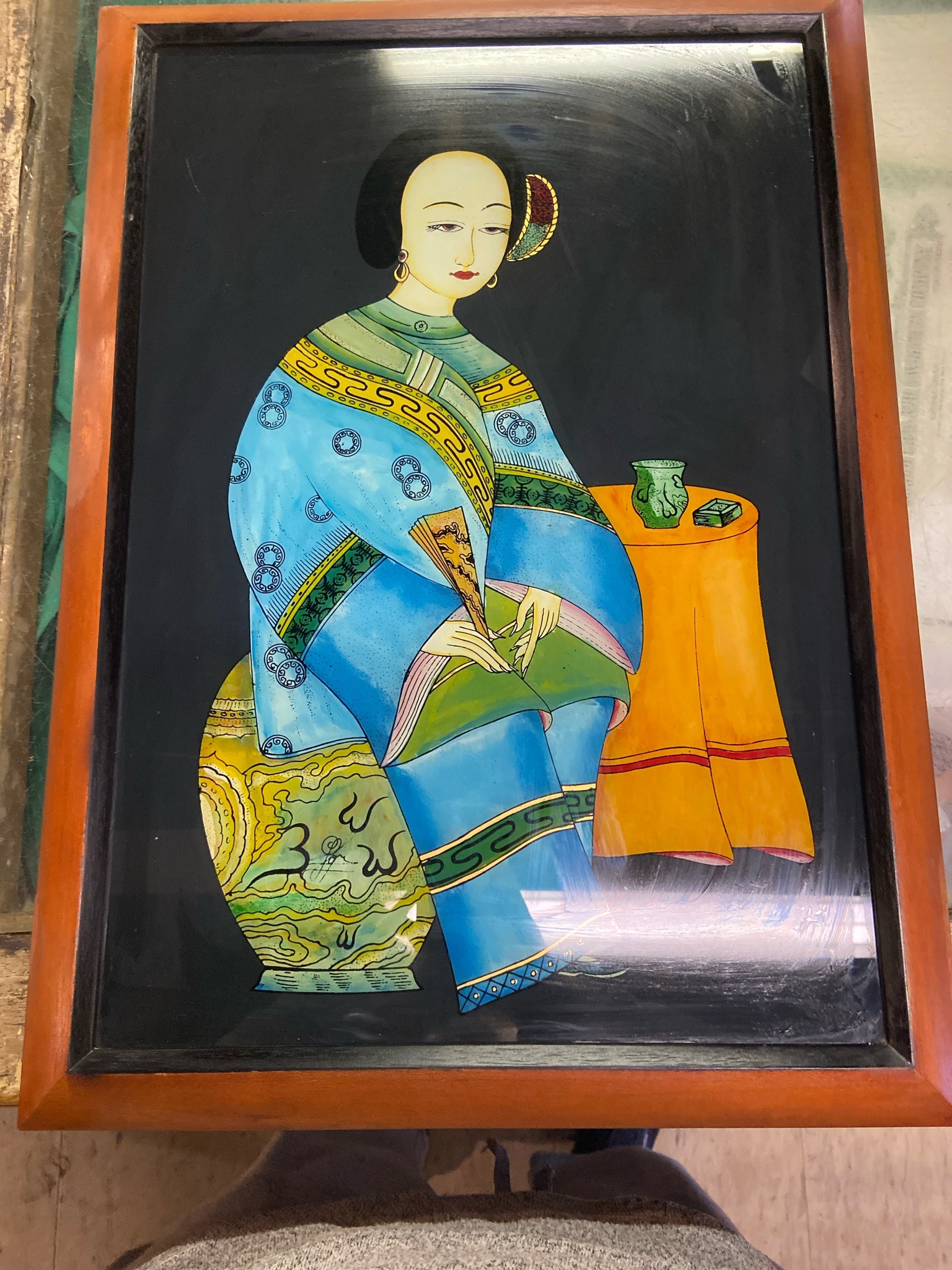
Chinese Reverse Glass Painting of a Seated Court Lady

Submitted photo of Chinese Reverse Glass Painting of a Seated Court Lady
Photo submitted by the user — not generated by AI

AI Estimated Value

Not an official valuation

$150 - $250

AI estimate as of April 12, 2026 · verify with a professional before acting

AI-Generated · Verify before acting

Everything on this page is generated by AI for informational purposes only. AI can make mistakes — the AI may misidentify items or misattribute them (artist, maker, brand, designer, origin, era). This is not an official valuation and should not be used for insurance, sale, tax, estate, legal, or lending purposes — or any decision requiring a certified appraisal. It is not an authoritative claim about any person, brand, or rights holder — do not share or rely on it as a factual statement about a third party. Always consult qualified professionals before making financial decisions.

Read the full disclaimer

AI Item Analysis

This is a decorative Chinese reverse glass painting depicting an elegant court lady seated beside a small table. The central figure is dressed in elaborate traditional robes of vibrant turquoise and blue, featuring intricate patterns of circles and yellow scrollwork along the borders. She holds a small fan and sits atop a large, decorative yellow and green ceramic vessel with calligraphic-style markings. To her right, a bright orange table holds a green jade-colored cup and a small box. The background is a solid, deep black lacquer-style finish, which makes the foreground colors pop. Reverse glass painting is a demanding technique where the artist paints on the back of a glass pane, requiring the layers of detail to be applied in reverse order. The style suggests a mid-20th-century production, likely for the export market, mimicking earlier Qing Dynasty aesthetics. The piece is housed in a simple rectangular wood frame with a polished reddish-brown finish and a black inner bevel. Concerning condition, the glass surface shows visible surface scuffing, scratches, and circular smudges, likely from improper cleaning or handling. There is a notable white haze or streak across the lower right quadrant of the glass. The paint itself appears mostly intact without major flaking (delamination), though some fine cracking may be present upon closer inspection. The wooden frame is in fair condition with minor abrasions consistent with age. There are no visible maker's marks or signatures on the face of the artwork.
AI Appraisal Report

I have completed a visual assessment of the Chinese reverse glass painting depicting a seated court lady. Based on the technique and stylized execution, this piece appears to be a mid-20th-century decorative work intended for the export market. While it successfully captures the aesthetic of the Qing Dynasty, the palette and brushwork suggest a decorative revival piece rather than an 18th or 19th-century original. The condition is a primary concern; the visible surface scuffing, circular smudges, and the white haze in the lower right quadrant negatively impact the visual clarity essential for glass art. Fortunately, the lack of significant paint delamination—a common defect in this medium—preserves its primary decorative value. Market demand for mid-century Chinese export glass work remains steady but modest. Comparable items at regional auctions typically realize between $150 and $250, depending on the integrity of the frame and the vibrancy of the pigments. The absence of a signature or maker's mark is typical for these assembly-line decorative pieces. While the subject matter is classic and appealing, the lack of age-related 'crackle' and the modern profile of the wooden frame confirm its status as a vintage decorative item rather than a fine antique. Limitations of this report include the inability to inspect the backing or the composition of the paint under UV light. A physical examination would be required to rule out modern synthetic pigments or to identify if the 'white haze' is on the surface or internal to the glass. To confirm an earlier date, one would need to inspect the hand-blown nature of the glass for characteristic bubbles and ripples, which are absent in these images.

Keep exploring

More fine art - asian paintings & glasswork appraisals

Get your items appraised

Instant AI-powered appraisal estimates from a photo

Browse More Appraisals