AI identification & appraisal estimate

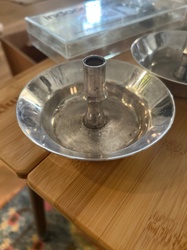
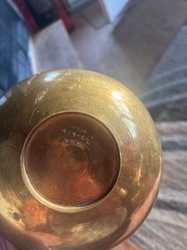
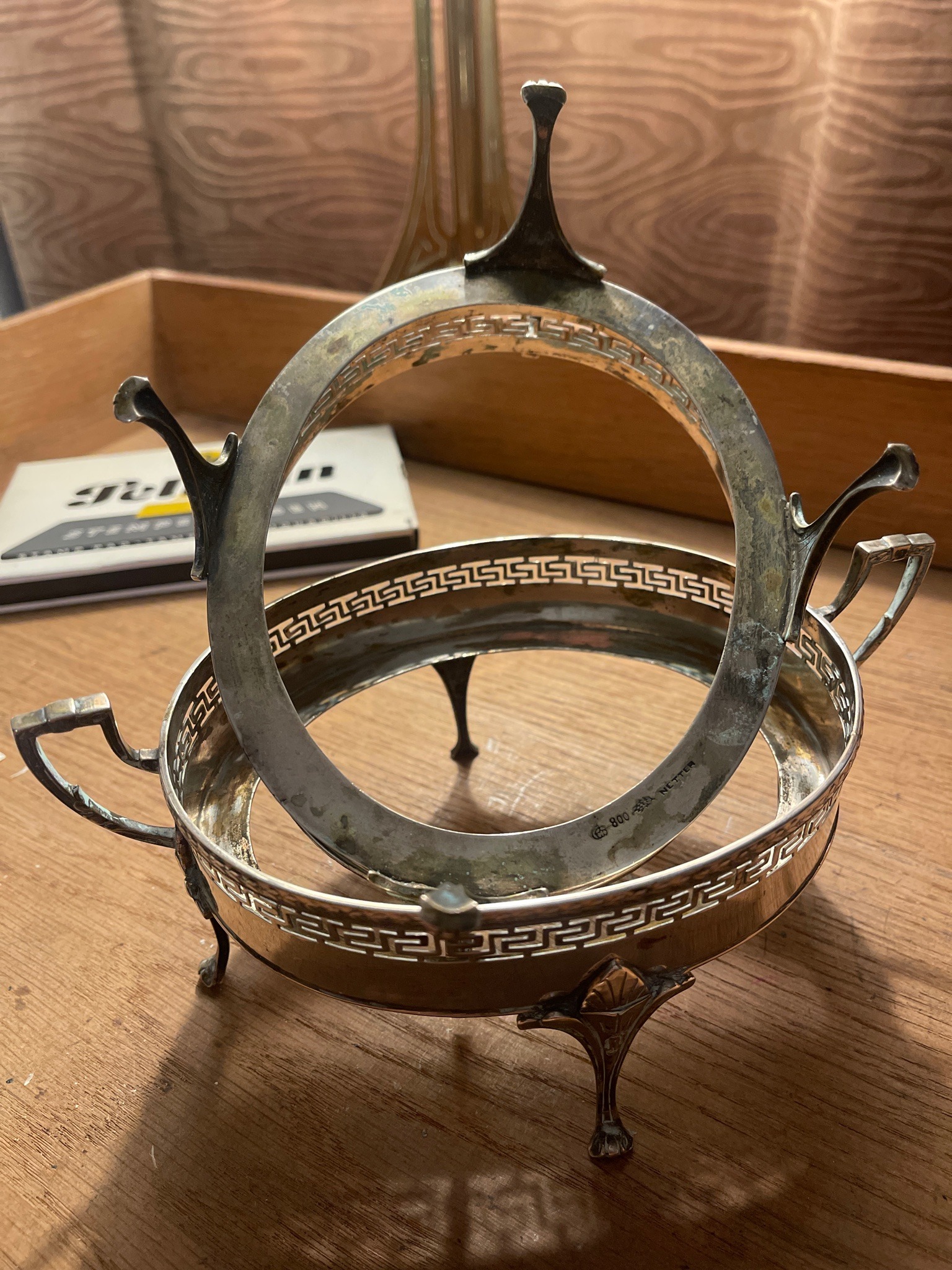
Silver-toned metal frame with Greek key pattern bears markings for 800 silver and Netter

Submitted photo of Silver-toned metal frame with Greek key pattern bears markings for 800 silver and Netter
Photo submitted by the user — not generated by AI

User's notes

Netter, 800

These notes were written by the person who submitted this item. Appraiser.AI has not verified them, and the AI's identification and estimate may rely on them.

AI Estimated Value

Not an official valuation

$600 - $900

AI estimate as of May 19, 2026 · verify with a professional before acting

AI-Generated · Verify before acting

Everything on this page is generated by AI for informational purposes only. AI can make mistakes — the AI may misidentify items or misattribute them (artist, maker, brand, designer, origin, era). This is not an official valuation and should not be used for insurance, sale, tax, estate, legal, or lending purposes — or any decision requiring a certified appraisal. It is not an authoritative claim about any person, brand, or rights holder — do not share or rely on it as a factual statement about a third party. Always consult qualified professionals before making financial decisions.

This analysis also relies on unverified notes provided by the user, which may be incomplete or inaccurate and could affect the result.

Read the full disclaimer

AI Item Analysis

This object consists of two circular or ring-shaped metal components, likely designed to host a glass insert or bowl. The piece appears to be constructed from a silver-toned metal, featuring ornate tripartite feet with fan-like motifs and a pierced rhythmic border displaying a Greek key (meander) pattern. One ring bears a visible stamp reading '800' followed by a crescent/crown mark and the name 'NETTER', which is stylistically consistent with late 19th or early 20th-century German silver standards, though these marks are unverified without physical inspection. The user identifies the item as 'Netter, 800', which aligns with the visible markings but remains an unconfirmed attribution. The metal shows significant surface oxidation and yellowing patina, particularly on the inner rings and the decorative handles. The construction is indicative of a footed centerbowl stand or jardinière frame. The presence of the '800' mark suggests a silver purity of 80%, common in European hollowware of the period, but the alloy cannot be confirmed from photography alone. Overall craftsmanship displays industrial-era precision in the repeating pierced band and hand-finished elements at the joins. The condition includes heavy tarnish and potential minor abrasions consistent with age and use.
AI Appraisal Report

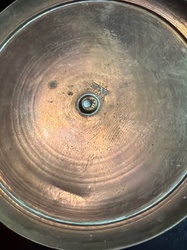
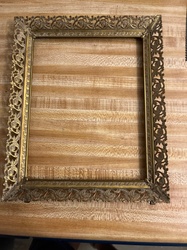
Based on the provided imagery, I have examined a silver-toned metal frame featuring a Greek key pattern and tripartite feet. Per the user's submission, the item is attributed to 'Netter' and is marked '800'. I can observe stamps consistent with German 800 silver standards, including a crescent and crown, though I cannot verify the metal's purity or the mark's legitimacy from a photograph alone. The value estimate assumes the item is indeed 80% silver as indicated by the '800' mark; if the piece is silver-plated or a non-precious alloy, the value would likely drop below $150. The current estimate is based on the assumption that the attribution to the maker Netter is accurate. The piece shows significant oxidation and a yellowing patina, which may suggest a high copper content in the alloy or a specific type of surface degradation. While the craftsmanship appears consistent with late 19th or early 20th-century European production, a physical inspection is required to confirm the weight, metal composition, and the hand-finished elements of the joins. Market demand for continental silver hollowware remains stable among collectors of neoclassical motifs, though the absence of an original glass insert negatively impacts the total value. To confirm authenticity and a more precise valuation, I recommend an in-person examination by a specialist, professional acid testing of the metal, and a review of any available provenance documentation. Without authentication, the market generally treats such items as 'style of' pieces, which typically realize lower prices at auction.

Keep exploring

More decorative metalware appraisals

Get your items appraised

Instant AI-powered appraisal estimates from a photo

Browse More Appraisals