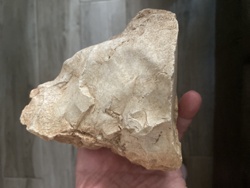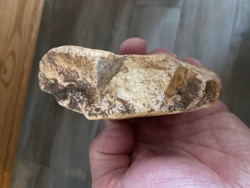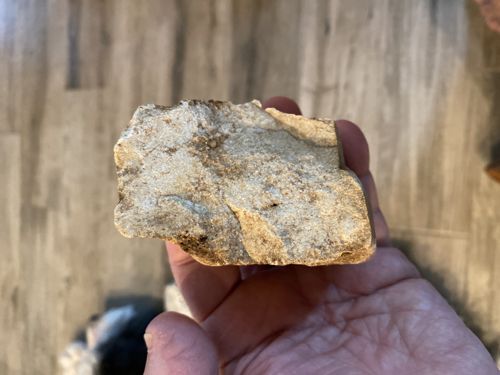
Paleolithic Chert Biface Hand Axe/Scraper
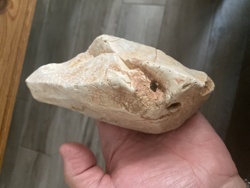
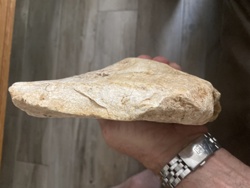
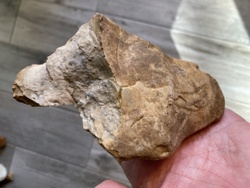
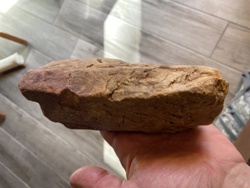
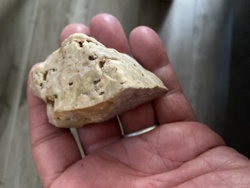
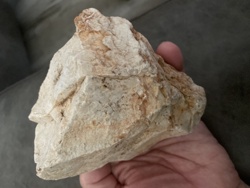
This artifact is a Paleolithic-style bifacial tool, commonly identified as a hand axe or large scraper, measuring approximately 3.75 inches by 2.75 inches. It is constructed from a dense, light-colored chert, showcasing an earthy palette of creamy white, beige, and tan tones with subtle brownish iron-oxide staining or patina across the surface indicative of prolonged soil exposure in the Guthrie, Oklahoma region. The tool features systematic percussion flaking on both faces (bifacial) to create a functional, albeit rugged, working edge. One side appears relatively flat, while the opposing side shows more significant flake removal to shape the grip and bit. The overall silhouette is roughly rectangular to sub-ovate, with one primary long edge exhibiting intentional retouching for scraping or cutting tasks. The condition of the specimen suggests significant antiquity, with softened flake scars and edges worn by environmental weathering and taphonomic processes. There is visible cortex (original stone outer layer) remaining on certain sections, suggesting a functional economy of manufacture where only the necessary edges were refined. No modern maker's marks or signatures are present, as the item is a prehistoric lithic artifact. The craftsmanship represents a utilitarian approach to stone tool technology, prioritizing durability and functionality over aesthetic symmetry.
AI-Generated Appraisal Disclaimer
Estimated Value
$75.00 - $125.00
Basic Information
Category
Prehistoric Lithic Artifacts
Appraised On
February 25, 2026
Estimated Value
$75.00 - $125.00
Additional Details Provided By Owner
User Provided Information
Paleolithic chert bi face hand axe scraper tool found in Guthrie OK measuring 3.75" x 2.75"
Item Description
This artifact is a Paleolithic-style bifacial tool, commonly identified as a hand axe or large scraper, measuring approximately 3.75 inches by 2.75 inches. It is constructed from a dense, light-colored chert, showcasing an earthy palette of creamy white, beige, and tan tones with subtle brownish iron-oxide staining or patina across the surface indicative of prolonged soil exposure in the Guthrie, Oklahoma region. The tool features systematic percussion flaking on both faces (bifacial) to create a functional, albeit rugged, working edge. One side appears relatively flat, while the opposing side shows more significant flake removal to shape the grip and bit. The overall silhouette is roughly rectangular to sub-ovate, with one primary long edge exhibiting intentional retouching for scraping or cutting tasks. The condition of the specimen suggests significant antiquity, with softened flake scars and edges worn by environmental weathering and taphonomic processes. There is visible cortex (original stone outer layer) remaining on certain sections, suggesting a functional economy of manufacture where only the necessary edges were refined. No modern maker's marks or signatures are present, as the item is a prehistoric lithic artifact. The craftsmanship represents a utilitarian approach to stone tool technology, prioritizing durability and functionality over aesthetic symmetry.
Related Tags
Get Your Items Appraised
Instant estimates of your treasures with AI-powered instant appraisals