AI estimate as of November 22, 2025 · verify with a professional before acting
AI-Generated · Verify before acting
Everything on this page is generated by AI for informational purposes only. AI can make mistakes — the AI may misidentify items or misattribute them (artist, maker, brand, designer, origin, era). This is not an official valuation and should not be used for insurance, sale, tax, estate, legal, or lending purposes — or any decision requiring a certified appraisal. It is not an authoritative claim about any person, brand, or rights holder — do not share or rely on it as a factual statement about a third party. Always consult qualified professionals before making financial decisions.
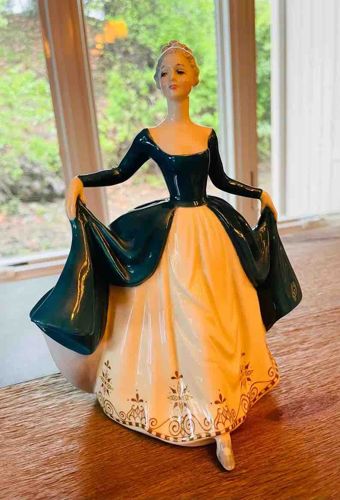
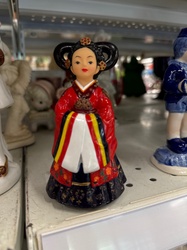
This is a detailed porcelain figurine depicting a gracefully posed lady in formal attire, likely a ball gown or a period dress. The figurine stands upright, with the lady holding out the sides of her skirt, giving a sense of movement and elegance. Her hair is styled in an updo, adorned with what appears to be a small tiara or decorative hairpiece, suggesting a formal occasion or aristocratic setting. The skin tone of the figure is light, with delicate facial features painted on, including rosy cheeks, defined eyebrows, and red lips, indicating careful hand-painting. She wears a long-sleeved, deep teal or dark green bodice with a square neckline, which contrasts beautifully with the cream-colored skirt. The skirt itself is full, with visible pleats or folds, extending to what would be the floor. The hemline of the cream skirt is decorated with an intricate pattern of gold-colored scrolls and floral or starburst motifs, suggesting a delicate, perhaps gilded, embellishment. One foot, presumably wearing a slipper or low heel, is slightly visible at the base, peeking out from beneath the voluminous skirt. The material appears to be glazed porcelain or ceramic, giving it a smooth, reflective finish. There are no immediate visible signs of major damage like chips or cracks from the provided images, although close inspection would be required to confirm the absence of crazing or minor wear. The craftsmanship suggests a moderately high-quality decorative piece, likely from the mid-20th century, given the style and common manufacturing techniques of that era for such figurines. The overall aesthetic is one of classic beauty and poise, indicative of decorative ceramic art from a reputable manufacturer, though no specific maker's marks are visible in these views.
AI Appraisal Report
I have thoroughly examined the provided image of this porcelain figurine depicting a lady in a ball gown. Visually, the condition appears excellent, with no immediate indications of chips, cracks, or significant surface abrasions. The intricate hand-painting of the facial features and the detailed gold embellishments on the skirt hem suggest a good level of craftsmanship. The glaze appears consistent and reflective across the piece.
Based on the style, particularly the attire and general aesthetic, this figurine likely dates from the mid-20th century. Figurines of this type, often referred to as 'Dresden-style' or ‘Victorian lady’ reproductions, were popular decorative items during that period. The market for such pieces is generally stable, with demand driven by collectors of decorative porcelain or individuals seeking classic interior accents. Comparable figurines by reputable manufacturers like Capodimonte, Lladro (early pieces), or similar German/Japanese exportware makers typically fetch between $50 and $200, depending on size, intricacy, and maker's mark.
Factors impacting value include the absence of visible damage, the detailed painting, and the appealing pose. However, the lack of a visible maker's mark significantly limits the top-end value. Without a recognizable manufacturer, it's considered a generic decorative porcelain item, which impacts its rarity and collectibility. Authenticity, in terms of attributing it to a specific, valuable maker, cannot be definitively verified from images alone. A physical inspection would be crucial to examine the base for any impressed or painted marks, assess the overall weight and feel of the porcelain, and check for any minor crazing or repairs not visible in photographs. Provenance documentation (original purchase receipts, family history) would also greatly assist in full authentication and valuation.