AI Appraisal Estimate

AI-generated estimates · not official valuations

From the user

What was submitted

Photo and notes provided by the user — not generated by AI

Submitted item photo
Submitted photo · June 26, 2026

User's notes

No additional notes provided.

AI analysis below

AI appraisal

AI analysis & estimate

AI-Generated · Verify before acting

Everything below is generated by AI for informational purposes only. AI can make mistakes — the AI may misidentify items or misattribute them (artist, maker, brand, designer, origin, era). This is not an official valuation and should not be used for insurance, sale, tax, estate, legal, or lending purposes — or any decision requiring a certified appraisal. It is not an authoritative claim about any person, brand, or rights holder — do not share or rely on it as a factual statement about a third party. Always consult qualified professionals before making financial decisions.

Read the full disclaimer

AI Identification

·Not independently authenticated·Verify before acting

Vintage Mickey Mouse Bisque Figurine

Vintage Disney Collectibles / Ceramic Figurines

AI Estimated Value

·Not an official valuation·Verify before acting

$45–$75

As of June 26, 2026

AI Item Analysis

·AI can make mistakes·Verify before acting
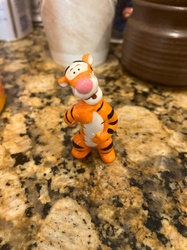
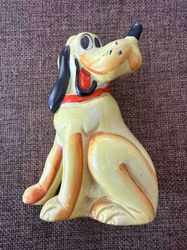
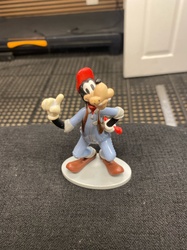
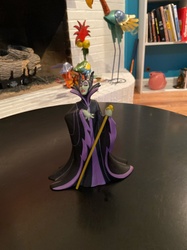
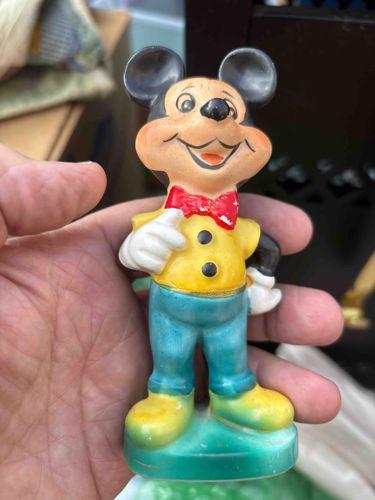
This is a vintage, hand-painted bisque or ceramic figurine depicting the iconic Walt Disney character, Mickey Mouse. Standing approximately 4 to 5 inches tall, the figure shows Mickey in a stylized, non-traditional outfit consisting of a yellow button-down waistcoat with a red bow tie, teal-blue trousers, and yellow shoes. The construction is a molded ceramic with a matte finish typical of mid-century bisque imports, likely originating from Japan or Germany. The color palette utilizes bold, saturated primary and secondary tones applied via cold painting. Mickey is posed with one hand on his hip and the other pointing upward, a common playful stance for cartoon figurines of this era. Regarding condition, there is visible paint loss and scuffing, particularly on the red bow tie, the black on the ears, and edges of the base where the teal paint has thinned. The surface shows minor pitting and accumulated grime consistent with age and shelf-wear. There are no immediate signs of chips or structural cracks in the ceramic body, but the patina suggests a production date between the 1930s and 1950s. The craftsmanship is modest, with somewhat loosely applied paint lines typical of mass-produced collectible figurines from the pre-plastic era. This piece represents a transition period in Disney merchandising before strict global brand standardization was enforced.

AI Appraisal Report

·AI can make mistakes·Verify before acting
Based on my visual inspection, this figurine is a characteristic example of a mid-century Japanese 'cold-painted' bisque Mickey Mouse. The non-traditional color scheme—specifically the yellow waistcoat and teal-blue trousers—identifies this as a 'pre-standardization' piece, likely produced between the late 1930s and early 1950s. While these variations are less common than the standard red-short Mickey, they represent the era before Disney enforced strict style guides on international manufacturers. The condition is 'fair to good.' The paint loss on the ears and bow tie, along with the visible scuffing and thinning of the teal pigment, significantly limits its value to top-tier collectors who typically seek mint-state cold painting, which is notoriously fragile. The lack of visible structural chips or 'flea bites' helps maintain its integrity, but the surface grime suggests poor storage conditions over the decades. Market demand for vintage Disney remains steady, but the high volume of mass-produced Japanese exports during this period keeps prices accessible. Comparables for similar Japan-marked bisque figures in this condition generally realize between $40 and $80 at auction. Limitations: This appraisal is based solely on digital images. A physical examination is required to verify the presence of 'Japan' or 'Disney' incised marks on the base, which are currently obscured by grime. Furthermore, in-person inspection is needed to ensure the paint loss hasn't been disguised by modern 'touch-up' paint, which would further devalue the item. Provenance documentation or a black-light test would be necessary to confirm original glaze versus later restorations.

Get your items appraised

Instant estimates of your treasures with AI-powered appraisals

Browse More Appraisals