AI identification & appraisal estimate

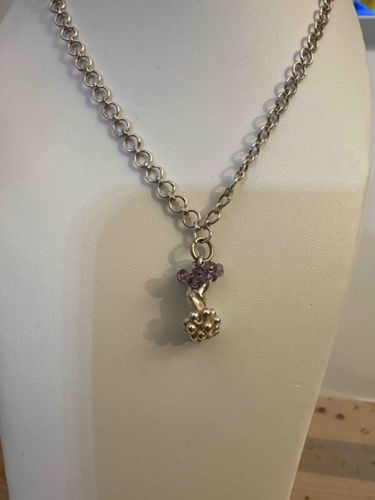
Bali Sterling Silver Amethyst Grape Cluster Pendant Necklace

This name is the AI's identification of the item — it may be incorrect.

Submitted photo of Bali Sterling Silver Amethyst Grape Cluster Pendant Necklace
Photo submitted by the user — not generated by AI

User's notes

Amethyst, Sterling , Bali silver

These notes were written by the person who submitted this item. Appraiser.AI has not verified them, and the AI's identification and estimate may rely on them.

AI Estimated Value

Not an official valuation

$145-185

AI estimate as of January 28, 2026 · verify with a professional before acting

AI-Generated · Verify before acting

Everything on this page is generated by AI for informational purposes only. AI can make mistakes — the AI may misidentify items or misattribute them (artist, maker, brand, designer, origin, era). This is not an official valuation and should not be used for insurance, sale, tax, estate, legal, or lending purposes — or any decision requiring a certified appraisal. It is not an authoritative claim about any person, brand, or rights holder — do not share or rely on it as a factual statement about a third party. Always consult qualified professionals before making financial decisions.

This analysis also relies on unverified notes provided by the user, which may be incomplete or inaccurate and could affect the result.

Read the full disclaimer

AI Item Analysis

This jewelry piece consists of a handcrafted Bali-style sterling silver pendant suspended from a substantial round link chain. The pendant features a distinctive 'grape cluster' design, incorporating multiple small, faceted amethyst beads at the top and a granulated silver bulbous weight at the base. The amethyst beads exhibit a light to medium purple hue with visible natural inclusions. The silver elements showcase traditional Balinese techniques, specifically granulation and high-relief decorative soldering. The chain is an oval-to-round link style, approximately 18-20 inches in length, constructed from solid .925 sterling silver links. The metal exhibits a bright polish with natural oxidation (patina) visible in the crevices of the granulation and between the chain links, which is characteristic of genuine silver jewelry. There is no visible damage, though slight tangential wear on the links suggests moderate previous use. The craftsmanship reflects 20th-century artisan production, often associated with Southeast Asian workshops. The weight of the chain and the detail on the pendant indicate a high-quality boutique production rather than mass-market casting. The combination of semiprecious stones and complex metalwork aligns with the bohemian or artisan jewelry aesthetic prevalent from the late 1990s through the early 2000s.
AI Appraisal Report

Upon my virtual inspection of this Bali-style sterling silver amethyst grape cluster pendant and chain, I find the piece to be a high-quality example of Indonesian artisan metalwork from the late 20th to early 21st century. The craftsmanship is commendable, showcasing traditional granulation and high-relief soldering typical of the Ubud or Celuk regions. The amethyst beads display the 'garden' inclusions expected in natural quartz, and the .925 sterling silver exhibits a desirable natural patina that enhances the depth of the design. Condition is graded as 'Good to Very Good,' with minor surface abrasions consistent with light wear. The market for Bali-style artisan jewelry remains stable, driven by collectors of the boho-chic aesthetic. Comparables for substantial pendant-and-chain sets of this weight typically sell within the $130 to $200 range at boutique retailers or secondary markets like Ruby Lane. The value is buoyed by the substantial gauge of the round link chain, while it is limited by the commonality of the grape cluster motif. Note: This appraisal is based on photographic evidence and descriptions provided. A definitive valuation is limited by the inability to perform physical density tests (Archimedes' principle) to confirm solid silver content throughout, or to use refractive index testing to verify the gemstones are not synthetic or glass. For full authentication, an in-person examination to verify hallmarks, weigh the piece in grams, and perform a thermal conductivity test on the amethysts would be required. No provenance documentation was provided, which, if available, could further authenticate a specific workshop origin.

Keep exploring

More jewelry appraisals

Get your items appraised

Instant AI-powered appraisal estimates from a photo

Browse More Appraisals