AI Appraisal Estimate

AI-generated estimates · not official valuations

From the user

What was submitted

Photo and notes provided by the user — not generated by AI

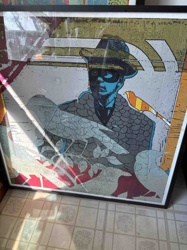
Submitted item photo
Submitted photo · June 15, 2026

User's notes

No additional notes provided.

AI analysis below

AI appraisal

AI analysis & estimate

AI-Generated · Verify before acting

Everything below is generated by AI for informational purposes only. AI can make mistakes — the AI may misidentify items or misattribute them (artist, maker, brand, designer, origin, era). This is not an official valuation and should not be used for insurance, sale, tax, estate, legal, or lending purposes — or any decision requiring a certified appraisal. It is not an authoritative claim about any person, brand, or rights holder — do not share or rely on it as a factual statement about a third party. Always consult qualified professionals before making financial decisions.

Read the full disclaimer

AI Identification

·Not independently authenticated·Verify before acting

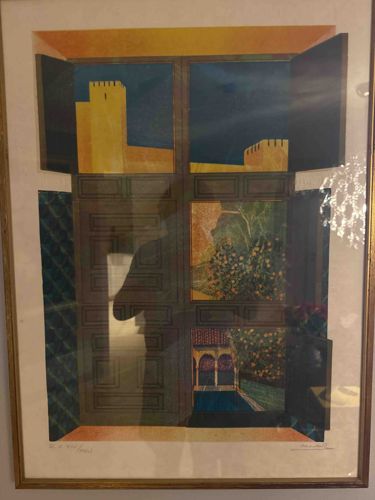
Framed Architectural Serigraph of a Mediterranean Palace View

Fine Art - Prints & Multiples

AI Estimated Value

·Not an official valuation·Verify before acting

$450 - $700

As of June 15, 2026

AI Item Analysis

·AI can make mistakes·Verify before acting
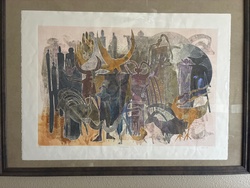
This item is a large-format contemporary art print, likely a serigraph or lithograph, depicting a stylized architectural view through an open window or door. The composition features several distinct panes showing aspects of a fortress or palace, possibly inspired by the Alhambra or similar Moorish architecture. The top panels show golden fortress walls against a deep blue sky, while lower panels reveal a lush garden with orange trees and a traditional courtyard pool. The color palette is rich, dominated by ochre, deep blue, forest green, and earthy browns. The artwork is printed on heavy white paper with visible margins. Notable markings include a handwritten edition number 'EA' (Épreuve d'Artiste) followed by Roman numerals in the bottom left, and a graphite signature in the bottom right corner. The piece is professionally matted in an off-white acid-free mat and housed in a thin gold-toned wood or metal frame. The condition appears fair to good; while the print colors remain vibrant, there is visible moisture staining or foxing on the left side of the white mat board. Reflection on the glass indicates it is standard rather than museum-grade acrylic. The style suggests a late 20th-century origin, approximately 1980-1995, characterized by graphic geometric forms and layered perspectives.
AI Appraisal Report

·AI can make mistakes·Verify before acting
I have conducted a visual analysis of this contemporary architectural serigraph. The work exhibits the hallmarks of late 20th-century 'Post-Modern Mediterranean' style, popular between 1980 and 1995. The 'EA' (Épreuve d'Artiste) designation indicates this is an artist's proof, which typically holds slightly higher desirability than the standard numbered edition due to its closer association with the artist's personal archive. Condition is a primary factor in this valuation. While the pigments appear vibrant with minimal UV fading, there is significant moisture ingress visible on the left side of the matting. This suggests a high risk of foxing or mold spores migrating to the paper substrate. The use of standard reflective glass, rather than museum-grade UV-filtering acrylic, further impacts the long-term preservation value. The frame shows signs of minor shelf wear. The market for this specific aesthetic is currently stable but specialized, often driven by interior design trends rather than high-stakes fine art auctions. Comparables for unsigned or moderately known artist proofs of this scale and era typically hammer between $300 and $900 depending on the artist's secondary market track record. Limitations: This appraisal is based solely on digital imagery. A full authentication would require removing the print from the frame to inspect the verso for water damage, verify the paper's watermark, and confirm the medium isn't a high-quality photomechanical reproduction. I would also require provenance documentation or a catalog raisonné reference to definitively identify the artist’s signature, which is currently illegible through the provided glass reflection. Scientific testing of the ink's chemical composition would be necessary to rule out modern digital giclée techniques.

Get your items appraised

Instant estimates of your treasures with AI-powered appraisals

Browse More Appraisals