AI Appraisal Estimate

AI-generated estimates · not official valuations

From the user

What was submitted

Photo and notes provided by the user — not generated by AI

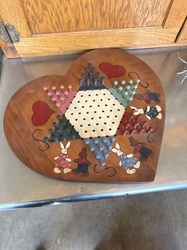
Submitted item photo
Submitted photo · June 6, 2026

User's notes

No additional notes provided.

AI analysis below

AI appraisal

AI analysis & estimate

AI-Generated · Verify before acting

Everything below is generated by AI for informational purposes only. AI can make mistakes — the AI may misidentify items or misattribute them (artist, maker, brand, designer, origin, era). This is not an official valuation and should not be used for insurance, sale, tax, estate, legal, or lending purposes — or any decision requiring a certified appraisal. It is not an authoritative claim about any person, brand, or rights holder — do not share or rely on it as a factual statement about a third party. Always consult qualified professionals before making financial decisions.

Read the full disclaimer

AI Identification

·Not independently authenticated·Verify before acting

Tumbled Stone Peg Solitaire Board Game

Antique/Vintage Games and Toys

AI Estimated Value

·Not an official valuation·Verify before acting

$45.00-$75.00

As of June 6, 2026

AI Item Analysis

·AI can make mistakes·Verify before acting
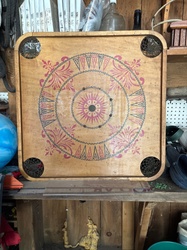
This is a circular wooden Peg Solitaire (also known as Marble Solitaire or Hi-Q) board featuring a collection of polished semi-precious tumbled stones and glass marbles as pieces. The board is constructed from a solid piece of dark-stained hardwood, likely mahogany or teak, featuring a central playing area with 33 recessed indentations and a deep peripheral gutter designed to hold captured pieces. The wood shows a smooth, lustrous finish with a visible natural grain, though there is minor surface wear and small abrasions consistent with frequent use. The playing pieces are a diverse mix of minerals, including varieties of amethyst, rose quartz, aventurine, jasper, and carnelian, alongside several modern glass cat's eye marbles. The stones vary in size and irregular organic shape, contrasting with the uniform mechanical indentations of the board. There are no visible maker's marks or signatures, suggesting it is a late 20th-century artisan or mass-produced decorative game. The craftsmanship of the board is high, with clean, concentric lathe-turned grooves and a well-balanced weight. One indentation at the bottom appears to contain a fragment of brown jasper, and several spots in the outer ring are filled with a mix of glass and stone units, indicating a substituted set of game pieces over time.

AI Appraisal Report

·AI can make mistakes·Verify before acting
Based on my visual examination of this Peg Solitaire board, I find it to be a high-quality decorative game set likely dating from the mid-to-late 20th century. The board is excellently crafted from a solid hardwood, exhibiting a rich grain and a deep peripheral gutter that suggests a premium artisan production rather than a budget novelty item. While the surface shows minor abrasions and wear consistent with play, the structural integrity remains sound. The collection of pieces—a mix of polished tumbled stones like amethyst and jasper alongside modern glass marbles—adds a tactile, organic aesthetic, though the presence of glass replacements suggests the original set of stones has been partially lost or augmented over time. Market demand for such items is currently driven by the 'elevated home decor' and 'vintage tabletop' trends. While the craftsmanship is superior to plastic or pine versions, the lack of a maker’s mark and the non-uniformity of the playing pieces limit its value. Similar hardwood boards with stone pieces frequently sell in the $50 range at estate auctions and online vintage marketplaces. The value is primarily in its functional and decorative appeal rather than historical rarity. Limitations of Image-Based Appraisal: This assessment is based solely on visual evidence. I cannot definitively confirm the wood species (e.g., distinguishing between mahogany and a stained fruitwood) without physical weight and grain inspection. Furthermore, the mineral authenticity of the pieces depends on tactile and hardness testing; several could be synthetic or glass imitations. A full authentication would require an in-person inspection of the joinery and grain, as well as a search for provenance documentation to determine if this was a specific artisan commission or a product from a known manufacturer like Drueke.

Get your items appraised

Instant estimates of your treasures with AI-powered appraisals

Browse More Appraisals