AI estimate as of September 1, 2025 · verify with a professional before acting
AI-Generated · Verify before acting
Everything on this page is generated by AI for informational purposes only. AI can make mistakes — the AI may misidentify items or misattribute them (artist, maker, brand, designer, origin, era). This is not an official valuation and should not be used for insurance, sale, tax, estate, legal, or lending purposes — or any decision requiring a certified appraisal. It is not an authoritative claim about any person, brand, or rights holder — do not share or rely on it as a factual statement about a third party. Always consult qualified professionals before making financial decisions.
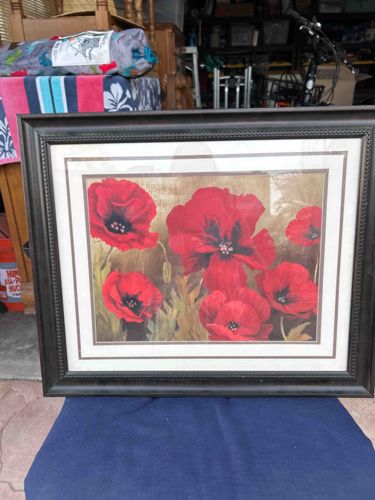
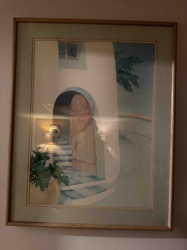
The item is a framed print or painting depicting a vibrant floral scene. The central focus is a cluster of large red poppies with dark centers, set against a muted, somewhat textured background that appears to be in shades of gold, brown, and pale green, suggesting a field or natural setting. There are at least six poppies visible, varying in size, with one prominent large bloom near the top center. The overall composition gives a sense of depth and natural arrangement. The artwork is housed within a substantial dark wooden frame, possibly stained or painted black, featuring a decorative, possibly carved or molded, outer edge pattern that adds a touch of classic elegance. Inside the dark frame, there appears to be a double matting system: a wider inner mat in an off-white or cream color, bordered by a thinner, dark line, followed by a very thin darker frame line directly around the artwork. The condition appears to be relatively good from the visible angle; the frame seems intact with no obvious major damage, and the matting is clean. However, closer inspection would be needed to determine any minor scratches on the frame, fading of the print, or potential moisture damage to the matting. Without visible artist signatures or manufacturing marks, it is difficult to determine the exact age or the specific technique used for the artwork (e.g., if it's a giclée print, a lithograph, or an original painting). The style suggests a decorative piece suitable for a variety of interior designs, likely from the late 20th to early 21st century given its general aesthetic and framing choices. The craftsmanship of the frame appears solid, indicating a commercially produced, quality framed artwork.
AI Appraisal Report
Based on my visual examination of the image, the 'Framed Red Poppy Floral Print/Painting' appears to be a commercially produced decorative art piece. The condition appears good from the photo; the frame is intact, and the matting seems clean, showing no overt damage like scratches or fading. However, a physical inspection would be crucial to detect minor blemishes, possible moisture damage to matting, or fading of the artwork itself.
From the image alone, I cannot definitively determine if this is a print (giclée, lithograph) or an original painting. The lack of a visible artist's signature or specific edition numbering suggests it is more likely a mass-produced print. The framing, with its dark, possibly carved wooden frame and double matting, is consistent with decorative home decor items from the late 20th or early 21st century.
The market for such decorative floral art is generally robust, especially for pieces in good condition. Comparables in the retail market for similar framed floral prints suggest a value range. While there's steady demand for aesthetically pleasing wall art, these items are not rare. Factors significantly impacting value include whether it is an original artwork (which would elevate value considerably), the artist's recognition, and overall condition. Without provenance documentation or a signature, it's difficult to assess rarity or true artistic merit.
For full authentication and to determine if it's a print or an original painting, I would need an in-person examination to inspect brushstrokes/texture, paper type, and look for hidden signatures or edition numbers. Scientific testing could further confirm print type or originality if necessary. Based solely on the visual information provided, it's valued as a decorative framed print.